
Layer 2 Networks
25 stories
Layer 2 Profits Expose Ethereum's Settlement Dilemma
Layer 2 networks are raking in sequencer fees and user activity is surging, but Ethereum's protocol value is not keeping pace. The real stakes lie in who controls settlement, data, and lasting ETH demand as L2s rewrite the economics of scaling.

Arbitrum One and Robinhood Chain Set Different Rules for Ethereum Layer 2
Arbitrum One and Robinhood Chain both run on Ethereum Layer 2 but diverge on governance, revenue, and application focus. Users face different trade-offs in speed, token rights, and access to tokenized assets depending on which network they choose

Arbitrum Captures Major Revenue Share From Robinhood Chain Fees
Arbitrum now claims 10 percent of net protocol revenue from Robinhood Chain and similar networks built on its stack but settling elsewhere, with July 2026 licence fees alone accounting for over a third of ArbitrumDAO's monthly income

Arbitrum Faces Revenue Surge and Security Trade-Offs on Ethereum
Arbitrum's Layer 2 network posted $6.19 million in revenue for early 2026, but its single Sequencer, week-long withdrawal delays, and reliance on Ethereum's data market expose users to unique risks and operational bottlenecks
Robinhood Chain faces outage as stock token backlash intensifies
Robinhood Chain halted block production for 14 minutes during a surge in onchain stock token activity, triggering legal threats from AMC and raising questions about the risks of tokenizing equities without company involvement
Delta Protocol Targets On-Chain Liquidity on Robinhood Chain
Delta introduces a self-custodial protocol for managing and earning from on-chain liquidity on Robinhood Chain, offering concentrated liquidity tools and fee-based rewards while exposing users to new risks and operational trade-offs

Prom Expands ZK Layer 2 to Multichain Settlement and AI Payments
Prom is building a modular ZK Layer 2 network on Polygon CDK, aiming to connect Ethereum, Bitcoin, and Solana ecosystems while supporting DeFi, GameFi, RWA, and automated AI payments. Its cross-chain focus sets it apart from other L2s

Polygon Labs Urges Node Upgrades After Austin and Kyoto Hardforks
Polygon Labs has warned that nodes running outdated Bor or Heimdall clients are no longer in consensus after recent hardforks, requiring urgent upgrades to maintain network compatibility and avoid operational risks
Plasma Blockchain Targets Cheaper Stablecoin Transfers With Layered Design
Plasma introduces a blockchain built for high-throughput, low-cost stablecoin payments, using a hybrid Layer 1 and Layer 2 approach. Its XPL token powers staking, governance, and non-stablecoin fees, but the architecture brings new trade-offs.
Morph Shifts Focus to Stablecoin Payments on Ethereum Layer 2
Morph is retooling its Ethereum Layer 2 network to prioritize stablecoin payments, aiming to lower transaction costs and improve on-chain settlement for businesses and users as stablecoins expand beyond trading into global commerce
Aligned Expands Ethereum Infrastructure With Proof Aggregation and ALIGN Token
Aligned is building a vertically integrated Ethereum infrastructure stack, aiming to reduce the cost and complexity of ZK proof verification, rollup deployment, and interoperability for developers and enterprises
GnosisDAO Votes to Retire Gnosis Chain Layer 1 and Unlock Staked Tokens
GnosisDAO has approved a plan to sunset Gnosis Chain's Layer 1 blockchain, unlocking 350,000 GNO tokens and shifting the network to an Ethereum rollup, raising new questions about token utility and network security
Polygon Adds Mento Protocol to Expand On-Chain FX for Stablecoins
Polygon's integration of Mento Protocol introduces on-chain foreign exchange for stablecoins beyond the U.S. dollar, enabling direct swaps between dollar and euro stablecoins and supporting cross-border payments and enterprise settlements
Ether.fi Expands DeFi App With Stock Trading and Multi-Currency Accounts
Ether.fi's latest upgrade transforms its self-custody app into a full-featured neobank, adding tokenized stock trading, Aave-powered portfolio loans, and fiat accounts in over 30 currencies-all while keeping user control over private keys

Linea vs Arbitrum vs Optimism for Ethereum Scaling
Linea settles with zk proofs and ETH-only gas, while Arbitrum and Optimism use fraud challenges and roughly seven-day official bridges, shaping DeFi depth, Superchain tools, and withdrawal risk for U.S. users

Linea zkEVM Explained: ETH Gas and LINEA Dual Burns
Linea is a Consensys-backed zkEVM Layer 2 that settles on Ethereum with ETH gas while LINEA funds ecosystem incentives and dual burns of ETH and LINEA from surplus network fees

How to Bridge Crypto Assets to Linea Safely
Moving assets to Linea needs wallet prep, the official bridge, and a Lineascan balance check. Most transfers finish in about 5 to 15 minutes for beginners and intermediate users who keep ETH for gas

Ethereum at 11 Faces Fee Pressure as Stablecoin Use Surges
Ethereum now hosts nearly $149 billion in stablecoins and $15.5 billion in tokenized assets, but falling mainnet revenue and shifting value capture raise new questions for ETH holders and developers
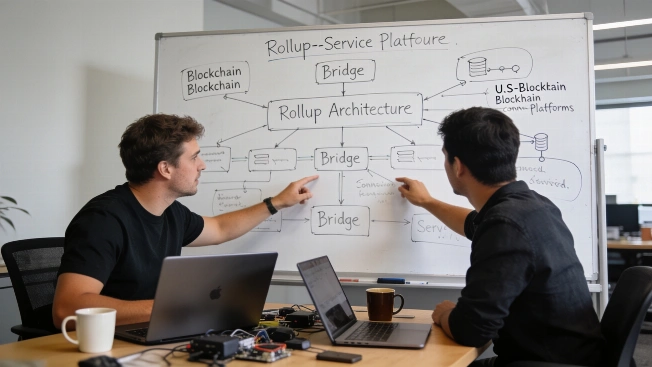
How to Choose Between Caldera, AltLayer, and Conduit for Rollups
Caldera, AltLayer, and Conduit each offer distinct approaches to Rollup-as-a-Service, with differences in interoperability, scalability, and hosting that can impact developers and projects seeking custom blockchain solutions

How to Launch a Custom Rollup on Caldera: Key Steps and Risks
Deploying a custom rollup on Caldera requires careful setup of framework, gas token, and network identifiers. U.S. developers and teams must weigh technical trade-offs, security risks, and operational requirements before going live

ADI Chain's $ADI Token Sets Fixed Supply and No Inflation Model
$ADI powers ADI Chain as its native gas, settlement, and staking token, with a fixed genesis supply and no inflationary issuance. Its allocation, vesting, and treasury-backed rewards shape incentives for users and institutions.

ADI Chain Targets Institutional Tokenization on Ethereum Layer 2
ADI Chain, a zkRollup Layer 2 on Ethereum, aims to provide banks, governments, and companies with compliant infrastructure for stablecoin payments and real-world asset tokenization, backed by major partners and a custom gas token.

How ADI Chain L3 Rollups Reshape Blockchain Compliance and Scalability
ADI Chain L3 rollups introduce a three-layer zero-knowledge architecture, enabling organizations to deploy isolated execution environments with customizable compliance rules while inheriting Ethereum-level security

Coinbase's Base Surpasses 100M AI Payments as Agentic Finance Grows
Coinbase's Base network has processed over 100 million AI-driven payments, highlighting the growing intersection of autonomous agents and blockchain infrastructure. The surge raises new questions about the future of programmable money and crypto payment rails.

How MANTA Tokenomics Shape Staking, Governance, and Network Roles
Manta Network's dual-chain tokenomics define how MANTA is used for staking, governance, and network security, with distinct roles on Atlantic and Pacific chains and annual inflation impacting rewards and supply