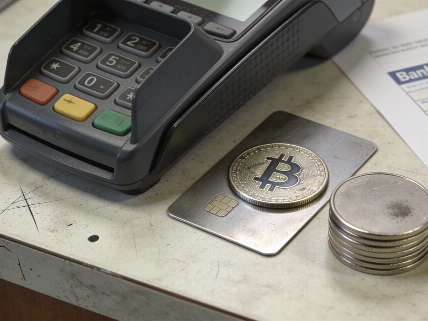

Japan's top financial regulator wants to exempt trust-type stablecoins from annual tax filings, arguing that current rules block practical payment use and don't fit assets that generate no income for holders
Japan's Financial Services Agency (FSA) is moving to dismantle a major regulatory barrier for stablecoin adoption, seeking to exempt trust-type stablecoins from mandatory tax filings starting in April 2027. The agency's formal request, submitted to lawmakers, targets the reporting rules that currently force issuers to file detailed beneficiary reports-even when the stablecoins in question are used for everyday payments and generate no income for holders.
Regulatory Friction and Payment Use
The FSA's proposal zeroes in on a core contradiction: trust-type stablecoins, which are structured under Japanese trust law, are designed for frequent, low-margin transactions, not for earning yield or capital gains. Yet, under current rules, issuers must submit trust reports listing every beneficiary's name and income details, a process the agency now calls disproportionate and impractical. The FSA argues that this paperwork burden discourages the use of stablecoins as a payment rail, especially when compared to traditional financial instruments that face no such requirements for non-income-generating assets.
For U.S. readers, the distinction is significant. While U.S. stablecoin issuers face their own patchwork of state and federal oversight, Japan's trust-type stablecoins are subject to a unique blend of trust law and financial regulation. The FSA's move signals a shift toward treating these digital assets more like cash equivalents than investment products-at least for tax purposes.
Legislative Backdrop and Market Context
This exemption push follows a series of regulatory changes in Japan. In July 2026, the country's parliament amended the Financial Instruments and Exchange Act (FIEA) to classify crypto assets as financial assets, a move first signaled by Finance Minister Satsuki Katayama earlier that year. The FSA's latest tax reform request builds on this foundation, aiming to align the treatment of stablecoins with other financial assets that do not require beneficiary-level tax reporting unless income is generated.
Japan's approach stands in contrast to the U.S., where stablecoin regulation remains fragmented and subject to ongoing debate. The FSA's focus on removing friction for payment-oriented stablecoins could influence how other jurisdictions approach the balance between anti-money laundering controls and practical usability for digital payments.
Income Generation and Tax Logic
The FSA's argument hinges on the mechanics of trust-type stablecoins. Unlike yield-bearing tokens or investment trusts, these stablecoins do not pay interest or dividends to holders. Their value is pegged to a reference asset, typically a fiat currency, and they are intended for rapid circulation among users. The agency maintains that applying income-reporting rules to such assets is a regulatory mismatch, one that stifles innovation without delivering meaningful tax oversight.
Stablecoin issuers would still be subject to anti-money laundering and know-your-customer requirements, but the FSA's proposal would relieve them of the need to file annual trust reports for every beneficiary unless the stablecoin itself generates income. The exemption would only take effect if approved by Japan's legislature ahead of the 2027 fiscal year.
Adoption, Competition, and Global Implications
Japan's stablecoin market remains relatively small compared to the U.S., but regulatory clarity could accelerate adoption. As of June 2026, the total supply of trust-type stablecoins in Japan was estimated at less than $1 billion, according to industry data. By comparison, leading U.S. stablecoins such as Tether and USD Coin each report circulating supplies in the tens of billions of dollars. The FSA's move could make Japanese stablecoins more competitive as payment tools, especially if other countries maintain stricter tax-reporting regimes.
Regulatory momentum in Japan has also affected other digital asset sectors. For example, recent coverage of large-scale Ethereum accumulation by institutional players highlights how evolving rules can reshape market participation and asset flows. The FSA's stablecoin exemption proposal is part of a broader effort to modernize Japan's digital asset framework and reduce operational drag for compliant issuers.
The FSA's push to exempt trust-type stablecoins from tax filings is less about deregulation and more about regulatory fit. By targeting rules that serve little purpose for non-income-generating payment assets, Japan's financial authorities are signaling a willingness to adapt legacy frameworks to the realities of digital money. If lawmakers approve the change, Japan could become a test case for how targeted regulatory relief can drive practical adoption-without sacrificing oversight where it matters. The real test will be whether other major economies follow suit, or whether Japan's stablecoin sector simply becomes a more attractive outlier in a fragmented global market.
Trust-type stablecoins are a distinct category within the broader stablecoin ecosystem. Unlike algorithmic or crypto-collateralized stablecoins, trust-type models rely on legal trust structures to hold and manage reserves, often under direct regulatory supervision. This structure can provide additional legal clarity and consumer protection, but it also introduces reporting and compliance obligations that may not align with the asset's practical use. As stablecoins evolve from speculative trading instruments to mainstream payment tools, the challenge for regulators is to calibrate oversight so that it addresses real risks-such as money laundering or fraud-without imposing unnecessary friction on legitimate users and issuers.