Super Inu and Artificial Inu both ride the AI and Nvidia wave, but their chains, trading pairs, and fee setups are nothing alike. Knowing these differences is key for anyone trying to avoid meme coin traps and false promises of equity.
Meme coins love to borrow buzzwords from AI and big tech, but Super Inu (SI) and Artificial Inu (AI) only look similar at first glance. Both use the Nvidia and AI story to draw in traders. Under the hood, though, their chains, trading pairs, and fee systems are built very differently. For U.S. users and investors, mixing them up can mean falling for copycats or thinking these tokens offer a real stake in Nvidia.
Narrative triggers and chain identity
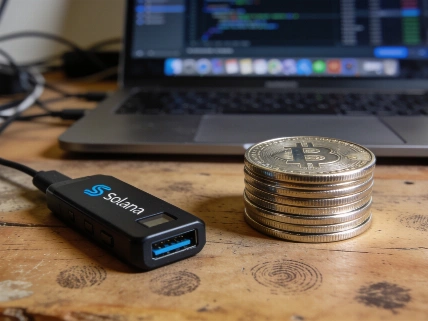
Super Inu (SI) runs on Solana. It uses the SPL token standard and a ticker that hints at "Super Intelligence." The project's main draw is how it turns trending tech talk into a tradable token. SI does not claim to have any AI model or offer company equity. Its real identity is tied to its mint address: DEW9dSN6QpWyNthphCpMmAbZP1Q4cEKR9xQXAri98WDP. Anyone can check this on Solscan. SI's launch and liquidity often overlap with other meme coins like Stonk or StonkFun. Sometimes, SI is paired with tokenized Nvidia (NVDAx) using the Backed xStocks setup. But trading SI or joining these pools does not give you Nvidia shares or dividends.
Robinhood Chain surpassed $1 billion in total value locked (TVL) within three months of its mainnet launch, rapidly establishing itself as a major on-chain financial platform.
Artificial Inu (AI) is different. It lives on Robinhood Chain, which is an Ethereum Layer 2 network. AI's story is built around "Long compute." Its main trading pair is usually AI/NVDA, and fees flow into a community vault. The project says that buy-side fees paid in NVDA are split-about 80% goes to the vault, 20% to project fees. Sell-side fees in AI are split between burning and vault locking. Even though the vault may hold tokenized tech assets, AI holders cannot redeem them. The token does not give any rights to Nvidia shares or voting. To check AI's real identity, you need to look up the full contract address on Robinhood Chain, not just the ticker or logo.
Pairing structures and fee mechanics
SI and AI might both look like ways to get Nvidia exposure, but their setups are not the same. SI's pairing with NVDAx is just a trading structure for the meme story. It does not mean you own any real equity. Solana pools use SPL authorities and transfer fees, and liquidity depends on the mint and pool makeup. AI's pools on Robinhood Chain use a direct AI/NVDA pair. The fee system is built to send some NVDA into a community vault, but holders cannot redeem what's inside. The difference between "pairing" and "ownership" matters-a vault or pool does not mean you own Nvidia shares, and regular holders cannot touch the vault's assets.
Getting these details wrong can be expensive. SI is open to copycats using the same ticker on Solana. AI faces the risk that users think vault assets are redeemable. The only way to be sure about a token is to check the full contract address on the right chain. Logos, abbreviations, and catchy names are not enough, especially as meme coins pop up on every network.
Robinhood Chain is a permissionless, Ethereum-compatible Layer 2 built on Arbitrum Orbit, designed for tokenized real-world assets and financial applications. It does not issue a native chain token; instead, all gas fees are paid in ETH, and token verification relies on full contract addresses rather than tickers or logos.
Risks of copycats and equity illusions
Meme coins with similar names and stories are everywhere now, so checking the real contract is more important than ever. On Solana, many tokens can use the "SI" name. Robinhood Chain can have contracts with almost the same branding. The idea that these tokens give you equity is another common trap-NVDAx and tokenized NVDA are just on-chain versions, not real shares or voting rights. Both SI and AI depend on hype, and their liquidity can dry up fast when attention shifts.
For users, the main lesson is to separate the story from the tech. SI's appeal comes from language trends and Solana contract checks. AI's pitch is about compute and how Robinhood Chain handles vaults and fees. Before trading either one, check the full contract address, the chain, the main trading pair, and how fees work. This is not trading advice. It's just the only way to avoid mixing up tokens or getting stuck with something you did not expect.
Market context and verification steps
On Solana, SI's mint address-DEW9dSN6QpWyNthphCpMmAbZP1Q4cEKR9xQXAri98WDP-is the key to telling the real token from fakes. You can check this on Solscan. SI may show up on exchanges like Gate with SI/USDT pairs, but these listings only show market activity, not any kind of endorsement or equity link. On Robinhood Chain, you need to check AI's contract address in a chain explorer and read the project's public docs for details on vaults and fees. The vault is not redeemable-AI holders cannot claim what's inside, no matter how much builds up.
If you are comparing meme coins across chains, remember: the contract and the chain matter more than the story. As reported earlier, even tokens with the same theme can have very different technical and legal setups. Doing your homework is the only way to keep up in the meme coin world.
On June 10, 2024, Solscan showed Super Inu (SI) active on Solana under the mint address DEW9dSN6QpWyNthphCpMmAbZP1Q4cEKR9xQXAri98WDP, with liquidity pools pairing SI against NVDAx and USDT. Robinhood Chain explorers listed Artificial Inu (AI) under its full contract address, with AI/NVDA as the main trading pair and vault details on the project's public site. There is no proof that SI or AI gives holders Nvidia equity or redemption rights.
Tokenized assets and meme coins often blur the line between hype and substance. Pairing a meme coin with a tokenized stock can make it look like you are getting equity, but the real mechanics rarely back that up. Treat vaults, fee flows, and trading pairs as technical features, not as promises of asset backing or redemption. In this market, tokens built on stories can pull in fast liquidity, but that can vanish just as quickly. In the end, only the contract and the chain tell you what you really hold-and what risks you face.