
Offline wallets no longer guarantee safety for crypto in 2026. Supply chain tampering and user mistakes now threaten even the most trusted hardware devices. The stakes for digital asset protection have never been higher.
In October 2026, $86 million in crypto disappeared from users who bought Ledger wallets through a Southeast Asian distributor. The case, still unresolved, broke the illusion that hardware wallets are untouchable. Security gaps now run from the factory floor to the end user's desk.
Ledger and Trezor wallets have become standard for anyone storing crypto long-term. But as attackers sharpen their tactics and digital assets climb in value, these devices face risks that go well beyond lost gadgets or careless seed phrase leaks.
On-chain analysts tracked over $42 million in ETH, $17.6 million in BTC, and $16.5 million in USDT linked to suspicious activity in the 2026 Ledger incident, though not all funds are confirmed as part of the same compromise.
Supply Chain and Firmware Threats
Supply chain attacks now top the list of concerns. Devices can be tampered with during production or swapped out before reaching the buyer. Attackers have preset mnemonic phrases, swapped chips, and pushed counterfeit wallets into the market. Ledger's Genuine Check only verifies the secure chip, not the rest of the hardware. In the October 2026 case, users who trusted the distributor CryptoBilis ended up with wallets that may have been compromised before setup. Ledger told CryptoBilis to halt all sales and deliveries, and warned customers who bought devices in the last 90 days to avoid activating them. Those who already set up wallets were told to move funds to a new device with a fresh seed phrase.
Firmware bugs open another door. Attackers can slip in malicious updates, especially if users grab firmware from unofficial sites. Trezor uses signature checks to flag unauthorized firmware, but these defenses only work if users pay attention. Downloading updates from search ads or third-party links can let malware in with a single click.
Seed Phrase and Blind Signing Dangers
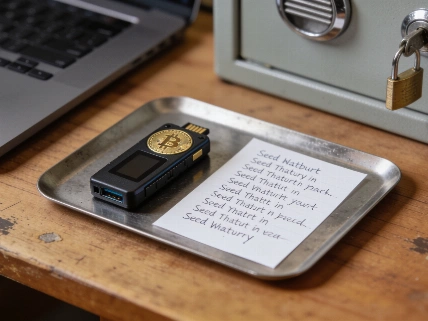
Even with keys offline, the mnemonic phrase remains a weak spot. Anyone who gets those 12, 20, or 24 words can restore the wallet and empty it. Users still snap photos, upload phrases to the cloud, or fall for phishing where fake support agents ask for the phrase "to verify identity."
Blind signing is another trap. In DeFi and NFT trading, users approve smart contract transactions that often show up as raw hexadecimal strings. Most people can't read these, so attackers hide malicious approvals in what look like routine actions. Once a user clicks confirm, assets can vanish under the radar.
Reports of the 2026 Ledger incident were based on on-chain tracking of suspicious transfers across Bitcoin, Ethereum, and TRON networks, with hundreds of addresses analyzed. However, not all addresses have been independently linked to a single event, and Ledger has not confirmed the total losses or the exact method of compromise.
Phishing, Address Tampering, and Physical Attacks
Phishing keeps catching users off guard. Fake wallet sites, rogue apps, and bogus support lines trick people into giving up secrets or approving dangerous transactions. Clipboard malware can swap out a recipient address, sending funds straight to an attacker. Hardware wallets only help if users double-check transaction details on the device screen, not just on their computer or phone.
Physical attacks and lost devices still matter. Secure chips and PINs slow down thieves, but someone with the device in hand can try to break it open or analyze the chip. Data leaks at shipping companies, like the Trezor breach that hit nearly 14,000 customers, can expose personal info and make targeted phishing or theft more likely.
Backup Failures and User Error
Hackers aren't the only threat. Hardware can fail, get damaged, or outlive its support window. Users who miswrite a mnemonic phrase or forget a passphrase can lock themselves out for good. Some never check their backup until it's too late. Multi-signature wallets and passphrase features add complexity, making backup and recovery even trickier.
Anyone holding serious crypto bets everything on a single hardware wallet. Using separate wallets for daily use and long-term storage, keeping offline backups, and setting up multi-signature protection are now standard moves. No single fix covers every risk. Revoking smart contract permissions won't help if a mnemonic phrase leaks, and swapping out a compromised device won't clean up old malicious approvals.
The market has been forced to face the limits of hardware wallet security. The only workable approach covers sourcing, setup, transaction approval, backup, and migration. Technical features mean little without disciplined habits.
Security for hardware wallets is a moving target. As attackers find new angles, users take on more responsibility. The 2026 lesson is blunt: vigilance and layered defenses are now the minimum standard for protecting digital assets.
On-chain researchers put the suspected losses in the October 2026 Ledger case at over $86 million. The affected wallets came through CryptoBilis in Southeast Asia. Ledger's investigation continues, and scrutiny of hardware wallet supply chains has only grown. Users are being pushed to check device authenticity and backup routines more closely.
Hardware wallet risks now overlap with broader crypto market changes. New lending and custody models, like those in recent reports, make managing keys and permissions even more complex. Security practices must keep up with shifting threats and product updates.
Hardware wallets still anchor self-custody, but chips and encryption alone don't cut it. The real work is building a risk management system that covers both technical exploits and human mistakes. In this environment, letting your guard down is the biggest risk of all.
Unlike hot wallets, hardware wallets keep private keys offline and out of reach from online attackers. But if a mnemonic leaks or a device is compromised before it arrives, even the best hardware can't stop a breach. Every step-from buying to backup to approving a transaction-can fail, and users have to treat each one as a possible weak point.