Ergo is betting on a memory-heavy Proof of Work system and eUTXO smart contracts to carve out a space in DeFi and privacy. But these technical choices bring real trade-offs for users, miners, and developers.
Ergo is not following the usual path for smart contract blockchains. Instead of chasing high transaction speeds or copying Ethereum's account-based setup, Ergo has stuck with Proof of Work and built its own eUTXO system. The goal: a platform for programmable financial contracts and privacy-focused DeFi. This makes Ergo stand out among Layer 1 networks, but it also brings challenges that most rivals don't face.
Technical design and trade-offs
Ergo's core is the eUTXO (Extended Unspent Transaction Output) model. It builds on Bitcoin's UTXO system, but each output-called a Box-can hold assets, data, and programmable spending rules. This setup lets developers build complex financial logic and privacy features. But it also means they have to learn new ways to manage state, build transactions, and handle off-chain logic. Unlike Ethereum's account model, where balances and global state update directly, Ergo's eUTXO system keeps a clear link between inputs and outputs. This supports parallel processing and makes contract execution predictable.
The Ergo protocol continues to receive updates, with the reference client version 6.0.6 released as recently as September 2026, signaling ongoing development and ecosystem activity.
ErgoScript, the platform's smart contract language, works closely with Sigma Protocols. These cryptographic tools let users prove they know a secret without showing it. That makes features like multisig wallets, threshold signatures, and privacy-focused transactions possible. The scripting environment is not Turing-complete by design. It aims for determinism and security in financial contracts. Developers can set up complex rules, but they have to work within the limits of eUTXO and Sigma Protocols.
Mining, storage, and incentives
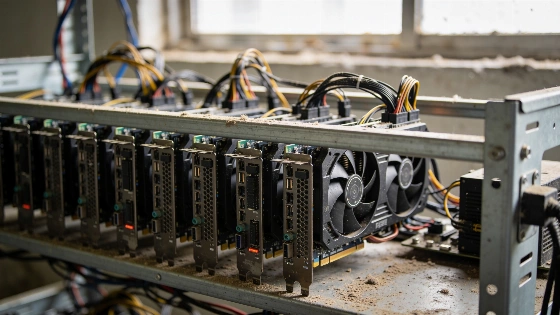
Ergo's security depends on the Autolykos Proof of Work algorithm. It's built to use a lot of memory and to keep ASIC miners from taking over. The current version, Autolykos v2, raises memory needs so more GPU miners can join and centralization is less likely. Block rewards have been dropping on a set schedule. In April 2026, the reward fell to 3 ERG per block. As new coins run out, transaction fees and a special Storage Rent system-where Boxes that sit untouched for four years get charged a fee-are expected to matter more for miner income.
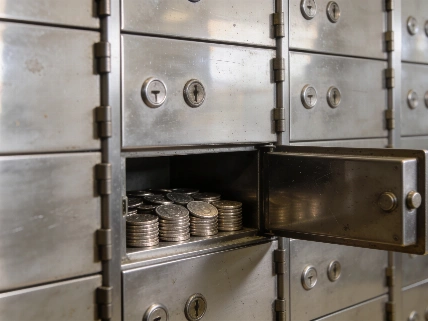
Storage Rent is Ergo's answer to blockchain state bloat. By charging for Boxes that stay idle, Ergo tries to keep on-chain data from growing too fast and gives miners a steady incentive. If a Box doesn't have enough ERG to pay, the protocol can reclaim its assets. This puts new duties on users, who have to keep an eye on their Boxes to avoid losing assets, especially NFTs or tokens left in dormant outputs.
Ergo maintains its position as a blockchain for decentralized applications with a focus on financial contracts, leveraging a flexible protocol, ErgoScript, and Sigma protocols for programmable and privacy-preserving conditions.
DeFi ecosystem and cross-chain moves
Ergo's DeFi scene is built around the eUTXO model. Projects like SigmaUSD (a crypto-backed stablecoin), SigmaFi (a peer-to-peer lending and bond market), and several decentralized exchanges use programmable Boxes. Oracle Pools bring in off-chain data, which is key for stablecoins and lending. Rosen Bridge lets assets move between Ergo and other networks like Cardano and Bitcoin. NIPoPoWs (Non-Interactive Proofs of Proof-of-Work) help with light client verification and research on scaling.
Even with these technical steps, Ergo's ecosystem is still smaller than big names like Ethereum or Solana. There are fewer active developers, less liquidity, and not as many user-facing apps. This can slow adoption and limit DeFi market depth. Some projects, like Spectrum Finance, have shut down, while others such as ErgoDex and SigmaUSD are still running. The Ergo Foundation points out that most projects in the ecosystem are built independently and should be judged on their own, not as stand-ins for the mainnet's health.
Roadmap and ongoing challenges
In 2026, Ergo's development shifted to the 6.x tech stack. The Sigma 6.0 upgrade brought new data processing tools and set the stage for future protocol governance and Sub-blocks-a scaling idea still in testing. Layer 2 solutions, sidechains, and more cross-chain links are being researched, but they're not ready for the mainnet yet. Because Ergo uses Proof of Work, miner economics, energy use, and hash rate spread are still big issues, especially as block rewards shrink and the network leans more on transaction fees and Storage Rent.
For U.S. users and developers, Ergo's setup brings its own set of trade-offs. The eUTXO model and Sigma Protocols offer strong predictability and privacy, but they're harder to learn and need special infrastructure. Exchanges and wallets have to adjust to the Box-based system, which makes integration more complex. As the fight for smart contract users heats up, Ergo's future will depend on whether its technical strengths can bring in enough developers and users to keep growing.
Ergo's total supply is capped at about 97,739,925 ERG, with new coins set to be issued until 2045. The economic plan is to move from block rewards to a mix of transaction fees and Storage Rent. But it's still unclear if this will be enough to keep miners interested and the network secure. Project documentation says Storage Rent for a typical Box is about 0.13-0.14 ERG every four years, though the exact fee depends on Box size.
For readers interested in privacy and confidential computing, related news in the sector has been covered earlier as projects look at hardware-level trusted execution and cryptographic proofs to protect user data and off-chain computation.
Ergo's approach to smart contracts, privacy, and DeFi is a clear bet on Proof of Work and the flexibility of the eUTXO model. The technical design is both its biggest strength and its main hurdle for wider adoption. As the network grows and the ecosystem changes, the real test will be whether these choices can bring in enough developers, liquidity, and users to make the complexity worth it and keep the project moving forward.
Unlike account-based blockchains, the eUTXO model used by Ergo and a few others structures every transaction as a set of inputs and outputs, each with its own spending rules. This allows for parallel transaction processing and predictable contract execution. But it also means users and developers have to manage Boxes, registers, and build transactions off-chain. The trade-off is a system that can offer more predictability and privacy, but it's harder to use and takes more effort to build on or integrate with the network.