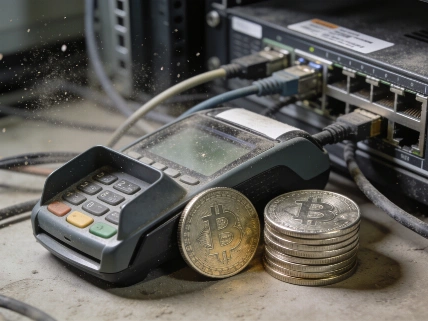

Stablecoins now move billions across borders in seconds, but hidden costs and compliance hurdles remain. Domestic bank rails have caught up on speed, leaving the real contest in international payments and business workflows.
In 2026, the old narrative-crypto is fast, banks are slow-no longer holds up. Most international Swift payments now reach the recipient bank within an hour, and domestic instant-payment rails like FedNow and SEPA Instant have erased the speed gap for local transfers. Yet for businesses moving money across borders, stablecoins have carved out a new lane, bypassing correspondent banks and weekend delays with near-instant settlement. The catch? The real friction now hides in on-ramps, off-ramps, compliance, and conversion fees, not just in the rails themselves.
For U.S. companies and global contractors, the choice between crypto payments and bank transfers is no longer about raw speed. It's about the total cost, operational complexity, and whether both sides can handle digital assets safely and legally. The stakes are highest for cross-border B2B payments, where stablecoins like USDT and USDC have become practical tools for moving value internationally-if both sender and recipient already hold crypto.
Cross-Border Friction
International bank wires have improved, but the process remains tangled. Swift, the backbone of global banking, now delivers over 90% of payments to the beneficiary bank within an hour, according to the network's own data. But that's not the end of the story. Funds can still get stuck in compliance checks, intermediary banks, or local processing queues before hitting the final account. Transfer fees often land in the $25-$50 range, and the World Bank's latest data puts the average remittance cost at 6.36%-with FX spreads and hidden charges pushing the real price higher.
Stablecoins sidestep much of this infrastructure. A USDC or USDT transfer on Tron or Solana can settle in seconds, with network fees often under $1. But the efficiency only holds if both parties already operate in crypto. If either side needs to convert to or from fiat, on-ramp and off-ramp providers add their own spreads, compliance checks, and withdrawal delays. For businesses with recurring international payments or crypto treasuries, stablecoins can cut costs and settlement times. For one-off transfers or recipients who need local currency, the savings can evaporate in conversion fees.
Cost Stack and Settlement
Comparing crypto and bank payments means tallying every fee, not just the headline network cost. Bank wires pile on sending, intermediary, and receiving fees, plus FX spreads and local charges. Crypto payments introduce a different stack: fiat on-ramp, trading spread, blockchain fee, payment-provider fee, off-ramp, and final fiat conversion. A low-fee stablecoin transfer can still become expensive if the recipient faces a steep spread or slow withdrawal when cashing out to local money.
According to McKinsey and Artemis Analytics, actual stablecoin payments-not just blockchain transfers-reached about $390 billion in 2025, with B2B activity making up roughly $226 billion. That's a fraction of the trillions moved by banks, but the growth is real. Merchant data shows USDC overtaking BTC as the most-used crypto payment asset, but stablecoins still account for only about 0.02% of global payments volume. The gap is narrowing, but traditional rails remain dominant for most business and consumer flows.
Security, Compliance, and Practical Limits
Bank transfers and crypto payments offer different protections and risks. Banks operate under mature regulatory frameworks, with formal processes for fraud investigation, recalls, and dispute resolution. Blockchain transactions, once finalized, are nearly impossible to reverse. That's a double-edged sword: merchants avoid chargebacks, but a single mistake or compromised private key can mean permanent loss. Crypto is not inherently safer-it simply shifts the risk profile.
Regulation has tightened for crypto payments, especially in Europe under the EU's MiCA regime. U.S. businesses face a patchwork of federal and state rules, and regulated exchanges and payment providers must comply with KYC, AML, and sanctions screening. But sending stablecoins from one self-custody wallet to another remains outside most traditional oversight. Businesses must evaluate not just the blockchain, but the legal status of every provider and workflow involved. As reported earlier, integrating crypto rails into institutional workflows brings its own operational and compliance challenges.
Gate Pay and similar platforms now let merchants accept crypto alongside fiat, converting orders at real-time rates and supporting multiple blockchains. But fiat settlement depends on the service, account setup, and jurisdiction. For most companies, crypto is an additional payment rail-not a full replacement for bank transfers.
For context, the World Bank's Remittance Prices Worldwide database reported an average global remittance cost of 6.36% as of Q1 2026. Meanwhile, blockchain explorers show that stablecoin transfers on Tron and Solana routinely settle in under a minute, with network fees below $1 per transaction. McKinsey's 2025 estimate of $390 billion in real stablecoin payments marks a doubling from 2024, but remains a small share of the global payments market.
Decision Points for Businesses
Choosing the right payment rail in 2026 means asking five questions: Is the payment domestic or international? Does the recipient need fiat? What is the real all-in cost? Does the payment need to be reversible? Can both sides manage crypto safely and compliantly? For domestic payroll, rent, or regulated transactions, instant bank rails remain hard to beat. For cross-border B2B payments, stablecoins can deliver speed and cost advantages-if the operational and compliance hurdles are manageable.
Most businesses now run hybrid stacks, using instant bank transfers where possible and layering in stablecoin infrastructure for international flows or crypto-native commerce. The optimal mix depends on transaction size, frequency, recipient needs, and the company's ability to handle custody, accounting, and regulatory obligations. Testing new payment methods with small transfers first is standard practice to avoid costly mistakes.
Crypto's promise of instant, borderless payments is real-but only for those willing to navigate the full stack of costs, compliance, and operational risk. The days of "crypto is always faster and cheaper" are over. In 2026, the winners are businesses that understand when to use each rail, and who refuse to be blinded by marketing slogans or outdated stereotypes.
Stablecoins have become the most relevant crypto payment tool for cross-border business, but their efficiency depends on the entire workflow-not just the blockchain. As bank rails catch up on speed and regulators tighten oversight, the real advantage shifts to companies that can integrate both systems, minimize friction, and adapt quickly. The future of payments isn't about picking a side; it's about building a stack that works in the real world, not just on paper.
Stablecoins are designed to maintain a fixed value relative to a reference asset, typically the U.S. dollar, by holding reserves or using collateral mechanisms. While this structure reduces volatility compared to cryptocurrencies like Bitcoin or Ethereum, it does not eliminate risk. Users must consider the stability of the underlying reserves, the reliability of redemption mechanisms, and the regulatory status of the issuer. In practice, stablecoin payments can offer speed and cost benefits for international transfers, but the total cost and risk profile depend on the full transaction flow, including on-ramps, off-ramps, and compliance requirements. Businesses and individuals should evaluate each payment scenario carefully, recognizing that neither crypto nor bank transfers offer a universal solution for every use case.