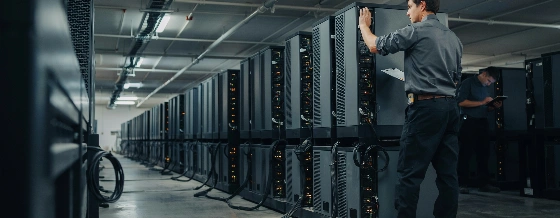
American Bitcoin has committed nearly 40% of its Bitcoin holdings as collateral for mining hardware purchases, exposing the company to both market volatility and operational timing risks as redemption windows approach
American Bitcoin, a mining company formed in 2025 by Hut 8 and American Data Centers with backing from Eric Trump and Donald Trump Jr., ended June with 8,002 BTC on its balance sheet. Of that total, 3,090 BTC-representing 38.6% of its reserves-had been pledged to Bitmain as collateral for future mining equipment purchases. The remaining 4,912 BTC were not subject to these pledges, leaving a significant portion of the company's Bitcoin holdings encumbered by contractual obligations tied to hardware acquisition.
Redemption Windows and Collateral Mechanics
The pledged Bitcoin remains on American Bitcoin's balance sheet as long as the company retains redemption rights and economic exposure. Under the terms of its agreements with Bitmain, American Bitcoin can pay cash before each redemption window closes to reclaim its pledged coins. If the company does not exercise this option before the window expires, the pledged BTC is transferred to Bitmain as payment for mining equipment and is removed from the company's assets. Most of the pledged balance originated from several tranches in 2025 totaling 2,776 BTC, each with a redemption window of roughly 24 months. A separate February 2026 agreement involved 314 BTC pledged toward the purchase of 11,298 miners, with an additional 12-month extension option available for redemption.
Financial Impact and Market Exposure
According to the company's Q2 filing, the carrying value of the pledged Bitcoin was $184.9 million as of June 30, while the non-current miner-purchase liability stood at $371.7 million. The spot value of the pledged BTC pool was approximately $193 million on August 3, when Bitcoin traded near $62,600-about 50% below its October 2025 peak. The unencumbered 4,912 BTC was worth roughly $307 million at that price. These figures highlight the sensitivity of American Bitcoin's balance sheet to both Bitcoin price fluctuations and the timing of redemption windows, which ultimately determine when the company must either pay cash or forfeit BTC to complete equipment purchases.
Operational and Market Risks
American Bitcoin reported a $57.2 million GAAP loss in Q2, including a $71.2 million digital-asset loss, an $18.3 million derivatives gain, and $28.2 million in depreciation and amortization. The company raised $33.6 million net through the sale of 2.15 million Class A shares, increasing its outstanding shares by about 3% quarter over quarter. Its Bitcoin holdings grew 14% during the same period, with satoshis per share up 11%. Each redemption window presents a recurring decision: pay cash to retain pledged coins or allow them to settle mining hardware purchases. While Bitcoin's price can affect the economics of these choices, the contractual redemption windows are the primary drivers of timing. This structure introduces operational risk, as the company must manage liquidity and market exposure in a volatile environment. For context, other U.S. mining firms have faced similar pressures as hardware financing and market cycles intersect, as seen when Core Scientific shifted focus to AI data centers amid mining losses.
As of June 30, 2026, American Bitcoin's 8,002 BTC reserve placed it among the larger U.S.-based public miners by holdings. The company's $184.9 million carrying value for pledged BTC and $371.7 million in miner-purchase liabilities reflect a capital structure heavily influenced by hardware financing. The spot price of Bitcoin on August 3, 2026, was $62,600, with the pledged and unpledged BTC pools valued at approximately $193 million and $307 million, respectively. These figures underscore the company's exposure to both crypto market volatility and the operational demands of large-scale mining expansion.
When mining companies pledge Bitcoin as collateral for hardware purchases, they effectively lock up a portion of their reserves, reducing immediate liquidity and increasing sensitivity to both market and operational risks. Redemption windows force companies to make strategic decisions about whether to deploy cash or part with Bitcoin, often under volatile market conditions. This approach can amplify the impact of price swings and hardware delivery delays, especially when mining economics are already under pressure from network difficulty, energy costs, and token price cycles. For investors and industry observers, understanding these mechanics is essential to evaluating the financial health and risk profile of publicly traded mining firms.