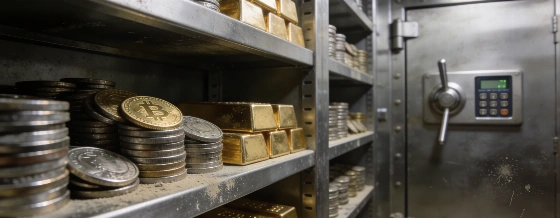
Tokenized real-world assets are moving onto blockchains, allowing U.S. Treasuries, stocks, and funds to be traded and managed on-chain. This shift is drawing institutional interest and raising new regulatory and liquidity questions
Tokenized real-world assets (RWA) are emerging as a major force in the evolution of blockchain finance, as traditional assets like U.S. Treasuries, stocks, and funds are increasingly represented by digital tokens on public and permissioned blockchains. This trend is reshaping how assets are issued, traded, and managed, and is attracting attention from both crypto-native and institutional players seeking more stable and diverse on-chain collateral.
How Tokenization Works
Tokenization refers to the process of converting ownership rights in a real-world asset-such as a government bond, equity, or commodity-into a digital token that can be transferred and managed on a blockchain. These tokens are typically backed by the underlying asset, with legal structures and custodians ensuring that each token corresponds to a specific claim or right. For example, a tokenized Treasury bond may entitle the holder to a share of the bond's yield, while a tokenized fund share can be managed through smart contracts that automate tracking and settlement.
This approach aims to address inefficiencies in traditional finance, where asset transfers often depend on intermediaries, limited trading hours, and geographic restrictions. By moving assets on-chain, tokenization can enable faster settlement, programmable ownership, and fractional participation, potentially lowering barriers for smaller investors. Blockchain records also provide transparent audit trails, which can help with verification and compliance.
Institutional Adoption and Market Growth
Institutional interest in RWA tokenization is growing as banks, asset managers, and fintech firms look for ways to reduce operational costs and improve asset liquidity. According to industry data, the market for tokenized U.S. Treasuries and funds has expanded rapidly, with several platforms now offering on-chain access to these products. The process typically involves purchasing the underlying asset, holding it with a regulated custodian, and issuing tokens that represent proportional claims.
Tokenized Treasuries have become a leading segment due to their clear yield structure and lower volatility compared to crypto-native assets. In decentralized finance (DeFi), these tokens are increasingly used as collateral for lending protocols and yield products. However, tokenizing stocks and more complex funds remains challenging, as these assets involve additional regulatory, custody, and investor-protection requirements.
Recent developments in tokenized gold and silver products highlight the importance of reserve verification and custody arrangements. As seen with Matrixdock's tokenized metals, the value and risk profile of RWA tokens depend heavily on off-chain reserves, third-party audits, and legal clarity-a topic explored in EgonCoin's coverage of tokenized gold and silver custody risks.
DeFi Integration and Regulatory Hurdles
The integration of RWA tokens into DeFi protocols is expanding the range of assets available for on-chain lending, trading, and yield strategies. While DeFi has historically relied on crypto-native assets like ETH, BTC, and stablecoins, tokenized Treasuries and funds are now being used as collateral and liquidity sources. This shift could help stabilize DeFi markets and attract more risk-averse capital.
Despite the promise, several challenges remain. Regulatory uncertainty is a major barrier, as tokenized assets must comply with securities laws, ownership verification, and investor-protection standards that vary by jurisdiction. Off-chain asset verification is another hurdle, since blockchains cannot independently confirm the existence or quality of the underlying asset-requiring trusted custodians, auditors, and legal frameworks. Liquidity is also a concern, as secondary trading for many RWA tokens remains limited compared to traditional markets.
Technical infrastructure is evolving to support RWA adoption, with new wallet, identity, oracle, and compliance solutions under development. The future of RWA tokenization will likely depend on regulatory progress, improved infrastructure, and the ability to deliver reliable liquidity for a broader range of assets.
According to data from RWA.xyz, the total value of tokenized U.S. Treasuries on public blockchains surpassed $1.2 billion as of June 2024, up from less than $200 million a year earlier. The number of platforms offering tokenized funds and commodities has also grown, with institutional-grade custody and compliance features becoming standard for new offerings.
Tokenization of real-world assets does not automatically guarantee legal ownership, liquidity, or regulatory approval. The rights and protections associated with RWA tokens depend on the underlying legal agreements, custody arrangements, and the jurisdiction in which the asset is held. Investors should carefully review the structure, redemption terms, and regulatory status of any tokenized asset before participating. As the market matures, the interplay between blockchain technology, traditional finance, and regulatory oversight will shape the practical impact of RWA tokenization for both institutional and retail participants.