Lost or exposed recovery phrases still wipe out self-custody holdings more often than chain exploits. Here is how paper, single-site, and digital backups fail-and what UKey Seed Ring claims to change
Mnemonic seed phrases remain the master recovery credential for self-custody wallets. Lose them or leak them, and digital assets can vanish permanently or move under someone else's control. Industry experience over recent years shows that many crypto losses stem less from blockchain breaks than from bad seed storage, missing backups, or unauthorized access. As more U.S. users move assets off exchanges into personal wallets, the quality of seed backup strategy has become as important as the hardware that signs transactions.
Self-custody gives owners direct control without an exchange intermediary, but it also places full responsibility for private keys and recovery words on the individual. A typical seed is 12 or 24 English words. Anyone who holds the complete phrase can restore the wallet in another app; if the phrase is gone, even knowing the public address does not restore funds. That asymmetry is why backup method often decides whether assets survive fire, theft, device failure, or simple human error.
Core Backup Failure Modes
Paper remains the default for many first-time hardware-wallet buyers. It is cheap and offline, yet paper burns, soaks, fades, attracts pests, and gets discarded during moves. When the sheet becomes unreadable, recovery ends. Metal plates and fire-resistant media reduce physical decay, but they do not solve every operational mistake.
Storing a single complete copy in one safe, drawer, or bank box concentrates risk. A burglary, flood, or building loss can erase every recovery path at once. Asset-management practice favors geographic redundancy-separate locations so no single incident destroys all copies. Digital shortcuts create a different problem. Photos in a phone gallery, cloud notes, or synced files can leak if an account is phished, a device is malware-infected, or cloud sharing is misconfigured. Because a full seed usually needs no second factor, one clean leak can empty a wallet. Security guidance widely discourages keeping a complete plaintext seed on any internet-connected device.
Human error compounds the technical gaps. Wrong word order, missing words, typos, or forgotten storage spots years later can make recovery impossible. Long-term holders face a special burden: the backup must stay accurate and findable across decades of life changes. Users who keep large balances on platforms should also weigh counterparty risk; practical steps for checking exchange safety before parking funds appear in this guide on how to assess cryptocurrency exchange safety before trading.
Why Seeds Outrank Device Chips
After buying a hardware wallet, many people focus on secure elements, tamper resistance, and offline signing. Most devices still generate a seed during setup that users write down and store separately. If that phrase is compromised, an attacker can restore the same wallet on other software without ever touching the original device. Seed backup therefore becomes the weakest and most underestimated layer of self-custody. Separating transaction signing hardware from dedicated recovery media is one way product designers try to shrink a single point of failure.
Industry loss patterns reinforce the point. Chainalysis and other forensic firms have repeatedly noted that user-side key mismanagement and scams account for a large share of stolen or inaccessible crypto relative to pure protocol exploits in many reporting periods. Exact annual totals vary by methodology and year, but the directional lesson for retail self-custody is consistent: recovery hygiene matters as much as chip design.
UKey Seed Ring Design Claims
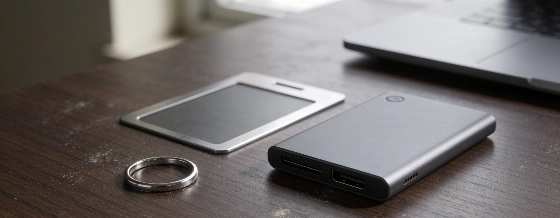
UKey Seed Ring, according to documentation published by UKey, does not replace hardware wallets. It targets seed backup specifically. The company describes a wearable form factor meant for daily carry rather than multi-year storage in one fixed place. The product uses a battery-free NFC design that stays inert until briefly activated near an NFC-capable device, limiting always-on radio exposure compared with continuously connected gadgets.
A central claim is that the ring does not store the full seed in plaintext. UKey states that the device keeps indexes, order data, and verification material needed for recovery rather than the complete phrase itself. If the wearable is lost, the firm argues, an attacker cannot simply read out every recovery word from the hardware alone. That design does not erase all risk-physical possession, companion apps, and user process still matter-but it aims to raise the bar versus a paper sheet or a phone photo that contains every word in clear text.
Functional separation is another theme. Instead of one device holding keys, signing payments, and guarding the seed, newer product lines split roles: signing wallets handle transactions while backup devices specialize in recovery data. UKey's Seed series follows that pattern, according to the company, so compromise of one product class does not automatically expose every security function.
Building a Full Recovery Plan
No single gadget substitutes for process. A durable self-custody backup plan usually combines media that resists fire and water, copies in more than one location, avoidance of full plaintext on networked devices, periodic recovery drills, and deliberate reduction of single points of failure. Holders should scale complexity to asset size, how often they move funds, and how much operational burden they can sustain. Wearable NFC backups such as UKey Seed Ring present one alternative to static paper or single-device storage, but users still need verified recovery steps, secure companion workflows, and realistic threat models.
Self-custody seed phrases function like master passwords with no issuer reset desk. Unlike a bank that can reissue credentials after identity checks, blockchain networks generally treat possession of the seed as ownership. That property underpins censorship resistance and removes intermediary freeze risk, yet it also means fire, flood, phishing, or a misplaced notebook can produce irreversible loss. Multisignature setups, geographically split shares, and specialized backup hardware all try to soften that binary outcome without reintroducing a custodian. Each approach trades convenience for different failure modes, so the practical choice depends on technical skill, household threat model, and whether heirs can execute recovery without the original owner.