
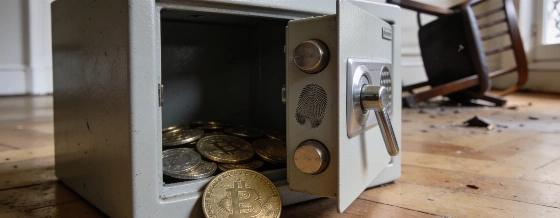
Over $30 million in cryptocurrency was forcibly stolen in the first half of 2026, with France experiencing a sharp rise in violent attacks linked to leaked tax data and targeted family incidents
Physical attacks targeting cryptocurrency holders have escalated sharply in 2026, with more than $30 million in digital assets stolen through violence and coercion in just the first six months of the year, according to a report from blockchain analytics firm Chainalysis. The firm documented 46 separate incidents through late June, including home invasions, kidnappings, and hostage situations where victims were forced to transfer Bitcoin or other cryptocurrencies under threat. If this pace continues, 2026 could surpass the previous annual record of $58 million in confirmed losses set in 2025.
France Emerges as Epicenter
France has become the global hotspot for these so-called "wrench attacks"-a term used by security researchers to describe crimes where physical force or threats are used to extract crypto from victims. Chainalysis identified 30 publicly reported violent crypto incidents in France through mid-2026, a dramatic increase from just a handful before 2025. French authorities have acknowledged more than 70 such incidents, suggesting that many cases go unreported or undetected. The surge has been linked to a 2024 breach involving a Paris-area tax official who allegedly stole and sold detailed records of high-net-worth crypto holders, including names, addresses, and holdings. Criminal groups reportedly purchased these files to identify and locate targets. The situation intensified in January 2026 when the French government disclosed the tax breach and crypto tax-reporting firm Waltio revealed a separate data leak affecting about 50,000 users.
Family Targeting and Attack Patterns
Attackers are increasingly targeting not just primary crypto holders but also their family members and close acquaintances. By early 2026, between 25% and 30% of all documented cases involved relatives or associates, up from near zero in 2021. In France, this figure exceeded 40%. Notable incidents include an April 2026 home invasion in northwest France where armed intruders held a family hostage for hours, forcing a transfer of roughly $820,000, and a separate case where attackers impersonating police coerced a Paris-area couple into sending $1 million in Bitcoin. French prosecutors have responded with approximately 200 arrests, 88 indictments, and 75 suspects held in pretrial detention by mid-year.
Changing Tactics and Lower Success Rates
Home invasions now account for 37% of 2026 incidents, up from 14% in 2025, while kidnappings make up 52%. Chainalysis notes that some kidnapping cases, especially in France, could be reclassified as home invasions depending on methodology. Despite the rise in attacks, the success rate for criminals has dropped: only 26% of attempts resulted in a payment through late June 2026, compared to 49% in 2025 and 67% in 2024. This decline is attributed to a shift from highly targeted operations to broader, less discriminating attacks, particularly in France. Once funds are stolen, laundering methods vary-some attackers send crypto directly to centralized exchanges, while others use decentralized exchanges, cross-chain bridges, or instant swap services to obscure the trail. Chainalysis has traced some stolen funds to networks linked to organized crime and terrorist financing.
Chainalysis estimates that total exposure to violent crypto thefts in 2026-including blocked transfers, ransom demands, and recovered assets-has reached about $107 million so far, compared to $180 million for all of 2025 and $316 million in 2024. The firm cautions that these figures likely understate the true scale, as they rely on publicly reported incidents. For a broader look at the risks facing crypto traders, including operational and security threats, see EgonCoin's analysis of how layered risks can impact capital.
Unlike traditional bank transfers, cryptocurrency transactions are irreversible once completed, making them especially attractive to criminals seeking quick, untraceable payouts. The inability to freeze or reverse transfers after a theft remains a core vulnerability for crypto holders, especially those whose personal information has been compromised.
Physical attacks on crypto holders highlight a unique risk that digital assets face compared to traditional financial instruments. While self-custody and decentralized networks offer users more direct control, they also make individuals solely responsible for their own security. Once a private key or seed phrase is compromised-whether through digital or physical means-there is typically no recourse for recovering lost funds. This reality underscores the importance of robust operational security, careful management of personal information, and awareness of the risks that extend beyond the digital realm. As the crypto ecosystem matures, balancing accessibility with effective protection against both online and offline threats remains a central challenge for users and service providers alike.