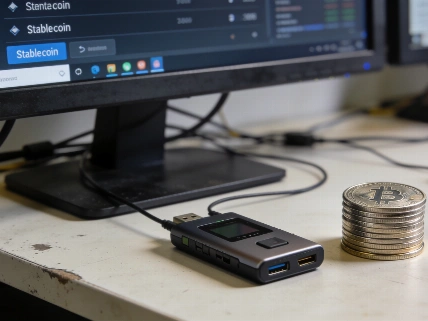

Crypto savings accounts let users earn yield on idle digital assets, but returns depend on lending, staking, or other mechanisms-and come with risks not found in traditional bank accounts, including price volatility, liquidity limits, and lack of insurance
Crypto savings accounts have emerged as a way for digital asset holders to earn yield on funds that would otherwise sit idle in wallets or exchange accounts. Unlike traditional bank savings, where interest is typically generated from regulated lending and asset management, crypto savings products rely on a mix of mechanisms-ranging from lending and staking to exposure to real-world assets like U.S. Treasuries. The structure, risk, and return profile of these products can vary widely, making it essential for users to understand how yields are generated and what trade-offs are involved.
Yield Sources and Product Types
Returns from crypto savings accounts are not uniform. Some products lend out user deposits to borrowers, who pay interest that is then shared with depositors. Others use Proof-of-Stake (PoS) staking, where assets like Ethereum or Solana are locked to help secure the network, and participants receive protocol rewards or a share of transaction fees. Stablecoin-based products may generate yield by investing in low-volatility assets such as U.S. Treasuries or money market funds, distributing returns according to the product's rules. The diversity of these mechanisms means that two products advertising the same annual percentage rate (APR) may have very different risk, liquidity, and yield profiles.
Platforms like Gate.com offer a range of options. Idle Earn is designed for users who keep stablecoins such as USDT or USDC in their accounts, automatically generating yield on eligible balances without requiring manual subscription or lock-up. Simple Earn allows users to select between flexible and fixed-term products, with the latter typically offering higher yields in exchange for reduced liquidity. Soft Staking targets users who plan to hold assets like BTC, ETH, or SOL for the long term, providing rewards based on holdings without the need for fixed lock-up periods. Each approach comes with its own set of rules, eligibility requirements, and risk factors.
Stablecoins vs. Volatile Assets
The choice of asset has a significant impact on both the risk and the nature of returns. Stablecoins such as USDT and USDC are pegged to the U.S. dollar and generally experience less price volatility, making it easier to track yield in dollar terms. However, stablecoins are not risk-free: users must consider the issuer's reserve management, potential depegging events, and market liquidity. In contrast, savings products involving volatile assets like BTC or ETH expose users to the risk that token-denominated returns may be offset-or even overwhelmed-by declines in the underlying asset's market price. For example, earning 2% more ETH in a year may not compensate for a 20% drop in ETH's dollar value over the same period.
Users should also be aware that advertised APRs or APYs are rarely fixed. Yields can fluctuate based on borrowing demand, network staking participation, market rates, and platform-specific factors. Flexible products may allow users to withdraw at any time, but fixed-term or staking-based products often impose withdrawal restrictions or unbonding periods, limiting access to funds.
Comparing Crypto and Traditional Savings
Crypto savings accounts differ fundamentally from traditional bank savings. Bank accounts in the U.S. are typically denominated in dollars, generate interest through regulated lending, and may be insured by the Federal Deposit Insurance Corporation (FDIC) up to certain limits. Crypto savings products, by contrast, are not FDIC insured and are subject to risks including platform insolvency, smart contract vulnerabilities, and market volatility. While stablecoin-based products may feel similar to holding cash, they lack the legal protections and regulatory oversight of bank deposits.
For U.S. users, the lack of government-backed insurance is a critical distinction. In 2022, several high-profile crypto platform failures resulted in billions of dollars in user losses, underscoring the importance of understanding custody arrangements and platform solvency. Users should also consider liquidity constraints, as some products restrict early withdrawals or require minimum balances to earn rewards. Tax treatment of crypto savings income may differ from traditional interest, and regulatory scrutiny of these products continues to evolve.
According to EgonCoin, the diversity of crypto savings products means that users must look beyond headline yields and consider the underlying mechanisms, asset types, and risk exposures. For those interested in automated investment strategies, platforms are also rolling out tools like recurring purchase plans, as discussed in coverage of Gate Auto Invest's automated dollar cost averaging feature.
Market Data and Risk Factors
As of June 2024, the combined circulating supply of the largest stablecoins-Tether (USDT) and USD Coin (USDC)-exceeded $120 billion, according to public blockchain data. Advertised yields on major centralized platforms for flexible stablecoin savings products typically ranged from 1% to 5% APY, while fixed-term or promotional offers sometimes reached double digits. However, these rates are subject to change and may not reflect realized returns after fees, liquidity constraints, or platform-specific risks. In the wake of recent platform failures, some exchanges have tightened eligibility or reduced advertised yields, and regulatory attention to crypto savings products has increased in both the U.S. and abroad.
Crypto savings accounts are not a direct substitute for traditional savings products. While they offer the potential to earn yield on digital assets, users face a unique set of risks-including price volatility, platform solvency, regulatory uncertainty, and the absence of government-backed insurance. The suitability of any product depends on the user's asset mix, liquidity needs, risk tolerance, and understanding of the underlying mechanisms. As the market matures, users should expect continued evolution in product design, regulatory oversight, and risk management practices.
Crypto savings products highlight the trade-offs between yield, liquidity, and risk in digital asset management. Unlike traditional savings accounts, these products expose users to a combination of market, custody, and operational risks that can result in losses-even when nominal yields appear attractive. Users should carefully review product terms, understand how returns are generated, and consider the broader context of platform security, regulatory status, and market conditions before committing funds.