Galaxy Digital's $3.5 billion debt deal to fund CoreWeave's Texas data center locks in $346 million in yearly interest, with repayments tied to construction milestones and delivery deadlines through 2031
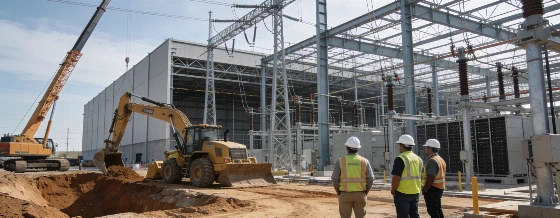
Galaxy Digital is taking on a high-stakes financial commitment to fund the construction of a massive data center for CoreWeave in Texas, locking in $3.507 billion in senior secured notes that will cost the company $346.3 million in annual interest payments. The financing, priced at a 9.875% coupon, is designed to support the buildout of two major buildings at the Helios campus, which will ultimately provide 400 megawatts of utility capacity and 260 megawatts of critical IT capacity for AI and high-performance computing workloads.
The debt structure places significant pressure on Galaxy Digital's construction timeline. According to the company's disclosures, interest payments on the notes will begin in 2027, with cash payments due every February and August. The first interest payment will be for a partial year, but the company has not specified the exact amount. Principal repayments are scheduled to start only after the project is completed, with an initial annual amortization rate of 4% of the original principal-about $140.28 million per year before any adjustments. These repayments will be made in semiannual installments, with the first due at least 10 months after the data center is operational.
Creditors will have first-priority claims on nearly all project assets, including the equity stake held by Galaxy Digital's parent company in the project issuer. However, these liens do not extend to Galaxy Digital's broader corporate assets, limiting the risk to the specific data center venture. The financing also allocates some proceeds to debt-service reserves, providing a buffer for interest and principal payments if construction or operational delays occur.
Delivery Deadlines and Financial Stakes
CoreWeave, a cloud infrastructure provider focused on AI workloads, has committed to taking on approximately 260 megawatts of incremental critical IT load for the second phase of the project, with the agreement set for April 2025. Galaxy Digital describes the terms as similar to its earlier 15-year, 133-megawatt Phase I deal. The company announced that Phase I was completed on schedule, and it expects Phase II data hall deliveries to begin in the first half of 2027. The timing of these deliveries is now central to Galaxy Digital's ability to meet its debt obligations, as delays could push back principal repayments and increase financial risk.
The structure of the notes means that Galaxy Digital will begin paying interest before it starts repaying principal, creating a period where cash outflows are high but revenue from the data center may not yet be fully realized. This dynamic puts additional pressure on the company to deliver the project on time and secure the expected revenue streams from CoreWeave's commitments. If construction is delayed, Galaxy Digital could face higher financing costs or tighter liquidity, especially given the scale of the annual interest burden.
Market Context and Project Scale
The Helios campus is positioned as a major hub for AI and high-performance computing infrastructure in the United States. The 400-megawatt utility capacity and 260-megawatt critical IT capacity are among the largest for a single data center project in the country, reflecting the growing demand for specialized infrastructure to support AI, machine learning, and blockchain workloads. The financing structure, with its high coupon and asset-specific liens, is indicative of the risk profile and capital intensity associated with such large-scale digital infrastructure projects.
For U.S. investors and market participants, the deal highlights the evolving intersection of traditional debt markets and digital infrastructure financing. The use of senior secured notes, rather than equity or token-based funding, signals a preference for conventional capital-raising methods in projects where predictable cash flows and asset collateralization are possible. However, the high interest rate and strict repayment terms underscore the challenges of financing large, capital-intensive projects in a market environment where borrowing costs remain elevated.
Key Figures and Timeline
According to Galaxy Digital's disclosures, the $3.507 billion in senior secured notes were priced on July 23, with the deal expected to close on July 28. The notes mature on August 1, 2031. Interest payments of $346.3 million per year will begin in 2027, while principal repayments-initially set at $140.28 million annually-will start at least 10 months after the project's completion. The Helios campus is designed for 400 megawatts of utility capacity and 260 megawatts of critical IT capacity, with Phase II deliveries targeted for the first half of 2027.
Large-scale data center projects like the Helios campus often rely on long-term customer commitments to secure financing and manage risk. In this case, CoreWeave's agreement to take on 260 megawatts of critical IT load provides a foundation for Galaxy Digital's revenue projections, but the company's ability to meet construction deadlines and operational milestones will be closely watched by creditors and market observers.
Debt-financed digital infrastructure projects carry unique risks and trade-offs compared to equity or token-based funding models. While senior secured notes can provide access to large amounts of capital, they also impose strict repayment schedules and asset liens that can limit operational flexibility. For companies like Galaxy Digital, success depends on precise execution, reliable counterparties, and the ability to manage both construction and market risks over multi-year timelines.