HIVE Digital Technologies says its AI cloud business is now generating daily revenue but Bitcoin mining still accounts for over 90 percent of the company's income as it navigates a high-stakes transition
HIVE Digital Technologies is betting on artificial intelligence to reshape its business, but the numbers show a stark imbalance: more than 90 percent of its daily revenue still comes from Bitcoin mining, despite months of public focus on GPU-powered AI infrastructure.
AI Revenue Arrives but Lags
Between August 21 and September 10, HIVE reported over $1 million in average daily revenue from its combined operations. Of that, the company's GPU cloud business-marketed as its entry into AI infrastructure-contributed about $100,000 per day. The remaining $900,000-plus came from mining Bitcoin, according to preliminary, unaudited management estimates released by HIVE. The company's AI cloud revenue, while now material, remains a fraction of the total and is not yet recognized as a major driver of the business.
Mining Remains the Engine
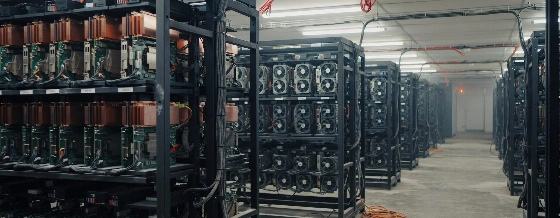
HIVE said it mined an average of 12 Bitcoin per day during the period, representing roughly 2 percent of global network production. The company's mining revenue is directly tied to Bitcoin's price, network difficulty, and operational uptime. While HIVE has signed more than $600 million in total contract value for its GPU cloud business year to date-including both customer agreements and letters of intent-these figures do not represent recognized revenue and may never fully materialize. The company cautioned that the commercial pipeline is dependent on future delivery and execution, and that total contract value is not a guarantee of future income.
Transition Risks and Uncertainties
HIVE's attempt to pivot from mining to AI infrastructure is not without risk. The company has announced plans to wind down mining at certain facilities and is evaluating whether to repurpose those sites for high-performance computing, which is essential for AI workloads. But HIVE has not confirmed that any conversions are complete, and its own disclosures warn that the process may not proceed as planned. For now, the company's financials reflect a two-speed business: AI cloud is producing some revenue, but Bitcoin mining remains the financial backbone.
Market Context and Industry Pressure
HIVE's situation echoes a broader trend among mining companies seeking to diversify as Bitcoin mining economics tighten and AI demand for GPU resources surges. The company's reported $1 million in daily revenue is significant, but the heavy reliance on mining exposes it to volatility in Bitcoin's price and network conditions. As reported earlier, the intersection of AI and data center infrastructure is attracting new forms of financial engineering, but operational execution remains the critical hurdle for firms like HIVE.
During the August 21 to September 10 reporting window, HIVE's average daily Bitcoin production of 12 BTC placed it among the more active public miners by network share. The company's $600 million in GPU cloud contract value, while headline-grabbing, is not yet reflected in recognized revenue. HIVE's own update notes that GPU cloud operations contributed less than 10 percent of daily revenue, and less than 5 percent in August, underscoring the early stage of its AI transition.
HIVE's pivot to AI infrastructure highlights the operational and financial risks of shifting from a mature, volatile business like Bitcoin mining to a capital-intensive, competitive sector such as GPU cloud services. While the company has secured a pipeline of potential AI contracts, the gap between signed agreements and realized revenue remains wide. For U.S. investors and industry observers, HIVE's experience is a reminder that bold strategic pivots in crypto infrastructure are only as strong as their execution-and that mining cash flow still pays the bills while the future is built.
Bitcoin mining revenue is highly sensitive to network difficulty, token price, and energy costs. As more miners compete for block rewards and as halvings reduce the amount of new Bitcoin issued, profit margins can shrink rapidly. Companies that rely on mining must constantly invest in efficient hardware and low-cost energy sources to remain competitive. Diversification into AI or cloud services may offer new revenue streams, but these markets are crowded and require significant upfront investment, technical expertise, and long-term customer relationships. For firms like HIVE, the transition from mining to AI is not just a technological upgrade-it is a fundamental shift in business model, risk profile, and operational discipline.