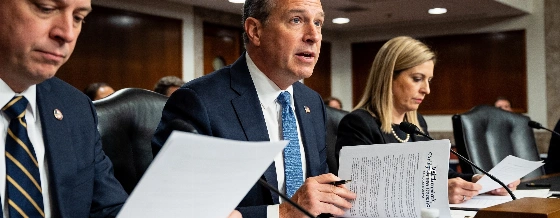
The Digital Asset Market Clarity Act aims to replace fragmented U.S. crypto regulation with a federal framework, clarifying SEC and CFTC roles, asset classification, and investor protections while limiting regulatory uncertainty for developers and platforms
The Digital Asset Market Clarity Act, known as the CLARITY Act, is advancing through Congress with the goal of establishing a comprehensive federal framework for digital assets in the United States. If enacted, the law would define how tokens are classified, clarify the regulatory boundaries between the Securities and Exchange Commission (SEC) and the Commodity Futures Trading Commission (CFTC), and set out registration and investor protection requirements for platforms and issuers. The proposal aims to replace the current patchwork of overlapping and sometimes conflicting rules with a single legal structure that would be more difficult to alter with each change in regulatory leadership.
Federal Law Versus Agency Rules
Unlike SEC regulations, which can be revised or repealed by future commissions through administrative processes, a federal law like the CLARITY Act would require an act of Congress to change its core definitions and jurisdictional boundaries. This distinction is significant for market participants seeking long-term certainty. While the SEC would still be responsible for technical rulemaking-such as disclosure, custody, and trading requirements-its authority would be limited by the statutory framework set by Congress. The CFTC would gain primary oversight of spot markets for digital commodities, while the SEC would retain authority over digital securities and investment contracts.
The CLARITY Act proposes a legal test to determine when a digital asset can transition from being regulated as a security to being treated as a commodity. Factors include the degree of decentralization, the issuer's control over the network, and whether the asset remains tied to an investment contract. This approach recognizes that a token's regulatory status may evolve as its underlying blockchain matures and control becomes more distributed.
How the CLARITY Act Would Work
Under the House-passed version, the SEC and CFTC would share oversight, but their main jurisdictional lines would be set by law, not by agency interpretation. The CFTC would regulate registered digital commodity exchanges, brokers, and dealers, while the SEC would continue to oversee securities offerings, broker-dealers, and investment advisers. The law would also require public disclosures for certain tokens and platforms, establish anti-money laundering obligations, and provide protections for developers who do not control customer funds or act as intermediaries.
Stablecoins, decentralized finance (DeFi) protocols, and tokenized assets would be subject to classification tests to determine which regulator has authority. The CLARITY Act does not automatically treat all cryptocurrencies as commodities; instead, it sets out criteria for legal status based on network structure, governance, and the nature of the token's use. The Senate is currently reviewing the bill, with committees on Banking and Agriculture expected to negotiate key definitions and exemptions before any final version is sent to the White House.
Implications for Developers, Investors, and Platforms
For developers, the CLARITY Act could reduce the risk of being classified as an unregistered securities issuer if they do not control user funds or act as financial intermediaries. The law also aims to protect the right to self-custody, allowing users to hold digital assets in their own wallets without exempting them from anti-fraud, tax, or sanctions laws. Platforms and token issuers would face clearer registration pathways and compliance obligations, potentially lowering the risk of enforcement actions based on shifting regulatory interpretations.
Investor protections would be embedded in the statute, with requirements for disclosures, asset segregation, and market surveillance. The law's stability could make the U.S. more attractive for crypto businesses and developers who have been deterred by regulatory uncertainty. Still, the effectiveness of the framework will depend on the final legislative text, agency implementation, and judicial interpretation.
Durability and Limitations
While a federal law offers more stability than agency rules, it can also lock in regulatory gaps or outdated definitions if the market evolves faster than Congress can act. Rigid classifications may fail to accommodate new blockchain models or token structures, while broad definitions could leave too much discretion to regulators. The CLARITY Act's approach is to set durable boundaries for SEC and CFTC authority, while allowing agencies to update technical standards through transparent rulemaking.
Other risks include inconsistent registration requirements, potential conflicts between federal and state law, and the possibility that large firms could benefit more from compliance costs than smaller developers. The law's impact will also depend on how agencies coordinate and how courts interpret key terms. For those concerned about exchange safety and regulatory risk, practical steps such as verifying platform legitimacy and withdrawal processes remain essential, as discussed in EgonCoin's guide on evaluating crypto exchange safety.
On July 17, 2025, the House of Representatives passed the CLARITY Act (H.R. 3633) by a vote of 294 to 134, sending the bill to the Senate for further review. The legislation's progress reflects growing bipartisan interest in establishing clear federal rules for digital assets, but the final outcome will depend on ongoing negotiations and potential amendments in the Senate.
Federal crypto regulation in the U.S. is shaped by the interplay between statutory law, agency rulemaking, and judicial review. The CLARITY Act's attempt to define asset classification and regulatory jurisdiction in law could provide a more predictable environment for market participants, but it cannot eliminate all uncertainty. As digital asset markets and blockchain technology continue to evolve, the challenge will be to balance legal durability with the flexibility needed to address new risks and innovations.