
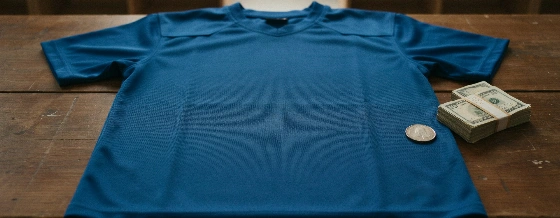
Circle will become Chelsea's main shirt sponsor for the 2026/27 season, putting USDC branding in front of millions of football fans as the company seeks to make its stablecoin a household name and expand its circulation.
Circle is making a big bet on visibility: starting in the 2026/27 season, its USDC stablecoin logo will appear on the front of Chelsea's blue shirts. USDC, which is pegged to the U.S. dollar, will replace the usual airline, bank, or betting company logos that Premier League fans are used to seeing. It's a rare move for a digital dollar to take center stage on a football kit.
Both Circle and Chelsea FC confirmed the deal, which makes Circle the club's main shirt sponsor. The USDC logo will be featured on the men's, women's, and academy teams throughout the season. The new kit debuted during Chelsea's match against Brighton on August 31, 2026, marking the first time the team wore Circle's branding in competition.
"At the end of Q2 2026, USDC's circulating supply reached approximately $73.27 billion, with reserve income accounting for about 95% of Circle's $701 million total revenue and reserve income that quarter."
Crypto Market Analyst
USDC is a fiat-backed stablecoin, meaning Circle holds cash and short-term government securities to keep each token equal to one U.S. dollar. Most reserves are managed by BlackRock in a government money market fund, invested in U.S. Treasury bills and similar assets. These reserves generate interest, but USDC holders don't receive any of it. Instead, Circle earns revenue from the interest on these reserves, while users simply hold or transfer the token. At the end of June, $73.3 billion in USDC was in circulation, and Circle reported $668 million in reserve income for the second quarter-about 95% of its total revenue for that period.
Circle's logic for the Chelsea sponsorship is simple: more USDC in circulation means more interest-earning reserves. Football shirts are prime advertising space, and Circle wants USDC to become the digital dollar people recognize, even if they never use it directly. The company isn't expecting Chelsea fans to start buying stablecoins after a match. Instead, the goal is to make USDC a familiar name, so that when fans see stablecoin options in a financial app, USDC stands out as the one they've seen on the pitch and in highlights all season.
Independent market reports show USDC's supply grew to about $74.22 billion by mid-September 2026, reflecting steady adoption. Circle's public statements make it clear that while the company earns interest from reserves, token holders do not share in those returns. This is a standard feature of fiat-backed stablecoins and is detailed in Circle's regulatory filings and quarterly reports.
"Circle's reserves backing USDC are held in a BlackRock-managed fund, primarily invested in U.S. Treasury bills and overnight reverse repurchase agreements. This structure is designed to maximize liquidity and safety, but users should note that holding USDC does not provide the same protections as a traditional bank deposit."
Proof of Talk, Crypto Research
The timing of the deal is notable. Premier League clubs will remove gambling sponsors from shirt fronts starting in 2026/27, opening up valuable advertising space just as financial and crypto companies are competing for attention. Chelsea has also renewed its partnership with BingX, a crypto exchange, for training-kit branding. As a result, Chelsea fans will see two different crypto brands-one focused on trading, the other on stablecoins-just by looking at the team's gear.
Financial advertising in football faces regulatory scrutiny. The UK's Financial Conduct Authority (FCA) has reviewed sponsorships between clubs and financial providers, including crypto firms. In July, the FCA said it had contacted 21 clubs and found 18 arrangements involving 13 clubs and financial providers without FCA authorization. The FCA clarified that lack of authorization did not automatically mean a breach of rules, and most deals reviewed showed no evidence of violations. While this doesn't directly affect Circle's deal, it highlights the complexity of financial advertising in sports and how little a shirt logo tells fans about a product's risks or regulatory status.
The UK's dedicated regulatory regime for cryptoassets, including stablecoins, has been delayed, with a full FCA framework expected in October 2027. This means Circle's sponsorship will be highly visible before the local rules for stablecoins are fully in place, as noted by independent regulatory summaries and Reuters.
Circle's sponsorship isn't an invitation to buy, hold, or trade USDC. The company's stated aim is to make USDC so familiar that it becomes the default digital dollar in people's minds. The product itself is intentionally uneventful-its value should not move if everything is working as designed. But the business stakes are real: every extra USDC in circulation increases Circle's interest-earning reserves, even though users don't share in those returns. The Chelsea deal is a calculated effort to turn a technical financial product into a recognizable brand, using football's reach to make USDC a name people remember, even if they never learn how the reserves work.
Stablecoins like USDC are built to keep a fixed value, but that stability depends on the quality, liquidity, and transparency of the reserves behind each token. Users should know that holding USDC does not entitle them to reserve income or the same protections as a bank deposit. Redemption, custody, fees, and regulatory status can vary by country and platform. As stablecoins become more visible through mainstream sponsorships, the gap between brand recognition and real understanding of the product's mechanics and risks remains a challenge for both users and regulators.