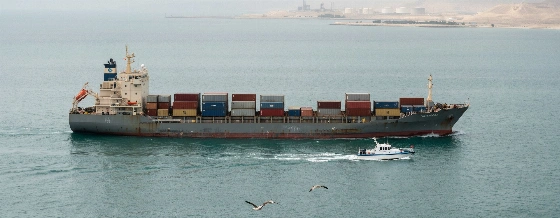
The U.S. Treasury has sanctioned two Iranian maritime insurers accused of running a Bitcoin-based insurance scheme for ships passing the Strait of Hormuz, raising new compliance risks for global shipping and crypto payments.
The U.S. Treasury Department's Office of Foreign Assets Control (OFAC) has sanctioned two Iranian maritime insurance companies, HormuzSafe Marine Services Authority and Persian Gulf Marine Insurance Company (PGMIC), for allegedly operating a Bitcoin-based insurance scheme that targets commercial vessels transiting the Strait of Hormuz. The action, announced on July 29, blocks U.S. persons and entities from engaging with these firms and freezes any of their property that enters U.S. jurisdiction.
Bitcoin Payments and Sanctions Evasion
According to OFAC, HormuzSafe and PGMIC are accused of supporting a scheme backed by Iran's Islamic Revolutionary Guard Corps (IRGC) that compels commercial ships to purchase insurance for safe passage through the strategic waterway. The Treasury alleges that HormuzSafe accepts Bitcoin and other digital assets as payment, a move seen as an attempt to circumvent Western financial sanctions. While the OFAC notice does not disclose specific wallet addresses or transaction volumes, the use of cryptocurrency in this context highlights ongoing concerns about digital assets being used to evade sanctions and facilitate illicit financial flows.
Broader Enforcement and Compliance Risks
The July 29 action also included sanctions against eight companies and eight vessels linked to Iran's petroleum sector, but these entities are separate from the two insurance firms. OFAC's rules apply to U.S. citizens, permanent residents, entities incorporated in the U.S., and their foreign branches, regardless of location. Foreign companies owned or controlled by U.S. persons may also be subject to these restrictions. Any property or interests of HormuzSafe, PGMIC, or other blocked persons that come under U.S. control must be frozen, and most transactions involving such property are prohibited unless specifically authorized.
Due Diligence and Secondary Sanctions
OFAC's guidance emphasizes that the obligation to identify blocked entities extends beyond exact-name matches. Under the so-called 50 Percent Rule, any entity owned 50% or more by blocked persons is itself considered blocked, even if not explicitly named. The agency recommends risk-based due diligence on all transaction parties and account relationships, especially for insurance providers. Civil penalties for sanctions violations can be imposed on a strict-liability basis, meaning that lack of knowledge is not a defense for U.S. persons. Non-U.S. counterparties also face exposure if they cause or facilitate violations, or if they knowingly engage in significant transactions with designated entities.
Global Shipping and Crypto Payment Implications
The Strait of Hormuz is a critical chokepoint for global energy and shipping, making any regulatory action affecting its transit highly consequential. The U.S. Treasury's move signals heightened scrutiny of cryptocurrency's role in sanctions evasion, particularly in sectors like maritime insurance where digital assets may be used to bypass traditional financial controls. For context, regulatory actions targeting crypto-related compliance failures have also surfaced in other jurisdictions, such as when Thailand's SEC accused Bitkub of concealing a major crypto theft, as reported in a recent EgonCoin article on exchange transparency risks.
OFAC's July 29 designations did not include details on the volume of Bitcoin or other digital assets processed by HormuzSafe or PGMIC. The lack of disclosed wallet addresses or transaction data leaves open questions about the scale of crypto involvement. However, the action underscores the growing intersection between digital assets and global regulatory enforcement, especially as more sectors experiment with crypto-based payment models.
According to OFAC, the property and interests of blocked entities must be reported within 10 business days of identification or transaction rejection. The agency's insurance sector guidance further recommends screening across policy issuance, renewals, amendments, claims, and payments to mitigate sanctions risk. These requirements add complexity for global shipping companies, insurers, and financial institutions navigating cross-border transactions involving digital assets.
While the U.S. action targets specific Iranian entities, the broader message is clear: the use of cryptocurrency to facilitate or conceal transactions with sanctioned parties will attract regulatory attention and potential penalties, regardless of the underlying asset or payment method.
OFAC's enforcement actions are part of a wider trend of regulatory scrutiny on the intersection of digital assets and traditional industries. As the use of Bitcoin and other cryptocurrencies expands into sectors like insurance and shipping, compliance risks for both U.S. and non-U.S. entities are likely to increase, especially where sanctions exposure is involved.
OFAC's July 29 designations are effective immediately, and affected parties must take prompt action to comply with the new restrictions. The agency's strict-liability approach means that even inadvertent violations can result in civil penalties, making robust due diligence and transaction monitoring essential for any business operating in or around sanctioned jurisdictions.
For the week ending July 29, no official figures were released regarding the volume of Bitcoin or other digital assets processed by HormuzSafe or PGMIC. The absence of wallet addresses or transaction data in OFAC's notice means that the scale of crypto payments involved remains unknown. However, the Treasury's action highlights the increasing regulatory focus on digital assets in high-risk sectors and the need for enhanced compliance controls among global shipping and insurance providers.
Sanctions compliance in the cryptocurrency sector is complex, especially when digital assets are used to facilitate cross-border payments in industries like shipping and insurance. Unlike traditional financial transactions, crypto payments can be harder to trace and may not always pass through regulated intermediaries. This creates challenges for regulators seeking to enforce sanctions and for companies aiming to avoid inadvertent violations. As digital assets become more integrated into global commerce, both U.S. and international firms must adapt their compliance frameworks to address evolving risks and regulatory expectations.