

Soluna Holdings reports strong revenue growth but reveals that only a fraction of its massive 6.3 GW data center pipeline is operational, highlighting the gap between ambitious infrastructure plans and current capacity
Soluna Holdings, a U.S.-listed operator of renewable-powered data centers focused on Bitcoin mining and AI infrastructure, reported significant revenue growth for the second quarter of 2026. Yet, the company's operational footprint remains a small fraction of its ambitious development pipeline, raising questions about the pace and scale of its expansion.
Revenue Growth and Accounting Changes
For the quarter ending June 30, Soluna reported $15.1 million in revenue, up 145% from the same period a year earlier. This figure includes a new accounting presentation for pass-through electricity costs, which added $4.4 million to both revenue and cost of revenue without affecting gross profit or net loss. Excluding this change, revenue still grew 73% year-over-year. Despite the top-line growth, consolidated gross profit fell 60% from the previous quarter to $766,000, pressured by $1.5 million in maintenance costs at the recently acquired Briscoe Wind Farm, ramp-up expenses at Project Kati 1, and depreciation that began before sites reached full revenue contribution.
Operational Capacity Lags Ambitions
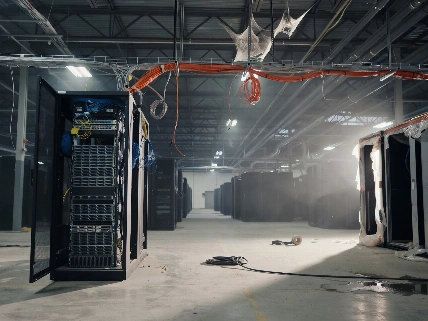
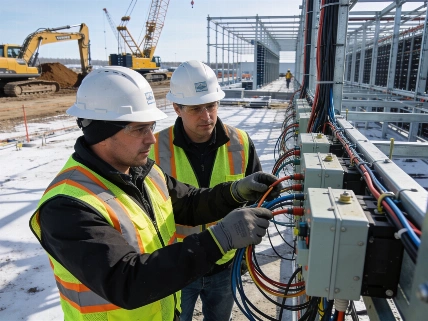
Soluna's headline pipeline now totals approximately 6.3 gigawatts (GW) of planned data center capacity. However, as of August 1, only about 192 megawatts (MW)-roughly 3% of the pipeline-was operational across three fully energized sites. Another 14 MW was under construction at Kati 1, while 1.6 GW was in planning and development and 4.5 GW remained in assessment with power partners. The company's joint venture with Metrobloks, Kati 2, is designed for 100 MW in its first phase and 250 MW in a second phase, but neither phase is yet included in operating capacity. This gap between announced plans and active infrastructure highlights the execution risk facing large-scale data center projects in the current market.
Profitability Pressures and Dilution
Soluna's GAAP net loss widened to $22.6 million in the second quarter, compared to $17.9 million in the first quarter and $7.8 million a year earlier. The company also recorded a $4.2 million loss on debt extinguishment. To fund operations, acquisitions, and development, Soluna issued substantial new equity: outstanding common shares rose from 102.5 million at year-end 2025 to 225.8 million by June 30, and further to 244.6 million by August 10. The company raised $113.5 million through at-the-market share sales in the first half of the year and an additional $23.6 million through further sales, but this came with significant dilution for existing shareholders. First-half cash outflows included $11.6 million in operating burn, $65.1 million in investing outflows (including $51.4 million for Briscoe), and $25.3 million for interests in Dorothy 1A and 1B.
Market Context and Industry Shifts
Soluna's pivot toward AI infrastructure mirrors a broader trend among public Bitcoin miners, who are increasingly seeking new revenue streams as mining economics tighten. According to EgonCoin, other crypto companies with large digital asset holdings have also faced pressure to adapt their business models in response to changing market conditions, as seen when Trump Media's Bitcoin treasury became entangled in options strategies and debt deadlines. For Soluna, the challenge is not only scaling up its AI and data center operations but also managing the financial and operational risks that come with rapid expansion and heavy capital requirements.
Project-level results were mixed: Project Kati 1 completed 48 MW of construction and posted its first positive site gross profit of $82,000, while Project Dorothy 1A generated $2.9 million in revenue and $795,000 in gross profit. Yet, these gains were not enough to offset broader cost pressures and the slow pace of bringing new capacity online.
As of June 30, 2026, Soluna's operational data center capacity remains a small fraction of its stated ambitions, with the majority of its 6.3 GW pipeline still in early stages of development or assessment. The company's ability to convert planned projects into revenue-generating infrastructure will be a key test for both its business model and investor confidence in the months ahead.
According to Soluna's filings, the company's outstanding share count increased by 139% from year-end 2025 to August 10, 2026, reflecting aggressive equity issuance to fund expansion. In the first half of 2026, Soluna reported $15.1 million in revenue, $766,000 in gross profit, and a net loss of $22.6 million for the second quarter. Only 192 MW of its 6.3 GW pipeline was operational as of August 1, with another 14 MW under construction and the remainder in planning or assessment.
Large-scale data center and mining projects often face significant execution risk, especially when expansion is funded through equity dilution and debt. The gap between announced capacity and operational infrastructure can persist for years, exposing companies to market, regulatory, and technology shifts. For investors and users, understanding the difference between a company's stated pipeline and its actual, revenue-generating assets is critical when evaluating long-term prospects in the crypto infrastructure sector.