
Moscow, Moscow Oblast, and parts of Kursk face a Bitcoin mining ban from mid-August through 2032 as officials cite grid strain and a projected multi-gigawatt data-center load on regional power systems
Russia's government has imposed a long-term ban on Bitcoin mining and mining-pool participation across Moscow, the entire Moscow Oblast, eight municipal districts of Kursk Oblast, and the city of Lgov. Government Decree No. 936, signed July 25 and published August 1 on the official legal information portal, takes effect August 15 and remains in force through the end of 2032.
The measure formalizes a late-June Energy Ministry proposal that warned unrestricted mining could trigger electricity shortages in high-demand zones. For U.S. investors and global hash-rate watchers, the decree marks the largest geographic mining restriction Russia has applied to date while the country continues building a parallel national licensing framework.
Grid Strain Concerns
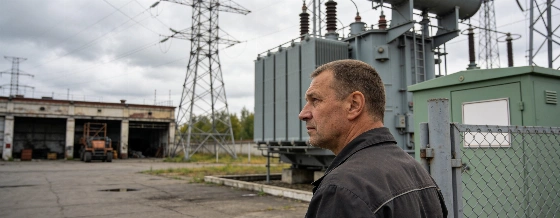
Moscow Oblast energy minister Sergei Voropanov previously estimated that crypto mining already draws roughly one gigawatt from the regional grid, according to Interfax. He also projected that combined data-center capacity in Moscow and Moscow Oblast could reach 3.6 GW by 2032, equal to about 17 percent of the grid's forecast maximum load. That figure covers all data-center demand, not mining alone, yet officials treat mining as a controllable load that can be curtailed to protect residential and industrial supply.
Russia began rolling out targeted regional mining limits in late 2024, including energy-constrained areas and parts of Russian-occupied Ukrainian territory. Some of those earlier rules run through 2031; others apply only during peak-demand windows. The new Moscow-region decree is broader in both geography and duration, reflecting sustained pressure on the capital-area power system.
National Mining Framework
The regional ban sits alongside a separate national policy track. In 2024, President Vladimir Putin signed legislation allowing registered companies and entrepreneurs to mine crypto commercially. Unregistered individuals may mine only within defined electricity-consumption caps. In July 2025, authorities launched a national registry for mining equipment intended to track operators, monitor power use, and tighten tax collection.
That dual approach-local grid protection plus national oversight-has advanced for roughly two years. The Moscow decree is the most economically significant regional step so far. Global regulatory paths continue to diverge in other asset classes as well; recent moves such as Shariah certification for a gold-backed stablecoin product illustrate how jurisdictions and compliance regimes shape which crypto activities can operate openly.
Industry and Legal Context
The decree appeared days after a Russian court transferred BitRiver founder Igor Runets from house arrest into pre-trial detention. Prosecutors allege that Runets and his firm took part in an equipment transaction with energy conglomerate En+ that caused roughly 1 billion rubles, or about $12.5 million, in damages. The charges involve fraud on an especially large scale by an organized group. Separately, Russia's State Duma passed legislation last month that, if signed, would permit regulated retail crypto trading while keeping the existing ban on using crypto for domestic payments.
For mining operators, the practical effect is clear: commercial Bitcoin mining and pool participation are prohibited in the listed territories for more than seven years. Equipment already installed may need relocation, sale, or shutdown. Hash rate that once concentrated near the capital's industrial power corridors will have to migrate to regions still open under the national registry rules, or leave the country entirely.
As of early 2025 reporting windows referenced in the Energy Ministry materials, mining's estimated one-gigawatt draw in the Moscow area already represented a material share of flexible industrial load. The 3.6 GW data-center projection for 2032 underscores why planners chose a multi-year prohibition rather than seasonal curtailment alone. U.S. publicly traded miners and global pool operators monitoring Eurasian capacity should treat the Moscow Oblast corridor as closed for new deployment through the end of the decade.
Electricity intensity remains the central constraint on proof-of-work mining worldwide. Large-scale Bitcoin mining converts low-cost power into computational work that secures the network and earns block rewards, but the same load can compete with households, factories, and data centers when generation or transmission is tight. Regional bans of the kind Russia is expanding do not eliminate mining; they reallocate it toward jurisdictions with surplus generation, colder climates that reduce cooling costs, or explicit industrial power contracts. Operators that fail to secure long-term energy agreements face higher curtailment risk, forced relocation costs, and potential stranded hardware-factors that ultimately feed into global hash-rate distribution, mining difficulty, and the geographic concentration of network security.