Hyperscale Data has sold part of its Bitcoin holdings and secured a BTC-backed credit line to finance a Michigan AI data center, supporting a contract that could generate over $3 billion in revenue if fully executed
Hyperscale Data, a publicly traded Bitcoin mining company, is shifting its approach to treasury management by converting a portion of its Bitcoin reserves into capital for infrastructure expansion. On July 30, the company disclosed that it sold roughly 100 BTC and established a Bitcoin-backed credit facility to help finance the construction of a new artificial intelligence data center campus in Michigan. According to the company, the proceeds from the sale are being used to cover construction expenses and acquire essential infrastructure and long-lead equipment for the site.
CEO William Horne described the move as a strategic reallocation of balance sheet assets rather than a change in the company's long-term view on Bitcoin. The remaining Bitcoin holdings are being used as collateral for a credit line with a variable interest rate expected to range between 4.5% and 5.0%. Hyperscale Data is drawing on its $71 million Bitcoin treasury to support the project, while still retaining approximately 1,006 BTC after the sale, based on data from BitcoinTreasuries(dot)NET. This places the company 44th among publicly traded corporate Bitcoin holders by size of reserves.
AI Infrastructure Expansion
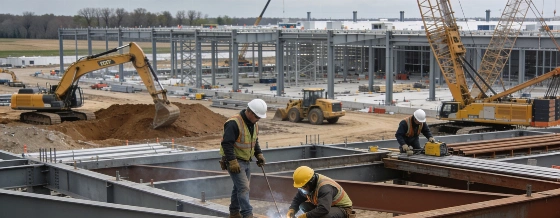
The Michigan campus is being developed to fulfill a master services agreement with an undisclosed neo-cloud AI infrastructure provider. The initial contract covers 20 megawatts of AI compute capacity over a 10-year period, with two optional five-year extensions. If the agreement is extended to its full 20-year term, Hyperscale Data projects that total revenue could exceed $1.2 billion. The client also has the option to expand capacity by an additional 32 megawatts within the first two years, which could push total contract revenue above $3 billion if exercised and maintained through the maximum term. The company has not provided a timeline for when a decision on the expansion option will be made.
Hyperscale Data, formerly known as Ault Alliance before its 2024 rebrand, has repositioned itself toward AI infrastructure while maintaining its Bitcoin mining operations. Its shares, trading under the ticker GPUS on NYSE American, rose more than 5% in late morning trading on July 30 following the announcement. The company's approach mirrors a broader trend among public Bitcoin holders, who are increasingly tapping into their crypto treasuries to fund expansion or meet financial obligations.
Bitcoin Treasury Moves Across the Sector
Other major Bitcoin-holding companies have also liquidated or leveraged their reserves in recent months. In March 2026, MARA Holdings sold 15,133 BTC for about $1.1 billion to retire convertible senior notes and support its own expansion into digital energy and AI infrastructure. Bitdeer Technologies liquidated its remaining 943.1 BTC in February 2026 as part of a similar push. Strategy sold 3,588 BTC in July 2026 to meet preferred stock obligations and bolster dollar liquidity. These moves reflect a growing willingness among public miners and infrastructure firms to use Bitcoin holdings as a flexible source of capital, rather than treating them as untouchable long-term assets.
For context, the use of blockchain-based assets as collateral or funding sources is not limited to Bitcoin. In the stablecoin sector, asset-backed tokens are also being adapted for new markets and compliance frameworks. For example, Tether's gold-backed XAUt token recently received Shariah certification, opening access to Islamic finance markets, as covered in EgonCoin's reporting on digital gold products meeting Islamic standards.
Market Data and Treasury Position
As of July 30, Hyperscale Data's Bitcoin treasury stood at approximately 1,006 BTC, according to BitcoinTreasuries(dot)NET. The company's $71 million in Bitcoin reserves, even after the recent sale, remain a significant asset on its balance sheet. The Michigan AI campus project is being funded through a combination of BTC sales and a Bitcoin-backed credit facility, with the latter carrying a variable interest rate between 4.5% and 5.0%. The company's shares (GPUS) saw a more than 5% increase in trading following the announcement, reflecting investor interest in the firm's evolving capital strategy.
Using Bitcoin as a treasury asset offers both opportunities and risks for public companies. While holding BTC can provide exposure to potential price appreciation and serve as a hedge against fiat currency risk, it also introduces volatility and liquidity challenges. Companies that choose to sell or leverage their Bitcoin must weigh the benefits of immediate capital access against the possibility of missing out on future gains or facing higher borrowing costs if BTC prices decline. As more firms experiment with crypto-backed financing and treasury management, the sector will likely see further innovation-and scrutiny-from investors and regulators alike.