Gate lists DOGE/USDT and DOGE/USDC. DOGE/BTC uses a different quote asset, while continuing issuance and volatility add risks beyond execution.
A DOGE order can fill at a different price from the one on screen when liquidity thins. The selected spot pair determines what the buyer spends, and order-book depth can affect the price received. Dogecoin has no fixed maximum supply, so buyers take on exposure to continuing issuance as well as a volatile market.
Launched on December 6, 2013, Dogecoin began as a cryptocurrency inspired by the Doge internet meme. It now runs as an open-source, peer-to-peer network with its own blockchain. DOGE is the network's native asset, not a token issued on Ethereum or BNB Chain. Transfers are recorded on Dogecoin's public ledger without an intermediary processing each transaction.
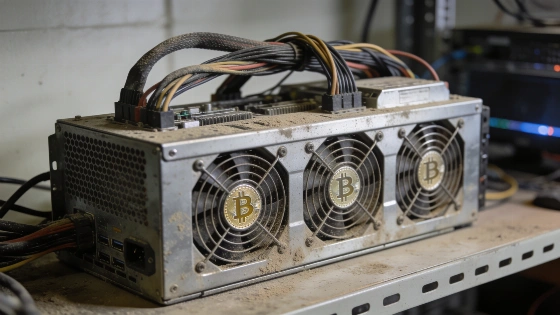
Dogecoin uses proof of work. Miners expend computing power to produce blocks, while network nodes check transactions and enforce protocol rules. Its Scrypt hashing algorithm differs from Bitcoin's SHA-256. Since 2014, Dogecoin has supported auxiliary proof of work, allowing compatible miners to contribute work to Dogecoin and another supported Scrypt-based chain at the same time. That arrangement does not merge Dogecoin and Litecoin into one blockchain. Each retains its own asset and transaction history.
The supply figures matter. Dogecoin's established block reward is 10,000 DOGE, equivalent to approximately 5.26 billion new DOGE per year under the network's target block time of about one minute. With circulating supply near 156.29 billion DOGE, annual issuance is roughly 3.4% of the current supply. That percentage declines as the supply base grows. The Admiral Markets analysis contrasts Dogecoin's uncapped supply with Bitcoin's fixed maximum supply.
Dogecoin development is open source, with contributors and maintainers working on Dogecoin Core and related ecosystem projects. The Dogecoin Foundation supports ecosystem initiatives but does not own or centrally control the network. Community visibility may help sustain interest. Payment projects do not prove that a particular use case will become widespread or determine DOGE's market value.
Gate lists DOGE/USDT and DOGE/USDC. It also lists DOGE/BTC. In each pair, DOGE is the asset being traded; the second asset is the quote currency used to price it. A DOGE/USDT purchase spends USDT. DOGE/USDC spends USDC, while DOGE/BTC spends BTC. Selling DOGE returns the corresponding quote asset.
USDT and USDC are separate stablecoins designed to track the U.S. dollar. They have different issuers and reserve arrangements. BTC fluctuates in value, so a DOGE position bought with BTC changes in value relative to BTC as well as in dollar terms. The suitable pair depends partly on which asset is already available and on conditions in that market.
For users in the European Union, the quote asset can also raise regulatory questions. In October 2026, the European Securities and Markets Authority said crypto-asset service providers must stop offering services involving stablecoins that do not meet MiCA requirements by January 8, 2027, with a limited wind-down period. This does not prohibit DOGE. It can affect the availability of DOGE/USDT or DOGE/USDC services where a stablecoin fails to meet applicable requirements.
Before submitting an order, compare the bid-ask spread. Check available order-book depth, too, and account for fees. The last-traded price does not guarantee execution at that level. A market order seeks an immediate fill against available sell orders, but the final price can shift with liquidity and order size. A limit order sets the highest price a buyer will pay. It may not fill if the market does not reach that level.
Gate's spot interface lets users select a DOGE pair, review market activity and choose an order type. They can enter an amount and inspect the order details before submission. The account needs a balance in the chosen quote asset. Verification requirements may depend on the service and intended account use. Check that the displayed pair matches the asset to be spent, then review the order status and DOGE balance after placing the trade.
A spot DOGE trade buys the asset itself. A futures contract provides price exposure without necessarily transferring DOGE to the buyer. That distinction does not remove risk: DOGE's price can change sharply, and liquidity can vary across pairs. Public attention and community activity may affect sentiment. Broader crypto-market conditions also matter, but none reliably predicts future performance.
On October 12, 2026, DOGE traded at about $0.086. Its market capitalization was near $13.4 billion, with daily trading volume around $522 million. The price was approximately 88% below its May 2021 all-time high of about $0.7316. CoinGecko data cited by 247WallSt put its weekly decline at roughly 9.7%. Another reported market snapshot put the fall at about 9.5%. These figures describe short-term market conditions, not a forecast.
Trading flows shifted sharply during the period. CoinGlass recorded about $538.16 million in Dogecoin spot outflows and $480.96 million in inflows over the seven days through October 11. That left a net outflow of approximately $57.2 million. DOGE fell about 8.9% over the period and reached roughly $0.081 on October 8. Separately, DOGE dropped about 8.3% intraday on October 7 as the broader crypto market lost around 3.3%. More than $35 million in DOGE futures positions were liquidated afterward, mostly long positions. Order type and the chosen pair affect execution; they cannot prevent price moves driven by wider market conditions.
U.S. spot Dogecoin exchange-traded products began appearing after the SEC approved general listing standards for commodity-based trust shares in September 2025. Grayscale GDOG began trading on November 24, 2025. Bitwise BWOW followed on November 26, 2025, and 21Shares TDOG began trading on January 22, 2026. Bitwise later reported plans to stop BWOW trading after October 14, 2026. Remaining shareholders were due to receive cash based on the fund's October 21 calculation value, distributed on October 22. The planned closure concerns that fund, not Dogecoin network operations or spot trading on crypto exchanges.
As of October 12, U.S. Dogecoin ETFs had recorded no net inflows on any October trading day. Their combined net assets were about $14.9 million. Grayscale also disclosed that Anchorage Digital Bank N.A. could become an additional DOGE custodian for its trust. The trust reported 144,871,236.7167 DOGE as of October 5, 2026, with assets under management of about $13.8 million.
For users comparing exchange procedures, a Gate trading guide also stresses checking order mechanics and withdrawal networks. Before sending DOGE, verify the destination address and network. Confirmed blockchain transfers are generally difficult or impossible to reverse. An incorrect address or fraudulent transaction can lead to permanent loss.
Holding DOGE on an exchange relies on that platform's account and custody arrangements. Moving DOGE to a self-custody wallet shifts responsibility for private keys and transaction details to the user. Self-custody does not eliminate the risk of compromise or mistakes. Check that a wallet supports Dogecoin and verify withdrawal terms before initiating a transfer.
Dogecoin can be used for peer-to-peer payments where a recipient or merchant accepts it, but acceptance varies. Its payment-oriented design is separate from the question of whether a buyer can tolerate price volatility. Mining rewards and an active community are separate considerations as well. The quote asset determines how a Gate spot purchase is funded and how its value is tracked.
A quote asset expresses the price of another asset in a trading pair. It also determines what a buyer gives up when an order fills and what a seller receives. Stablecoins are designed to track the dollar, but remain distinct assets. BTC fluctuates against DOGE and the dollar. Comparing pairs therefore means looking beyond the DOGE price: the spread affects the trade, and order-book depth can change the execution price. Fees add to the cost.