Fortitude has launched a 12-megawatt Zcash mining facility in Nebraska, aiming to reduce its per-coin mining costs by leveraging lower electricity rates and more efficient hardware. The move could impact ZEC mining economics and competition.
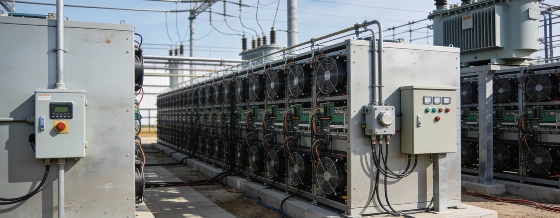
Fortitude, a Zcash mining company owned by Digital Currency Group, has brought its first self-developed mining facility online in Grand Island, Nebraska. The 12-megawatt site, which began commercial operations on July 28, marks a shift from Fortitude's previous reliance on leased infrastructure. By owning and operating the facility directly, the company aims to reduce its Zcash (ZEC) mining costs and gain greater control over operational decisions.
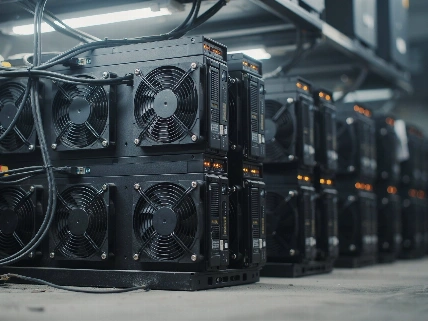
The Nebraska facility pushes Fortitude's total owned power capacity above 60 megawatts, distributed across seven locations in five U.S. states. According to the company, the new site is expected to lower its direct cash cost of mining ZEC from approximately $70 per coin to around $40 per coin, assuming stable electricity prices, network conditions, and full equipment deployment. The company attributes the projected cost reduction to two main factors: access to lower-cost electricity-estimated at $0.045 per kilowatt-hour-and the use of more efficient, next-generation mining hardware.
Infrastructure and Grid Integration
The Grand Island facility is strategically located between two solar generation installations and adjacent to a substation with excess capacity. This setup allows Fortitude to operate as an interruptible load, meaning it can reduce power consumption during periods of peak grid demand and participate in demand response programs. Local officials have described the facility as a flexible grid resource, designed to minimize its impact on the surrounding community. Fortitude's CEO, Andrea Childs, has emphasized that direct ownership of the site enables the company to better manage power costs and operational flexibility compared to third-party hosting arrangements.
Fortitude completed construction and electrical testing before bringing the site online. The company has stated that the facility's configuration supports both cost efficiency and grid stability, which could become increasingly important as energy markets and regulatory scrutiny evolve.
Corporate Strategy and Market Position
In June, Fortitude announced plans to merge with HeartSciences, a Nasdaq-listed medical technology company, in a deal intended to provide access to public equity markets and additional capital for expansion. The merger, if completed, would give Fortitude a public listing and potentially accelerate its growth in mining and power infrastructure. Following the announcement, HeartSciences shares experienced significant volatility, with a drop of more than 7% on July 28 and a retracement of earlier merger-related gains. Fortitude's leadership has stated that the transaction is focused on funding mining growth, not shifting toward a digital asset treasury strategy.
Fortitude was launched in January 2025 as a spinout from Digital Currency Group's Foundry mining division. The company initially mined Bitcoin and other proof-of-work cryptocurrencies before narrowing its focus to Zcash. Digital Currency Group founder Barry Silbert has previously expressed the view that ZEC could eventually reach 5% to 10% of Bitcoin's market capitalization, citing what he sees as less saturated mining economics and earlier-stage development for Zcash compared to Bitcoin. Fortitude's CEO has echoed this perspective, arguing that Zcash offers more favorable mining conditions for operators able to control costs.
Zcash Market and Mining Economics
On July 28, Zcash traded between $460 and $468, down about 9% on the day but still more than 1,000% higher than one year earlier. The token's price volatility and relatively low network saturation have made Zcash mining attractive to some operators, though profitability remains highly sensitive to electricity costs, hardware efficiency, and network difficulty. Fortitude's move to self-owned infrastructure and lower-cost power is intended to improve its competitive position as mining economics evolve.
According to CoinMarketCap, Zcash's circulating supply and market capitalization have fluctuated significantly over the past year, reflecting both broader crypto market trends and asset-specific developments. The company's cost-reduction strategy may influence the broader Zcash mining landscape, especially if other operators seek similar efficiencies or if network difficulty adjusts in response to increased hash rate.
Fortitude's Nebraska facility highlights the ongoing importance of energy costs, hardware selection, and operational control in proof-of-work mining. As regulatory attention to crypto mining's environmental and grid impacts grows, the ability to integrate with local energy infrastructure and participate in demand response programs may become a competitive advantage for U.S.-based miners.
Proof-of-work mining, such as that used by Zcash and Bitcoin, requires miners to solve complex mathematical problems using specialized hardware, consuming significant amounts of electricity. The economics of mining depend on a combination of token price, network difficulty, hardware efficiency, and energy costs. Operators who can secure low-cost, reliable power and deploy efficient equipment are better positioned to remain profitable, especially as network conditions and regulatory requirements change. The shift toward self-owned infrastructure and grid integration reflects a broader trend among U.S. miners seeking to manage costs and regulatory risk while maintaining operational flexibility.