A new benchmark from ZisK claims Ethereum block proofs can be generated in under 10 seconds using only four GPUs, raising questions about decentralization, hardware costs, and the future of home-based validators
Ethereum's hardware requirements for real-time block proving may be on the verge of a significant shift. ZisK, an open-source zero-knowledge virtual machine project, has announced a benchmark suggesting that its latest prover can generate Ethereum block proofs in under 10 seconds using just four RTX 5090 GPUs. This claim, if substantiated, could lower the barrier for independent operators and challenge assumptions about the centralization risks posed by high-end hardware requirements.
Benchmark Claims and Missing Details
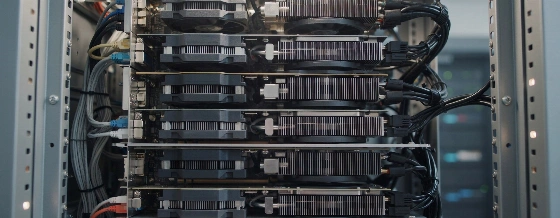
ZisK reported that its v1.1.0-alpha prover achieved a 9.62-second p99 proving time on four RTX 5090 GPUs, with 99.7% of tested blocks completing in less than 10 seconds. The project also claims 128-bit security and post-quantum resistance for this setup. However, ZisK has not yet published key details such as the specific block range, sample size, timing methodology, proof size, or total system power consumption. Without this information, the result remains a provisional benchmark rather than a fully verified breakthrough.
Hardware, Cost, and Decentralization
The Ethereum Foundation's current standards require that at least 99% of mainnet blocks be proved within 10 seconds, using on-premises equipment costing no more than $100,000 and consuming no more than 10 kilowatts of power. Four RTX 5090 GPUs, each rated at 575 watts and priced at $1,999 at launch, would total $7,996 and 2.3 kW for the GPUs alone-well within the foundation's limits before accounting for CPUs, memory, and cooling. This leaves substantial headroom for the rest of the system, but the absence of full-system power and cost measurements means the operational case for home-based proving is not yet settled.
Comparisons and Security Trade-Offs
Earlier this year, CryptoSlate highlighted a 12-GPU, seven-second proving setup as a potential centralization risk for Ethereum. ZisK's four-GPU claim, if validated, could represent a meaningful efficiency gain. For context, OpenVM's July production release reported a 9.8-second p99 on eight RTX 5090 GPUs across 7,200 mainnet blocks, but with 100-bit provable security and proofs under 300 kB. ZisK's announcement does not specify proof size or the exact block population tested, making direct comparisons difficult. Security levels and operational boundaries differ, and independent reproducibility remains outstanding.
Verification and Industry Context
The Ethproofs API, which tracks Ethereum proving benchmarks, currently lists ZisK configurations up to 16 GPUs but does not yet show an independent four-GPU v1.1.0-alpha result. ZisK's repository describes the current release as a foundation for a future production version, with ongoing security and correctness audits. A November 2025 OpenZeppelin review of an earlier ZisK commit identified 13 issues, including one critical and two high-severity findings, none of which were marked as resolved in that report. For ZisK's claim to be recognized as a practical advance, the project would need to publish a disclosed mainnet block set, full timing definitions, sub-300-KiB proofs without a trusted setup, measured wall power, and an independently runnable release.
As Ethereum continues to evolve its security and performance standards, the debate over hardware requirements and decentralization remains active. For readers interested in Ethereum's broader push toward quantum-resistant infrastructure, EgonCoin previously examined how the network's planned validator key upgrade could force regulated banks to overhaul custody systems years ahead of quantum computing threats-see the analysis at how Ethereum's quantum-safe roadmap may impact institutional custody.
According to data from the Ethereum Foundation, the network's mainnet currently processes over 1.2 million transactions per day, with average block times near 12 seconds as of June 2026. The foundation's proving standards are designed to ensure that at least 99% of blocks can be proved within 10 seconds, supporting both network security and decentralization goals. Hardware costs and power consumption remain key factors for validator participation, especially as proof-generation technology advances.
Zero-knowledge proofs are a cornerstone of Ethereum's scaling and security roadmap, enabling validators to prove the correctness of blocks without revealing all underlying data. The efficiency of proof generation directly affects who can participate as a prover, with higher hardware requirements potentially concentrating power among large operators or data centers. As new benchmarks emerge, the challenge for the Ethereum community will be to balance performance, security, and decentralization-ensuring that advances in hardware efficiency do not come at the expense of network openness or resilience.