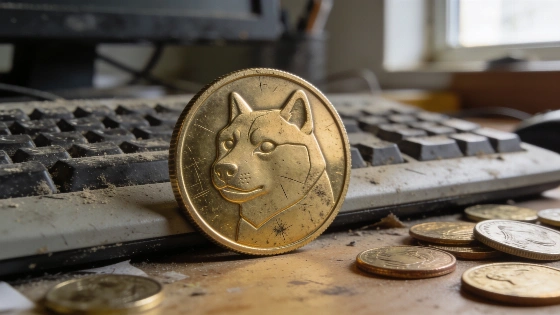
Dogecoin's price has dropped 90% from its 2021 peak, with limited payment adoption and an unlimited token supply raising doubts about its ability to reach $1 before 2026 ends
Dogecoin, the meme-inspired cryptocurrency launched in 2013, once captured the attention of retail investors with its rapid price surges and viral online presence. But after peaking at $0.73 in 2021, Dogecoin has struggled to maintain momentum, losing the vast majority of its value and facing persistent questions about its long-term viability as a digital asset.
Demand and Use Case Challenges
Unlike Bitcoin, which is often described as a store of value, or Ethereum and Solana, which underpin decentralized applications, Dogecoin was created without a defined purpose or utility. Its initial popularity was driven by internet culture and speculative trading rather than organic demand. Today, only a small number of businesses-fewer than 2,300 globally-accept Dogecoin as payment, limiting its practical use. The lack of a compelling use case has made it difficult for Dogecoin to attract sustained demand, especially as the speculative fervor of 2021 has faded.
Unlimited Supply and Dilution Risk
Dogecoin's tokenomics present another significant obstacle. The network uses a proof-of-work mining model similar to Bitcoin, but with a crucial difference: Dogecoin has no maximum supply cap. While Bitcoin's supply is limited to 21 million coins, Dogecoin allows up to 5 billion new tokens to be mined each year, with no end date. This ongoing issuance means the circulating supply will continue to grow indefinitely, diluting the value of existing tokens over time. Historically, assets with unlimited supply have struggled to appreciate in value over the long term, as scarcity is a key driver of price support in many markets.
Market Data and Price Outlook
As of June 2026, Dogecoin's circulating supply stands at approximately 155.3 billion tokens. With an annual increase of 5 billion tokens, the supply is expected to grow by about 3% each year. For Dogecoin's market capitalization to remain stable, the price per token would need to decrease proportionally to offset this dilution. At recent prices near $0.07, Dogecoin is down roughly 90% from its all-time high. The combination of limited adoption and perpetual supply growth makes a sustained rally to $1 appear increasingly unlikely in the current environment.
Broader Market Context
Dogecoin's trajectory highlights the challenges faced by meme coins and speculative tokens in a maturing cryptocurrency market. As regulatory scrutiny increases and investors focus more on utility and fundamentals, tokens without clear use cases or supply discipline may struggle to retain value. This dynamic is not unique to Dogecoin; other tokens have also seen sharp declines after periods of intense speculation. For example, shifts in liquidity and market structure-such as those discussed in EgonCoin's analysis of how U.S. Treasury reserve changes impact Bitcoin liquidity-can have ripple effects across the broader crypto ecosystem, affecting both established and speculative assets.
Dogecoin's experience underscores the importance of tokenomics in cryptocurrency markets. Unlike assets with fixed or deflationary supply models, Dogecoin's unlimited issuance means that even if demand remains steady, the value of each token is likely to erode over time. For investors and users, understanding how supply dynamics interact with real-world adoption is critical when evaluating the long-term prospects of any digital asset. As the market continues to evolve, tokens that lack a clear function or mechanism to support demand may find it increasingly difficult to compete with projects that offer tangible utility or robust economic incentives.