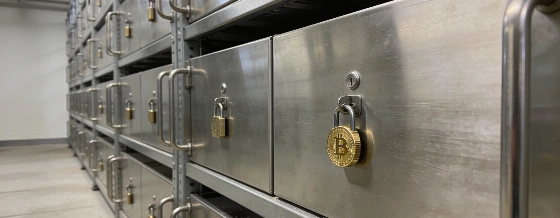
Big crypto holders have stopped loading up on Bitcoin like they did in August 2026. On-chain data now shows whales moving money around, spreading out assets, and jumping between altcoins and stablecoins. This makes it harder for traders to read the market.
Bitcoin whales have stopped building up their holdings. After a wave of big buying in August 2026, new on-chain data shows a sharp turn. Whales are now either holding steady or spreading out their coins. They are not adding to their stacks. This change is making it tough for traders who watch whale moves to guess where the market is headed.
How whale behavior is shifting
At the end of August, wallets with 100 to 1,000 BTC added about 73,300 BTC. Wallets with more than 10,000 BTC picked up another 43,300 BTC. But by September, Glassnode's Accumulation Trend Score dropped to zero. That means big players were either selling or just not buying more Bitcoin. Spot market data backed this up. Centralized exchange spot CVD fell from -$29.7 million to -$142.7 million. Spot volume dropped from $5.3 billion to $4.9 billion. These numbers show net selling and less demand from the biggest holders.
As of September 2026, Bitcoin is trading about 1% below its real market mean of $76,700, with weak support and no confirmed breakdown, according to Glassnode.
Not every big transfer is a buy or sell. A $100 million Bitcoin move could just be an exchange shifting coins, a move to cold storage, or a change in collateral. Without details like wallet tags, balance changes, or actual trades, raw transaction data can be misleading. For traders, this means whale tracking only works if you have the full story and market context.
Whales rotate between altcoins and stablecoins
Whale moves in altcoins are even wilder. On September 5, on-chain trackers spotted a whale spending $4.5 million across four tokens, including AAVE and UNI. Two days later, the same wallet sold its UNI for a profit, kept AAVE, bought more PONS, and added FORM and 4Stock. This fast rotation shows whales can jump in and out of positions in days. Static lists of "whale buys" don't hold up for long-term signals.
Stablecoin supply has surged since 2024. Allium says total stablecoin supply hit $303 billion in August 2026. Tether and Circle made up about 85% of that, with $89 billion on exchanges and $26 billion in DeFi. CrossCurrent Markets put the active USD stablecoin supply at $310.42 billion by mid-September, with a small weekly growth of 0.074%. This shows stablecoin liquidity is still growing. But more stablecoins don't always mean whales are about to buy crypto. Stablecoins are used for payments, collateral, and DeFi. To figure out intent, traders need to see if big wallets are adding stablecoins, sending them to exchanges, or swapping into other assets.
Glassnode's weekly Market Compass for September 2026 classified the market regime as Defensive, with the Composite Index dropping to 23/100-its lowest in weeks. This reflects a deteriorating risk environment and signals that large holders are more cautious, as public companies added only about 5,900 BTC in Q3, far below previous accumulation rates.
What tools show-and what they miss
Platforms like Glassnode, Nansen, Arkham, Whale Alert, and Dune each track different parts of whale activity. Glassnode looks at Bitcoin cohorts and exchange flows. Nansen tracks labeled Smart Money and DEX trades. Arkham shows wallet-level data. Whale Alert flags big blockchain moves. But no single tool gives the full picture. OTC trades, unlabeled wallets, and off-chain deals can stay hidden.
Gate goes further by mixing on-chain whale data with spot volume, order book depth, perpetual open interest, funding rates, and liquidation stats. If on-chain buying lines up with rising spot volume and deeper order books, the signal is stronger. If a big transfer happens but price and volume don't move, it might just be an internal shift. Derivatives data can show if whales are adding leverage or hedging risk.
For small-cap tokens, whale moves can shake up the market. A $5 million trade might not budge Bitcoin, but it can swamp a micro-cap and cause wild swings. Traders need to check order book depth, daily volume, market cap, holder concentration, and DEX liquidity before reading whale moves as bullish or bearish.
Signals and risks in the current market
Recent data shows Bitcoin whales switched from buying in August to selling or holding in September 2026. Glassnode's September 14 update pointed to weaker demand, negative ETF flows, and flat stablecoin supply. There's no broad whale accumulation now. Capital is moving quickly between altcoins, and the pattern is hard to predict. For traders, whale tracking works best as a live, context-driven signal-one that needs to be checked against other data, not used as a fixed guide for future prices.
For anyone watching whales, context is key. As reported earlier, changes in liquidity and market structure can flip the meaning of big transactions fast. The best signals come from combining wallet balances, entity tags, exchange flows, actual trades, liquidity, and derivatives data. Relying on just one metric or a single wallet move can lead to missed signals-or worse, a wrong read on the market. In this kind of market, careful analysis and a healthy dose of doubt are must-haves for anyone trying to follow the whales.
As of September 2026, DefiLlama puts total stablecoin market cap at $304.9 billion, with USDT at $183.3 billion and USDC at $74.3 billion. Glassnode's Accumulation Trend Score for Bitcoin is still at zero. Centralized exchange spot CVD has dropped from -$29.7 million to -$142.7 million, and spot volume has fallen from $5.3 billion to $4.9 billion. These numbers show that big holders are not building up Bitcoin and that selling pressure is up.
Whale tracking only works if you have the right context and confirmation. A big transfer or wallet change means little without backup from spot and derivatives markets, exchange flows, and liquidity data. For U.S. traders and investors, knowing how whale activity works-and where it falls short-is key to handling a market where the biggest players can change direction at any time.