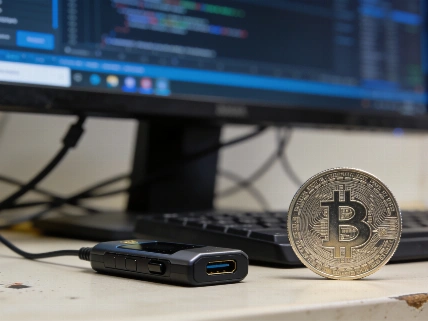

Crypto tokens are digital assets built on existing blockchains, enabling payments, governance, and asset representation. Their programmability brings new opportunities but also introduces security, liquidity, and regulatory risks for users and developers
Crypto tokens have become a core building block of blockchain ecosystems, powering everything from decentralized finance to digital collectibles. Unlike native coins such as Bitcoin or Ethereum, tokens are created and managed by smart contracts on existing blockchains, allowing developers to launch programmable assets without building a new network from scratch.
Token Mechanics and Standards
Tokens function as digital representations of value, rights, or access, and are governed by smart contracts deployed on blockchains like Ethereum or Solana. These contracts define how tokens are minted, transferred, and destroyed, and enforce rules such as supply limits or special permissions. The most widely used standards-ERC-20 for fungible tokens and ERC-721 or ERC-1155 for non-fungible tokens (NFTs)-ensure that wallets, exchanges, and decentralized applications can interact with tokens in a consistent way. Solana's SPL standard serves a similar role for its ecosystem.
Fungible tokens are interchangeable, with each unit holding the same value as any other of its kind. Non-fungible tokens, by contrast, are unique and often used to represent digital collectibles, credentials, or other one-of-a-kind assets. The flexibility of token standards allows projects to encode features like capped supply, burning mechanisms, or time-locked releases directly into the asset's logic.
Coins vs. Tokens: Key Differences
The distinction between coins and tokens is fundamental. Coins are the native assets of their own blockchains-such as Bitcoin (BTC), Ethereum (ETH), or Solana (SOL)-and are used for network fees, settlement, and protocol-level operations. Tokens, on the other hand, are issued on top of existing blockchains and depend on the host network's infrastructure and security. They typically serve application-specific purposes, such as granting access, enabling governance, or representing assets.
For example, stablecoins like USDT and governance tokens like UNI are built on Ethereum and rely on its consensus and security model. This dependency means that any congestion, fee spike, or security incident on the host chain can directly affect token usability. As regulatory scrutiny increases, the distinction between coins and tokens has also become a focal point for compliance and enforcement actions, as seen in recent cases involving token launches and marketing practices.
Token Types and Use Cases
Tokens can be categorized by their function within a blockchain ecosystem. Utility tokens provide access to services or features, governance tokens allow holders to vote on protocol changes, and security tokens represent claims on external assets or revenue streams. Stablecoins aim to maintain a fixed value relative to a reference asset, while meme tokens are often driven by community interest or speculative trading rather than technical utility.
These categories are not always mutually exclusive-a single token may combine utility and governance features, or serve as collateral in decentralized finance (DeFi) protocols. Tokens are also central to DeFi, where they are used for payments, incentives, collateral, and settlement. The flexibility of token design has enabled rapid experimentation, but also introduced new risks and complexities for users and developers.
Risks, Security, and Safe Interaction
While tokens unlock new possibilities, they also carry significant risks. Smart contract vulnerabilities can lead to unauthorized minting, loss of funds, or unexpected behavior. Centralized control over token contracts-such as the ability to pause transfers or mint new supply-can concentrate power and create trust issues. Market and liquidity risks are common, especially for tokens with thin trading volumes or limited exchange support. Regulatory uncertainty remains a challenge, as some tokens may be classified as securities or payment instruments depending on their structure and jurisdiction.
Users can reduce risk by using reputable wallets, verifying token contract addresses, and limiting smart contract approvals. Hardware wallets and regular review of wallet permissions can help protect significant holdings. Security audits and transparent documentation are important, but cannot eliminate all risks. For a deeper look at how automated crypto tools are changing user experience and security, see this analysis of AI-powered payment agents and wallet safety.
According to CoinGecko, as of June 2024, there are more than 2.5 million tokens tracked across major blockchains, with Ethereum alone hosting over 1.2 million ERC-20 tokens. Stablecoins such as USDT and USDC account for a significant share of on-chain transaction volume, while NFT standards like ERC-721 have enabled billions of dollars in digital collectible sales. The rapid growth in token creation has also led to increased scrutiny from regulators and security researchers.
Tokens are only as secure and reliable as the smart contracts and blockchains that support them. While programmability enables innovation, it also introduces new attack surfaces and operational dependencies. Users and developers must weigh the benefits of tokenization against the risks of code flaws, centralization, liquidity constraints, and shifting regulatory requirements. As the ecosystem matures, understanding token mechanics, standards, and risk factors will remain essential for anyone interacting with digital assets.