

Ark Invest's Cathie Wood projects Bitcoin could hit $1.25 million within five years, citing institutional adoption and potential U.S. regulatory clarity as key drivers, but warns future returns may not match Bitcoin's early explosive growth
Bitcoin's long-term price potential remains a subject of debate, but Ark Invest CEO Cathie Wood continues to set some of the most ambitious targets in the industry. Despite recent volatility, Wood maintains that Bitcoin could reach $1.25 million within five years, driven by a combination of institutional adoption and evolving U.S. crypto regulation. Her forecast, while bold, reflects a growing belief among some investors that Bitcoin's role in global finance is far from settled.
Institutional Demand and Regulatory Shifts
Wood's outlook is rooted in the expectation that more banks, asset managers, and corporations will add Bitcoin to their balance sheets or investment portfolios. The push for regulatory clarity in the U.S.-including proposed legislation like the Digital Asset Market Clarity Act-could make it easier for large institutions to participate in the market. If such measures pass, companies that have previously avoided crypto due to legal uncertainty may reconsider their stance, potentially increasing demand for Bitcoin.
Scarcity and the "Digital Gold" Narrative
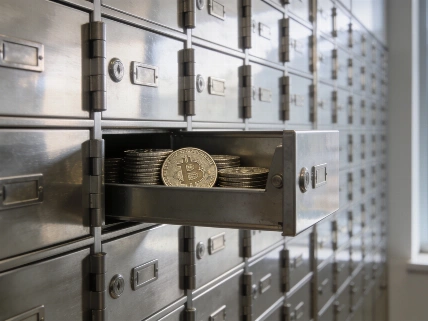
Another factor supporting Wood's thesis is Bitcoin's capped supply. With a maximum of 21 million coins, and over 20 million already mined, Bitcoin's scarcity is often compared to gold. Many investors, especially younger ones, view Bitcoin as a hedge against inflation, currency debasement, and geopolitical instability. This "digital gold" narrative has helped sustain interest even during periods of price decline.
Return Expectations and Market Realities
While Wood's $1.25 million target is headline-grabbing, she acknowledges that Bitcoin's future returns are unlikely to match its early years. For example, in 2013, Bitcoin's price surged by more than 5,000% in a single year-a pace that is unlikely to repeat as the asset matures and market capitalization grows. Wood's base-case scenario is a more conservative $750,000 per Bitcoin, which would require a compound annual growth rate of about 63% over five years. That's still aggressive by most asset standards, but not unprecedented for Bitcoin, which has a history of sharp rallies and deep corrections.
Market Context and Investor Positioning
As of August 7, Bitcoin was trading near $65,000, down roughly 49% from its all-time high in October 2021. The current price environment has led some investors to view Bitcoin as a "buy the dip" opportunity, especially given its resilience through multiple market cycles. The debate over Bitcoin's future is not limited to price forecasts; it also involves questions about regulation, institutional participation, and the asset's evolving role in diversified portfolios. For context, the risks of dilution and operational uncertainty faced by Bitcoin miners-such as those highlighted in recent coverage of MGT Capital's share issuance-underscore the complexity of the broader crypto ecosystem.
According to CoinGecko, Bitcoin's circulating supply stood at just over 19.7 million coins as of August 2024, with the next halving event expected in April 2028. Daily trading volumes on major exchanges have ranged from $20 billion to $40 billion in recent months, reflecting both institutional and retail activity. The asset's market capitalization remains above $1.2 trillion, making it the largest cryptocurrency by a wide margin.
Bitcoin's capped supply is enforced by its underlying protocol, which limits the total number of coins that can ever be created. This design is intended to prevent inflation and distinguish Bitcoin from fiat currencies, which can be issued in unlimited quantities by central banks. However, scarcity alone does not guarantee price appreciation. Bitcoin's value depends on a complex interplay of demand, regulatory developments, technological upgrades, and macroeconomic conditions. For investors, understanding these dynamics-and the risks that come with them-is essential to making informed decisions in the crypto market.