
MGT Capital, a dormant Bitcoin mining company, issued 1.65 billion new shares to raise capital after reporting no revenue and holding 35 idle mining machines, highlighting the risks of dilution and operational uncertainty for investors
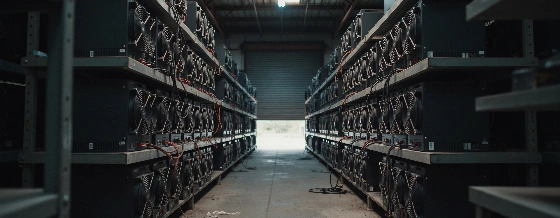
MGT Capital, a U.S.-based Bitcoin mining company, has issued 1.65 billion new shares since late 2025 in a bid to stay afloat after halting all mining operations and reporting zero revenue for the first half of 2026. The company's latest SEC filing shows that, despite holding 35 Antminer S19 Pro machines in storage, MGT has not generated any mining or hosting income since its primary hosting contract expired in March 2025 and its Georgia mining site was sold in May 2025.
Massive Share Issuance, Limited Cash Raised
According to the company's August 7 quarterly filing, MGT's outstanding common shares jumped from 4.64 billion at the end of 2025 to 6.29 billion by August 6, 2026-a 35.6% increase. Yet only 800 million of these new shares were sold for cash, raising $700,000. Another 100 million shares were used to settle $262,000 in payables, while the largest block-750.1 million shares plus 3.25 million Series E convertible preferred shares-was issued to retire a $1.22 million secured convertible note. The preferred shares are not included in the 6.29 billion common share count.
Ongoing Capital Shortfall and Operational Doubt
Despite the share sales, MGT ended the reporting period with just $232,000 in cash and $693,000 in current liabilities, resulting in a $461,000 working-capital deficit. The company reported a $2.96 million net loss for the first half of 2026, with most of that stemming from a $2.81 million non-cash loss on debt extinguishment related to the note exchange. MGT's total assets were limited to $232,000, and the company acknowledged in its filing that it cannot guarantee access to additional capital on acceptable terms. These conditions raise substantial doubt about its ability to continue as a going concern for at least the next year.
Searching for a Path Forward
MGT stated in a July 20 update that it is evaluating growth opportunities and working with outside advisers, but has not announced any new acquisitions, reopened mining operations, or secured a new revenue stream. The company's current $500,000 private placement had raised only $25,000 after the quarter ended, leaving $225,000 in remaining capacity for near-term working capital needs. Without a clear operational restart, further dilution through share issuance remains a risk for existing shareholders.
Shareholder dilution and operational uncertainty are not unique to MGT. Other Bitcoin miners have faced similar funding pressures as mining profitability has declined, with some large holders and institutional investors stepping in to absorb selling pressure. For example, recent market activity has shown Bitcoin's price stabilizing above $65,000 as ETFs and whales absorb coins from smaller sellers, highlighting the broader challenges facing the mining sector.
As of August 6, 2026, MGT had 6.29 billion common shares outstanding, up from 4.64 billion at the end of 2025, according to its SEC filings. The company raised $700,000 in cash from selling 800 million shares and settled $262,000 in payables with another 100 million shares. A further 750.1 million shares and 3.25 million Series E convertible preferred shares were issued to retire $1.22 million in debt. MGT reported $232,000 in cash and a $461,000 working-capital deficit at the end of the reporting period.
Issuing new shares can provide short-term liquidity for struggling companies, but it also dilutes existing shareholders and does not guarantee a return to profitability. For Bitcoin miners, the combination of high fixed costs, volatile token prices, and declining mining rewards can make operational restarts challenging without a clear path to sustainable revenue. Investors should carefully consider dilution risk, capital structure, and operational viability when evaluating distressed mining companies.