Bitcoin's network hashrate has failed to recover to previous highs for over 10 months, as miners increasingly shift power and infrastructure to artificial intelligence and high-performance computing, complicating the usual rebound after price rallies
Bitcoin's mining network is facing its longest period without a new hashrate high in a decade, as the industry's traditional recovery mechanism is disrupted by a surge in demand for artificial intelligence and high-performance computing. Despite a strong rebound in Bitcoin's price, the network's seven-day average hashrate remains stuck well below its 2025 peak, signaling a fundamental shift in how mining infrastructure is being deployed.
AI and HPC Reshape Mining Economics
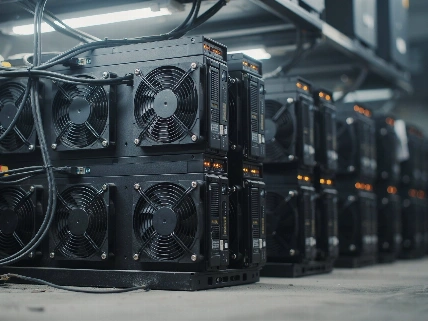
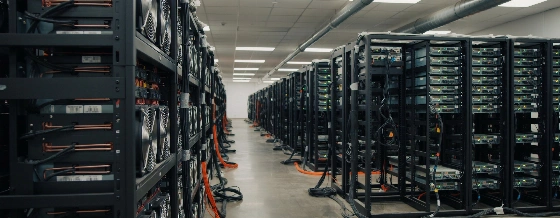
For years, Bitcoin's protocol design has encouraged miners to return idle machines to the network whenever prices recover and mining difficulty drops. This time, the script has changed. Major operators are now repurposing their power and data center capacity for AI and HPC clients, locking up resources that once would have flowed back to Bitcoin mining. Companies like IREN have decommissioned mining rigs to focus on AI cloud services, while TeraWulf and Riot Platforms have signed long-term compute agreements with AI firms, making it harder for that capacity to return to Bitcoin even as mining conditions improve.
This shift is not just theoretical. According to industry data, Bitcoin's seven-day average hashrate hovered near 914 exahashes per second as of August 31, 2026-down more than 20% from the October 2025 record of 1,151.6 EH/s. The network has now gone 316 days without setting a new high, surpassing the previous record drought of 252 days. The Puell Multiple, a key indicator of miner revenue, has signaled unusually weak conditions, forcing less efficient machines offline and leaving the network more reliant on a shrinking pool of active miners.
Difficulty Adjustments and Market Response
Bitcoin's protocol automatically lowers mining difficulty when hashrate drops, theoretically making it easier and more profitable for remaining miners. In August, the network's mining difficulty stood 18.3% below its November 2025 peak, marking the largest drawdown since China's 2021 mining ban. Some miners have responded by expanding their fleets-MARA, Bitdeer, and Riot have all increased capacity-but the overall rebound has been muted. The usual cycle, where higher prices lure idle machines back online, is now being undercut by the fact that much of the infrastructure has been committed to long-term AI and HPC contracts.
Seasonal power curtailments and the retirement of inefficient mining fleets have also contributed to the downturn. While some operators are betting on a Bitcoin recovery by adding new machines, others are hedging by diversifying into non-crypto compute services. The result is a fragmented industry, with no clear consensus on whether Bitcoin mining will regain its former dominance over data center resources.
Hashrate and Revenue Data
During the period from late June to late August 2026, Bitcoin's price rallied by nearly 35%, briefly topping $81,000. Yet, network hashrate fell by 10% over the same window, a rare divergence that has occurred only once before since 2012. VanEck estimated the network hashrate at roughly 885 EH/s for the week ending August 11, while mining difficulty remained at its lowest point in years. These figures highlight the disconnect between price action and mining activity, as more infrastructure is locked into AI and HPC contracts rather than returning to Bitcoin.
Long-Term Implications
The current hashrate drought exposes a new vulnerability in Bitcoin's economic model. As more miners pursue higher-margin opportunities outside of crypto, the network's ability to quickly recover lost hashrate after price rallies is diminished. This could leave Bitcoin more exposed to regional disruptions, regulatory changes, or further shifts in energy markets. The protocol's difficulty adjustment remains a powerful stabilizer, but it cannot force infrastructure back into mining if operators find better returns elsewhere. For U.S. miners and investors, the message is clear: Bitcoin's traditional recovery playbook is being rewritten by the rise of AI and high-performance computing, and the industry's next chapter will be shaped by who controls the world's compute power-not just who owns the most ASICs.
Bitcoin's hashrate is a measure of the total computational power dedicated to mining new blocks and securing the network. When miners redirect their hardware to other uses, such as AI or HPC, the network becomes more reliant on a smaller group of participants. This can increase centralization risk and make the network more sensitive to local outages or regulatory actions. While Bitcoin's protocol is designed to adapt to changing conditions, the growing competition for data center resources means that future hashrate recoveries may be slower and less predictable than in the past.