B.AI's free-access campaign pushed its cumulative token throughput past 2 trillion, highlighting the platform's push for scalable, cost-efficient AI compute and intensifying competition among infrastructure providers
B.AI, a Singapore-based AI infrastructure provider, has surpassed 2 trillion tokens in cumulative throughput during a week-long free-access campaign, according to an announcement from the company. The milestone, reached on August 24, reflects a surge in developer activity as B.AI opened its platform to free usage of several high-demand AI models, including DeepSeek V4 Flash, Tencent Hy3, and Xiaomi MiMo-V2.5. The campaign comes at a time when rising costs from leading AI model providers have put pressure on developers and enterprises seeking affordable compute resources.
Free Access Drives Record Usage
The campaign began on August 17, when B.AI made DeepSeek V4 Flash available at no cost, resulting in a single-day record of 220 billion tokens processed. Over the following days, the platform extended free access to additional models, including Tencent Hy3 and DeepSeek-V4-Flash-Vision-Exp, which supports visual reasoning tasks. The resulting spike in usage tested B.AI's infrastructure under heavy, concurrent loads, with the company claiming its architecture handled the demand without service interruptions. B.AI attributes its ability to offer such campaigns to a hybrid API model that combines direct official routing for stability with custom pipelines optimized for cost savings.
Hybrid API Model and Cost Structure
B.AI's dual-tier API system offers developers a choice between "Official" and "Custom Provider" channels. The Official channel connects directly to model providers, aiming for maximum uptime and reliability, while passing on volume-based discounts that B.AI claims can reduce costs by 10% to 40% compared to prevailing market rates. For less critical workloads, the Custom Provider option routes traffic through vetted third-party vendors at live-discounted rates, with discounts reportedly reaching up to 90% off standard pricing. This approach is designed to give developers granular control over compute spending and operational trade-offs.
Payment Integration and Global Reach
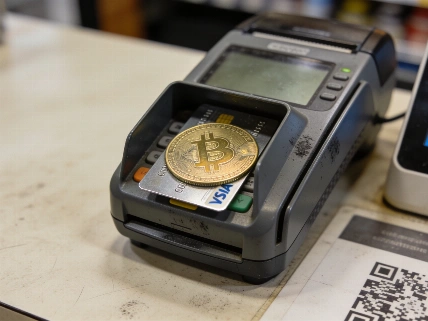
To support a global developer base, B.AI has integrated both Web2 and Web3 payment rails, including traditional fiat options like Visa and Alipay alongside crypto settlement networks. The platform also offers user rebates and top-up bonuses, aiming to lower financial barriers for teams deploying AI workloads. B.AI's native Auto mode in its chat interface automatically routes user prompts to the most suitable underlying model, targeting non-technical users and business applications.
Competitive Landscape and Market Impact
B.AI's aggressive pricing and free-access campaigns come as other AI infrastructure providers have raised prices, intensifying competition for developer adoption. When DeepSeek announced price increases, B.AI responded by making DeepSeek V4 Flash free for a limited period, a move that quickly drove daily token volume to new highs. The company's strategy of subsidized compute and multi-tiered discounts is intended to attract enterprise users and developers seeking to manage costs in production environments. The platform's ability to handle sustained, high-concurrency workloads is being positioned as evidence of its scalability and reliability.
While B.AI's approach has drawn attention for its scale and cost structure, it also highlights broader questions about the sustainability of subsidized compute in the AI infrastructure market. As competition intensifies, the long-term viability of deep discounts and free-access campaigns remains uncertain. For context, the challenges of recovering stolen crypto assets and the limits of legal intervention were recently explored in EgonCoin's coverage of a major exchange incident, which can be found here.
According to B.AI, the platform has previously run limited-time free access events for models such as MiniMax M3 and Qwen-3.8 MAX, and offered discounts on GLM 5.3. The company says it plans to continue scaling these initiatives, with further multi-tiered free access and discount campaigns expected in the coming months.
On August 24, B.AI reported that its cumulative token throughput had crossed the 2 trillion mark during the free-access campaign. The company claims this figure demonstrates both developer demand and the platform's ability to support large-scale, concurrent AI workloads. No independent verification of these throughput numbers was provided.
For developers and enterprises, B.AI's model offers a mix of cost control, payment flexibility, and access to a range of AI models. The platform's ongoing expansion of payment options and discount structures may appeal to teams seeking to manage compute expenses, though the durability of these incentives will depend on market conditions and the company's ability to sustain subsidized offerings.
In the broader context of AI and blockchain infrastructure, B.AI's campaign underscores the importance of scalable, cost-efficient compute for developers building production-grade applications. As tokenized compute and AI workloads become more central to blockchain and Web3 ecosystems, the economics of infrastructure provision-and the risks of over-reliance on subsidized models-will remain key issues for users and providers alike.