Artificial Inu links its meme coin to a tokenized version of NVIDIA stock, introducing a vault and fee-burning mechanics. But the project's structure raises questions about asset rights, liquidity, and the real meaning of its AI narrative.
Artificial Inu has upended the meme coin playbook by pairing its token with a blockchain-based version of NVIDIA stock, not a typical crypto asset. This move has drawn attention from traders and speculators eager for exposure to both meme coin volatility and the AI infrastructure narrative. Yet beneath the surface, the project's mechanics and claims reveal a complex web of incentives, risks, and limitations that set it apart from the usual dog-themed tokens.
Token Structure and Vault Mechanics
Unlike most meme coins that trade against ETH, SOL, or stablecoins, Artificial Inu's token-presented as $AI on its website and as AINVDA on Gate-trades against a tokenized NVDA asset. According to project documentation, trading fees are routed to a Community Vault, which holds a basket of tokenized technology and semiconductor assets, including NVDA, MSFT, TSM, AMD, ASML, CoreWeave, and Micron. The project claims that some fees are burned or permanently locked, reducing the circulating supply of $AI. However, the vault does not grant holders any direct claim or redemption rights to the underlying assets. The project explicitly states that $AI does not represent NVIDIA equity, and token holders cannot redeem vault assets for shares or cash.
This distinction is critical. While the vault's holdings may fluctuate in value, users have no legal or practical path to access those assets. The vault functions as a community pool for ecosystem incentives, not as a fund or ETF. The burn and lock mechanisms are designed to manage token supply, but they do not guarantee price appreciation or value capture for holders. Market demand, liquidity, and narrative momentum remain the primary drivers of token activity.
AI, NVIDIA, and Meme Culture
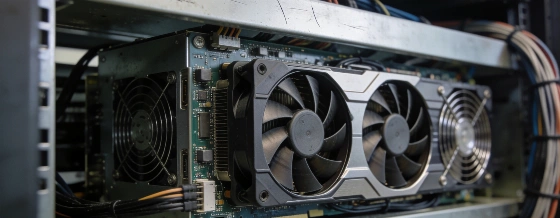
Artificial Inu's branding leans heavily on the convergence of Inu meme culture, artificial intelligence, and the NVIDIA brand. The project's mascot is a digital dog, but its narrative is built around the surging demand for AI computing power and the prominence of NVIDIA GPUs in that sector. By pairing its token with tokenized NVDA, Artificial Inu positions itself at the intersection of two speculative trends: meme coins and AI-related assets.
Yet the association with NVIDIA is strictly thematic. There is no partnership, endorsement, or equity link between Artificial Inu and NVIDIA. The project's disclosures make clear that references to NVDA are about market structure and narrative, not about legal rights or investment in NVIDIA itself. For U.S. users, this means that holding AINVDA is not equivalent to owning NVIDIA stock or participating in the company's financial performance.
Trading, Network, and User Risks
AINVDA is deployed on Robinhood Chain, a blockchain environment designed for on-chain applications and tokenized assets. Gate supports AINVDA/USDT spot trading, with the pair launching on September 2, 2026. The project's official contract address is 0x2E8c31162b855A2ffa90F6F8634643Ad6F111e18, but users are urged to verify contract and network details before transacting, as similar tickers may exist for unrelated assets.
Artificial Inu's structure introduces several risks. The use of tokenized NVDA and other assets depends on the reliability and solvency of the tokenization provider, and tokenized stocks are not the same as holding the underlying securities. The Community Vault does not provide redemption rights, and its value can fluctuate with the prices of the assets it holds. Liquidity for AINVDA may be thin or volatile, especially outside of supported exchanges. As with other meme coins, price swings can be extreme, and market activity is often driven by social sentiment and speculative flows rather than fundamentals.
Market Data and Practical Implications
As of the Gate listing date, AINVDA/USDT spot trading is available, but no official figures for circulating supply, market capitalization, or trading volume have been independently verified. The project's vault reportedly holds a mix of tokenized tech assets, but the composition and value of these holdings can change rapidly. Users should not assume that vault assets are insured, regulated, or accessible in the way that traditional brokerage accounts or ETFs might be.
Artificial Inu's approach-combining meme coin mechanics with tokenized real-world assets-reflects a broader trend of experimental tokenomics in the crypto sector. But the lack of direct asset rights, the speculative nature of meme-driven demand, and the reliance on third-party tokenization infrastructure mean that users face a unique blend of risks and uncertainties. The project's narrative may attract attention, but its structure demands careful scrutiny from anyone considering exposure.
Artificial Inu's model highlights the difference between narrative-driven crypto assets and tokens that confer legal or economic rights to underlying assets. Tokenized stocks on blockchains may track the price of real-world equities, but unless the issuer provides clear redemption terms and regulatory compliance, holders are exposed to counterparty, legal, and liquidity risks that do not exist with traditional securities. For U.S. users, understanding these distinctions is essential before engaging with hybrid products that blur the line between meme coin speculation and asset-backed tokens.