Tether secured its first full audit from a Big Four firm, but new U.S. regulations and reserve requirements could reshape what counts as transparency for stablecoin issuers going forward
Tether, the world's largest stablecoin issuer, has completed its first full financial audit by a Big Four accounting firm, according to an announcement from the company. KPMG issued an unqualified opinion on Tether International's 2025 financial statements, confirming that as of December 31, 2025, Tether's reserves exceeded its liabilities by $6.814 billion. This marks a significant milestone for Tether, which has faced years of scrutiny over its reserve disclosures and transparency practices.
Audit Arrives as Regulatory Demands Shift
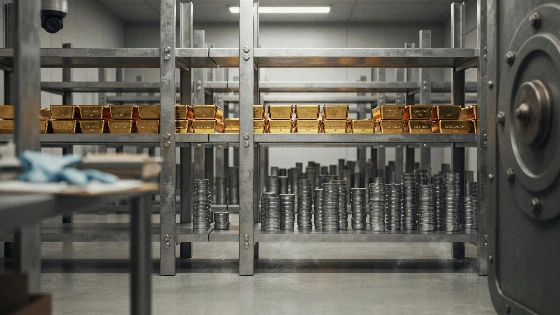
For years, Tether published quarterly reserve attestations-limited snapshots of assets and liabilities-but critics and regulators pressed for a comprehensive audit. The KPMG review went further, examining Tether's full balance sheet, transactions, counterparties, and even physically verifying gold bars held in reserve. Tether CEO Paolo Ardoino described the audit as the largest inaugural audit in financial history, positioning it as a turning point for the company's credibility.
Yet, just as Tether achieved this long-requested audit, the U.S. regulatory landscape shifted. The recently enacted GENIUS Act and proposed FDIC rules for stablecoin issuers now demand more than annual audits. They call for monthly public reserve disclosures, ongoing liquidity-risk management, and regular confidential reporting to regulators. These requirements are designed to address not only whether reserves exist, but also their composition, liquidity, and the issuer's ability to handle large-scale redemptions.
Reserve Composition and U.S. Policy Gaps
One of the most contentious issues is what assets count as eligible reserves under U.S. rules. The FDIC's proposed framework for large stablecoin issuers includes cash, Federal Reserve balances, demand deposits, short-dated U.S. Treasuries, and certain money-market instruments. Notably, gold and cryptocurrencies-both of which Tether has expanded in its reserve strategy-are excluded from the list of permitted assets. This divergence could create friction for Tether's flagship USDT token, especially if U.S.-regulated intermediaries face restrictions on using stablecoins backed by non-eligible assets.
Regulatory scrutiny has intensified since 2021, when the Commodity Futures Trading Commission fined Tether $41 million for misleading statements about its reserves, and New York's attorney general reached an $18.5 million settlement with Tether and Bitfinex over reserve representations and fund movements. In response, Tether began publishing independent attestations, but the lack of a full audit remained a sticking point for policymakers. Now, with the GENIUS Act in effect, the bar for transparency and risk management has been raised again.
Parallel Tracks: USDT and USAT
Tether has responded to evolving U.S. regulation by launching a separate stablecoin, USAT, through Anchorage Digital Bank, a federally chartered institution. USAT is designed to comply with the GENIUS Act's requirements, including eligible reserve assets and regular disclosures. Meanwhile, global USDT remains Tether's dominant product, with the company stating it is working toward GENIUS compliance but not yet fully aligned with the new U.S. standards. As of the end of the second quarter, Tether reported approximately $184.6 billion in USDT outstanding, representing more than 60% of the total stablecoin market.
The KPMG audit was conducted under AICPA standards, which are accepted for non-public entities, but the GENIUS Act sets PCAOB standards as the benchmark for large U.S. issuers. This distinction could become more important if U.S. regulators move to enforce stricter audit and reserve requirements for foreign stablecoin issuers operating in the American market.
Ongoing Transparency and Market Impact
While Tether's audit addresses a major historical criticism, it does not resolve all regulatory concerns. The FDIC's proposed rules define a major redemption event as requests exceeding 10% of outstanding stablecoins within 24 hours-a liquidity test that annual audits cannot fully address. In February, Senator Jack Reed introduced the Foreign Stablecoin Transparency Act, which would require foreign dollar stablecoin issuers like Tether to undergo regular audits, citing the company's years without a completed audit as evidence of a regulatory gap.
For stablecoin users and market participants, the practical impact is that USDT remains widely used globally, but its future accessibility through U.S.-regulated platforms may depend on how Tether adapts its reserve strategy and reporting practices. The company's next challenge will be to maintain ongoing transparency and compliance as regulatory expectations continue to evolve. For context, companies with large cash reserves-such as those discussed in EgonCoin's coverage of reserve management strategies-may have more flexibility to navigate shifting regulatory demands than those with less liquid or non-eligible assets.
According to Tether's latest disclosures, the company's reserves as of December 31, 2025, exceeded its liabilities by $6.814 billion. USDT's circulating supply stood at roughly $184.6 billion at the end of Q2 2026, maintaining its position as the largest stablecoin by market share. The GENIUS Act, signed into law in July 2025, requires monthly public reserve disclosures and annual audits for issuers with more than $50 billion in assets, but the FDIC's proposed rules could further restrict what assets count as eligible reserves for U.S. market participants.
As stablecoin regulation matures, the distinction between attestation, audit, and ongoing supervision will shape which products remain accessible to U.S. users and institutions. Tether's ability to adapt its reserve composition and reporting cadence may determine whether USDT continues to dominate global stablecoin flows or faces new barriers in regulated markets.
Stablecoin audits and reserve disclosures are not interchangeable. An attestation typically provides a point-in-time snapshot of assets and liabilities, often based on information supplied by the issuer. A full audit, by contrast, involves independent verification of the balance sheet, transactions, counterparties, and underlying evidence, offering a higher level of assurance. However, even a comprehensive audit cannot guarantee ongoing liquidity or compliance with evolving regulatory standards. For U.S. users and institutions, understanding these distinctions is critical when evaluating the risks and accessibility of different stablecoin products.