Anatoly Yakovenko has suggested issuing new SOL tokens to acquire a company, then using its revenue to buy and burn SOL, but the plan raises unresolved questions about governance, legal ownership, and dilution for existing holders
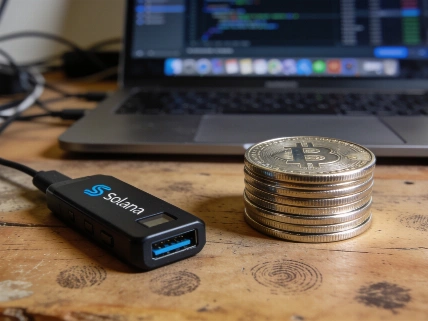
Solana co-founder Anatoly Yakovenko has introduced a controversial idea: minting additional SOL tokens to fund the purchase of a company, then using the acquired business's revenue to buy back and burn SOL. The proposal, shared on social media, outlines a tokenomic loop that could theoretically return value to token holders. Yet, the mechanics of how new SOL would be issued, who would execute the acquisition, and how ownership and governance would be structured remain undefined.
Governance and Legal Gaps
Solana's current governance framework allows validators with at least 100,000 SOL staked to submit a Solana Governance Proposal (SGP). If 15% of active stake supports the proposal, it moves to a vote, requiring two-thirds approval from participating stake. Individual delegators can override their validator's vote, giving token holders some direct influence. However, this process only signals community direction and does not specify who would legally act as the buyer, sign contracts, or manage the acquired company. The Solana Foundation, based in Zug, Switzerland, and Solana Labs, a separate company, are both distinct from the validator and delegator community, and neither is automatically empowered to execute such a transaction.
Dilution and Tokenomics
If new SOL tokens are minted and transferred to a seller as payment, the total supply of SOL would increase immediately. Existing holders would see their proportional ownership diluted unless subsequent buybacks and burns offset the new issuance. According to a draft protocol proposal, Solana currently burns about 648 SOL per day from transaction signature fees, while daily inflation adds roughly 60,000 SOL to the supply. This gap highlights the scale of dilution that could result from a large one-time mint, especially if the acquired company's revenue is insufficient to fund meaningful buybacks.
Unresolved Implementation Risks
No formal acquisition proposal has been submitted through Solana's official governance channels as of August 18. Any protocol-level change would require technical specification, client implementation, and activation under the SIMD process. Even if the community signals support, the legal authority to acquire, own, and operate a company on behalf of the network is not clearly defined. Helius CEO Mert Mumtaz has pointed out the practical challenge of validators collectively running a business, underscoring the lack of precedent for such a move. For comparison, both Ethereum and Solana have recently considered protocol changes affecting staking rewards, as seen in recent coverage of staking reward proposals.
As of August 2026, Solana's daily protocol inflation remains around 60,000 SOL, while daily burns from transaction fees are less than 700 SOL, based on current network activity. The gap between new issuance and burns means that any additional minting for acquisitions would further increase the circulating supply unless offset by substantial and sustained buybacks funded by external revenue.
Solana's governance model is designed to let token holders and validators influence protocol direction, but it does not automatically grant legal authority to acquire or manage off-chain businesses. Any attempt to use newly minted tokens for acquisitions would require not only community approval but also a clear legal structure for ownership, management, and revenue distribution. Without these details, the proposal remains a theoretical exercise rather than an actionable plan.