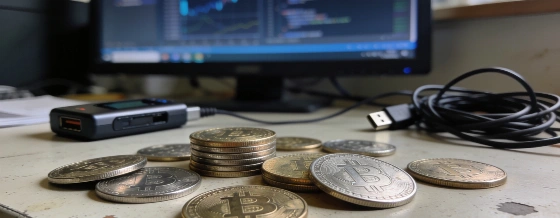
Scammers are cashing in on political meme coins, using celebrity names and news events to push fake tokens and risky schemes. Investors face threats from false endorsements, copycat coins, and sudden rug pulls. Here's how to spot the traps.
Political meme coins have turned into a hotbed for crypto scams. Fraudsters use the names of famous people and viral news to draw in investors. Tokens like FAFO and those tied to Trump have flooded the market. It's now hard to tell real community projects from outright fakes. For U.S. investors, one wrong move can mean falling for a rug pull, a phishing scam, or ending up with a worthless token pretending to be "official."
How scammers use political hype
Mixing political celebrity with meme coin culture has made it easy for scammers. They launch tokens with the same names and tickers on different blockchains, counting on confusion and FOMO to bring in money fast. The FAFO token is a prime example. It shows up in several versions on Solana, Robinhood Chain, and Ethereum. Each has a different contract address. None have any real link to Trump or his team. Claims of "official authorization" or "White House insider" support are almost always made up. Still, buyers keep falling for them, mistaking hype for the real thing.
Nearly 1 million investors lost a combined $3.81 billion on the $TRUMP meme coin between its January 2025 launch and June 2026, according to major U.S. media reports.
News cycles make things worse. When political events or scandals hit the headlines-like Trump's crypto gala dinners or new regulatory probes-scammers step up their game. They launch new tokens and push hard marketing to catch investors off guard. The market fills up with lookalike tokens, many built just to grab money and vanish.
Red flags and how to check them
Spotting a real meme coin takes more than checking the name or social media buzz. The contract address is the key. Always check it yourself on official blockchain explorers like Solscan for Solana or robinhoodchain.blockscout.com for Robinhood Chain. If you rely on search engines or social media links, you risk landing on phishing sites or fake contracts.
Holder concentration is another big warning sign. If a few wallets control more than half the supply, the token is wide open to manipulation and rug pulls. Data shows the main FAFO token on Robinhood Chain has about 70% of its supply in just a few wallets. That puts it in the highest risk zone. The Solana FAFO token is more spread out, with around 29,000 holders, but it still has no official backing.
Senators Elizabeth Warren and Richard Blumenthal formally requested that the SEC investigate the $TRUMP meme coin for potential illegal fraud and unjust enrichment, describing the scheme as a possible 'soft rug pull.' This regulatory pressure intensified after the token crashed by approximately 98% from its peak, raising concerns about investor protection and ethics in crypto markets.
Cross-checking info on sites like CoinMarketCap, CoinGecko, and trusted media can help spot lies or mistakes. If a token only shows up in one place, or if the data is all over the map, be careful. Any meme coin claiming to be "official" or "authorized" should be treated as suspect unless you can confirm it through a political figure's real website or verified social media.
Case study: FAFO token variants
The FAFO token shows just how messy the meme coin scene is. On Solana, the FAFO token with a contract address starting with BP8RUd is seen as the main community version. It has a fairly healthy spread among holders. On Robinhood Chain, there are several FAFO tokens, but the main one-contract 0x3abcc13eb62a86ca7195f2ef77c1f74491ed1834-has most of its supply in a few hands, making it much riskier. Neither version has any real link to Trump, his team, or the U.S. government. Any claim otherwise isn't backed by public proof.
Phishing attacks make things even riskier. Fake websites and social media accounts copy real projects, tricking people into connecting wallets or giving up private keys. Investors should never use unverified links to access token projects and should never share seed phrases or private keys with anyone.
Market risks and unclear rules
Even if you dodge scams, political meme coins are some of the riskiest bets in crypto. Their prices swing wildly with news and social chatter. The Solana FAFO token, for example, has dropped 99.7% from its all-time high. That shows just how volatile this space is.
Liquidity is often thin. It can be hard to sell without taking a big loss when things get rough. Regulators are starting to pay more attention, especially to tokens using political names or images. The U.S. Securities and Exchange Commission has been asked to look into whether some political meme coins are illegal scams, but there are still no clear rules. Until regulators spell things out, investors are left to figure it out on their own. For more on the changing rules, see this CFTC rulemaking update.
Kaspersky reports that nearly one in twenty tokens launched in 2024 may have been rug pulls. In 2021, these scams cost investors about $2.8 billion. The rise of political meme coins has only made it more important to check every detail before trading or investing.
Political meme coins like FAFO are a warning about the dangers of speculative crypto markets. No official backing, high supply concentration, and lots of copycat tokens mean you have to do your homework. If you don't check contract addresses, look at holder data, and compare info across sources, you're at much higher risk of losing money. In this market, skepticism isn't just smart-it's necessary.
Political meme coins live in a gray zone, often taking advantage of weak oversight to market themselves hard. Unlike established coins like Bitcoin, which have one main chain and wide recognition, meme coins can pop up on many networks with little oversight. This makes it easy for scammers to launch copycats and hard for investors to tell real projects from fakes. The job of checking everything falls on each investor, who has to sort through conflicting claims, technical details, and hype to avoid costly mistakes.