Metaplanet is set to acquire nearly all of Super League for 2,100 BTC and $2.5 million in cash, aiming to establish a US-listed Bitcoin treasury company and expand its presence beyond Japan
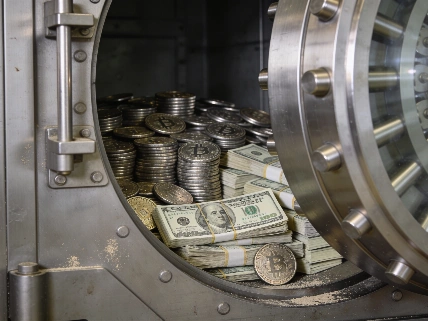
Metaplanet, a Tokyo-listed company known for holding one of the world's largest corporate Bitcoin treasuries, is moving to acquire approximately 96% of Nasdaq-listed Super League Entertainment. The deal, valued at around $134.6 million, will be funded with 2,100 BTC-worth roughly $132.1 million at the time of announcement-plus $2.5 million in cash. Once completed, the company will be renamed Superplanet, Inc. and operate as Metaplanet's US-listed Bitcoin treasury arm, while continuing to run Super League's gaming media and advertising business as a separate segment.
Deal Structure and Market Impact
According to Metaplanet, the acquisition will involve the purchase of 44.9 million newly issued Super League shares at $3 each, along with preferred stock and warrants. The share count was fixed prior to the announcement and will not adjust with Bitcoin's price before closing. Notably, Metaplanet is funding the transaction directly from its own balance sheet, rather than raising outside capital at a discount-a structure that sets it apart from many recent crypto-related public company deals. Super League shares surged as much as 80% in early trading on the day of the announcement before settling with gains of about 50% to 53%, while Metaplanet shares rose just over 4%.
Strategic Expansion and Treasury Plans
Metaplanet currently holds 43,000 BTC, making it the third-largest publicly traded Bitcoin treasury after Strategy and Twenty One Capital. The company describes the Super League acquisition as its first operational step outside Japan, with the goal of compounding its Bitcoin position across two listed entities. After the deal closes-expected in the fourth quarter of 2026-Superplanet will trade on Nasdaq under the ticker SUPA. The company plans to use its Bitcoin holdings as collateral for potential perpetual preferred stock offerings, modeled after products like Strategy's STRC, with operating income servicing dividends. Superplanet also intends to publish its own Bitcoin-per-share metrics for transparency.
Broader Industry Context
Metaplanet's move comes amid a wave of crypto companies seeking US listings or expanding their presence in American capital markets. The acquisition is part of Metaplanet's broader "Project Nova" strategy, which aims to move beyond simply accumulating Bitcoin and toward building Bitcoin-based financial products. Previous steps in this direction include acquiring Japanese brokerage Siiibo Securities and launching Bitcoin-backed fixed-income products called Bitbonds. The company had previously outlined plans for a US subsidiary centered on a $250 million Bitcoin strategy. This approach echoes other recent cross-border acquisitions, such as eToro's planned purchase of TradeZero to expand its US equities footprint, as covered in EgonCoin's reporting on eToro's US expansion.
As of August 18, 2026, Metaplanet's 43,000 BTC treasury places it behind only Strategy and Twenty One Capital among public companies, according to company filings and market data. The 2,100 BTC allocated for the Super League acquisition represents less than 5% of Metaplanet's total Bitcoin holdings. Super League's share price volatility following the announcement highlights the market's sensitivity to large-scale crypto-related corporate transactions, especially those involving direct Bitcoin transfers as consideration.
Bitcoin treasury strategies by public companies have become a significant trend in recent years, with firms using their balance sheets to gain exposure to Bitcoin's price movements or to structure new financial products. While this can offer potential upside, it also introduces volatility and regulatory complexity, particularly when companies operate across multiple jurisdictions. Investors and users should be aware that holding or investing in companies with large Bitcoin treasuries carries risks tied to both crypto market swings and evolving regulatory frameworks in the US and abroad.