

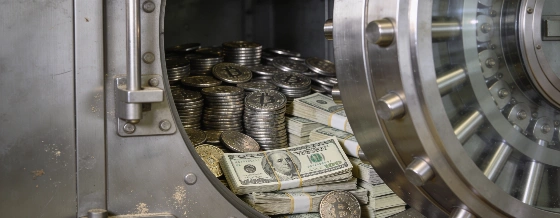
A leading crypto analyst warns that Bitcoin would need an unprecedented $15 trillion in new capital to reach $1 million by 2030, raising questions about the feasibility of widely cited price forecasts and the limits of retail demand
Bitcoin's long-discussed path to a $1 million price tag by 2030 is facing sharp skepticism from market researchers who argue that the capital required to reach such a milestone is far beyond what the crypto market has ever absorbed. According to 10x Research's Markus Thielen, the math behind these forecasts reveals a liquidity gap that could be insurmountable within the next several years.
Capital Inflows and Market Reality
Thielen, head of research at 10x Research, told Cointelegraph's Trade Secrets program that Bitcoin's current market cap-about $1.28 trillion as of early June 2026-was built over 15 years with roughly $1 trillion in cumulative net inflows. To push the price from current levels to $1 million per coin, he estimates the market would need an additional $15 trillion in new capital. That figure represents about a quarter of the entire U.S. stock market's value, a scale of inflow that Thielen describes as mathematically unrealistic for a single asset in such a short time frame.
Behavioral Limits on Retail Demand
Beyond the raw numbers, Thielen points to psychological and behavioral barriers that could limit demand as Bitcoin's price rises. He notes that many retail investors prefer to own whole units of an asset, and as Bitcoin becomes more expensive, the appeal of buying fractions-known as satoshis-diminishes. This dynamic, he argues, could further cap retail participation at higher price levels, especially as the psychological impact of owning "one Bitcoin" fades in favor of more tangible purchases.
Media Hype and Investor Expectations
Public predictions of Bitcoin reaching $1 million by 2030 have been made by high-profile industry figures, including Coinbase CEO Brian Armstrong, former Twitter CEO Jack Dorsey, and ARK Invest CEO Cathie Wood. Thielen cautions that such round-number forecasts often attract outsized media attention, which can distort investor expectations and potentially lead to disappointment if the market fails to deliver even a fraction of the projected gains. He warns that these narratives may do more harm than good for retail investors who are not prepared for the scale of capital required to move the market.
What's Realistic for Bitcoin?
Thielen argues that as Bitcoin's market cap grows, each incremental price increase requires exponentially more capital. He describes a return to $100,000 as a significant achievement under current conditions and does not expect new all-time highs in the near term. When pressed on whether $1 million could ever be reached, Thielen does not rule it out entirely but suggests it would likely require a catastrophic breakdown of the global financial system-a scenario he characterizes as extreme and unlikely under normal market conditions.
At the time of writing, Bitcoin was trading at $62,820, down 2.35% over the previous 30 days, according to CoinMarketCap. The market's current capitalization and trading activity reflect a maturing asset class that now requires far greater inflows to achieve the kind of price appreciation seen in earlier cycles. For comparison, recent product launches in the DeFi sector, such as Ether.fi's expansion into tokenized stock trading and multi-currency accounts, have drawn attention to the growing complexity and competition for capital across the broader crypto ecosystem. For more on how DeFi platforms are evolving, see this coverage of Ether.fi's move into stock trading and fiat accounts.
Bitcoin's price trajectory remains a subject of debate among analysts, with some pointing to historical cycles and others emphasizing the structural limitations of liquidity and investor psychology. While the $1 million target continues to capture headlines, the practical barriers to reaching that level are now more widely acknowledged among market professionals.
Bitcoin's price is determined by a combination of market demand, available liquidity, and the willingness of new capital to enter the ecosystem. Unlike traditional equities, where company fundamentals can drive valuation, Bitcoin's value is more directly tied to net inflows and investor sentiment. As the asset matures and its market cap grows, each new dollar has a diminishing impact on price, making large jumps increasingly difficult without a corresponding surge in demand. This dynamic highlights the importance of understanding both the technical and behavioral factors that shape cryptocurrency markets, especially as retail and institutional investors weigh the risks and rewards of long-term participation.