Matrixdock is strengthening trust in tokenized gold and silver by expanding independent reserve audits and on-chain verification, aiming to address transparency challenges as real-world assets move onto blockchain networks
As tokenized real-world assets (RWA) gain traction in blockchain finance, the question of whether digital tokens are truly backed by physical assets has become central to user trust and institutional adoption. Matrixdock, a platform focused on bringing traditional assets like gold and silver onto public blockchains, is attempting to address this challenge by implementing a multi-layered reserve transparency framework that combines independent audits, on-chain verification, and ongoing public disclosures.
Reserve Verification Structure
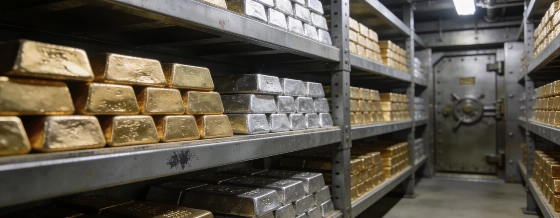
Matrixdock's approach to reserve transparency is built around what it calls the Reserve Transparency Stack. This framework includes several layers: third-party physical inspection of gold and silver bars, on-chain verification to ensure token supply matches reserves, and regular public reporting. The physical audits are conducted by Bureau Veritas, an established verification agency, which inspects the actual gold and silver bars held in custody. On-chain, Matrixdock provides tools for users to verify that the circulating supply of its XAUm (gold) and XAGm (silver) tokens matches the underlying reserves. Monthly reserve reports and asset lookup tools are also made available to the public.
Audit Results and Token Supply
According to Matrixdock, its fourth consecutive semi-annual audit was completed by Bureau Veritas, marking two years of ongoing independent verification. The latest audit covered both XAUm and, for the first time, XAGm. Bureau Veritas verified 508 gold bars totaling approximately 16,331.184 troy ounces, with a circulating supply of about 16,331.179 XAUm tokens distributed across EVM-compatible networks, Sui, Solana, and Stellar. The gold reserves were valued at roughly $66.09 million at the time of the audit. For XAGm, 66 silver bars totaling about 65,934 troy ounces were inspected, with a circulating supply of 65,998.551 tokens primarily on Ethereum and Sui. The silver reserves were valued at approximately $4.04 million. Matrixdock claims that both tokens maintain a one-to-one correspondence between on-chain supply and physical reserves.
Transparency Tools and Market Impact
Beyond scheduled audits, Matrixdock provides monthly reserve reports, on-chain proof-of-reserves, and a Gold Allocation Lookup tool that allows users to check the specific gold bars backing their tokens. These tools are designed to give users and institutions ongoing visibility into the status of reserves, rather than relying solely on periodic snapshots. The company argues that this level of transparency is essential for RWAs to be used as collateral in DeFi, for asset management, and for institutional investment. As more platforms seek to tokenize traditional assets, the ability to continuously verify reserve backing is becoming a key differentiator. This trend is reflected in broader industry developments, such as the growing use of stablecoins and tokenized assets for institutional settlement, as discussed in EgonCoin's coverage of stablecoin adoption on TRON.
Future Directions and Industry Context
Matrixdock has stated that it plans to expand its partnerships with global third-party service providers to further strengthen off-chain asset verification. The company also says it is working to balance transparency with user privacy and asset management needs. As tokenized RWAs evolve from simple asset mapping to more complex financial infrastructure, the ability to provide ongoing, independently verified reserve data may become a standard expectation for projects seeking institutional and regulatory acceptance.
As of the latest audit, Matrixdock reported a circulating supply of approximately 16,331 XAUm tokens and 65,999 XAGm tokens, with reserves independently verified by Bureau Veritas. The gold and silver reserves were valued at about $66.09 million and $4.04 million, respectively, at the time of the audit. These figures reflect the company's stated commitment to maintaining a one-to-one backing between tokens and physical assets, though users should note that ongoing verification and transparency tools are critical for monitoring reserve status over time.
Tokenized real-world assets introduce new transparency and verification challenges that do not exist in traditional financial markets. While blockchain networks can provide open records of token transactions, they cannot independently confirm the existence or custody of off-chain assets. This creates a reliance on third-party audits, proof-of-reserves mechanisms, and public reporting to bridge the gap between digital tokens and physical assets. As more projects pursue tokenization, the effectiveness and credibility of these verification systems will play a central role in determining which platforms earn lasting user and institutional trust.