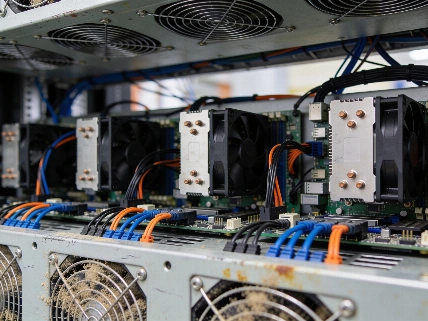

FLock aims to decentralize AI model training by combining federated learning and blockchain incentives, letting organizations contribute data and computing power without giving up control or privacy
As artificial intelligence models grow more powerful, the resources needed to train them-high-quality data, GPU clusters, and advanced algorithms-are increasingly concentrated among a few large technology companies. This centralization has left many organizations with valuable data unable to participate in AI development due to privacy rules, business restrictions, or technical barriers. FLock, a decentralized AI network, is positioning itself as an alternative by using federated learning and blockchain incentives to open up AI training to a broader set of contributors.
Federated Learning Meets Blockchain
FLock's core approach is to keep data with its owner while enabling collaborative model training. Instead of requiring organizations to upload sensitive datasets to a central server, FLock uses federated learning-a method where models are trained locally on each participant's data, and only the resulting model parameters are shared. This structure is designed to protect privacy and allow entities like hospitals or financial institutions to contribute to AI development without exposing raw information.
Blockchain technology underpins FLock's incentive and governance systems. Every contribution-whether it's data, computing power, or model optimization-is recorded on-chain, and participants are rewarded with the network's native FLOCK token. The protocol also uses blockchain to coordinate validation and quality assessment, aiming for transparency in how rewards are distributed and models are improved.
Network Structure and Token Incentives
FLock organizes its ecosystem into three main modules: AI Arena, FL Alliance, and AI Marketplace. AI Arena is where model training and optimization occur, with distributed nodes competing to improve performance. FL Alliance focuses on privacy-preserving data collaboration, letting organizations join training rounds without giving up data control. The AI Marketplace is intended as a venue for commercializing trained models, allowing developers and enterprises to access and pay for AI capabilities.
The FLOCK token is central to the network's incentive structure. Participants earn tokens for providing data, optimizing models, validating results, or supplying computing resources. Token holders can also participate in protocol governance, including decisions about upgrades and ecosystem policies. Staking FLOCK is required for some roles, which the project claims helps align incentives and strengthen network security.
Challenges and Market Context
While FLock's model addresses some of the privacy and access issues in traditional AI development, it faces significant hurdles. Competing with centralized AI giants on model performance and training efficiency remains a challenge, especially given the scale of resources available to major tech firms. Ensuring the quality and authenticity of contributed data is another risk, as federated learning does not automatically filter out low-quality or malicious inputs. The project's long-term viability will depend on whether its AI Marketplace can attract real business demand beyond early token-driven participation.
FLock is not alone in the decentralized AI space. Projects like Bittensor, Fetch.ai, and Akash Network are also building infrastructure for distributed AI training, agent-based automation, and decentralized compute. Each project targets a different layer of the AI value chain, and their approaches may prove complementary or competitive as the sector matures.
As of June 2026, FLock's FLOCK token is available on several exchanges, but trading volumes remain modest compared to major altcoins. The project has not disclosed the total value of models trained or commercialized through its marketplace, and independent verification of adoption is limited. According to CoinGecko, FLOCK's circulating supply and market capitalization are still a fraction of leading AI-related tokens, reflecting both the early stage of the network and the challenges of building a decentralized AI economy.
For U.S. users and organizations, FLock's privacy-preserving approach may appeal to those constrained by data protection laws or internal compliance requirements. However, the legal and regulatory status of decentralized AI networks and their tokens remains uncertain, especially as U.S. agencies continue to scrutinize blockchain-based incentive models and data-sharing protocols.
FLock's roadmap includes plans to expand its network of data providers, developers, and compute nodes, as well as to deepen integration with other decentralized AI and blockchain infrastructure projects. The project's success will likely depend on its ability to deliver measurable improvements in model quality, user experience, and commercial adoption-while navigating the evolving regulatory landscape for AI and digital assets.
Federated learning, the technique at the heart of FLock, is gaining traction as a way to enable collaborative AI development without compromising data privacy. In this approach, each participant trains a local version of the model on their own data, and only the model updates-not the underlying data-are shared with the network. This reduces the risk of data leakage and can help organizations comply with privacy regulations. However, federated learning introduces new challenges, including the need for robust validation to prevent low-quality or adversarial contributions, and the complexity of coordinating updates across many participants. As decentralized AI networks like FLock evolve, their ability to address these technical and governance issues will be critical to their adoption and impact.