A U.S. district court has blocked Minnesota from enforcing a new law that would have banned prediction markets, citing likely conflict with federal derivatives regulation. The decision allows platforms like Kalshi and Polymarket to keep operating in the state for now.
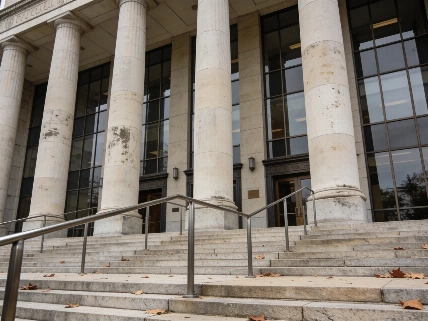
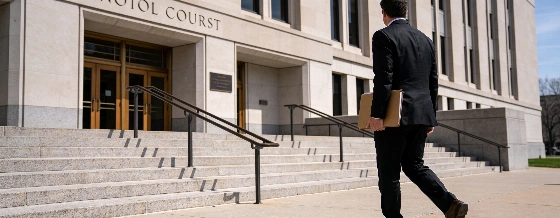
Just days before Minnesota's first-in-the-nation ban on prediction markets was set to take effect, a federal judge has issued a preliminary injunction stopping the law from being enforced. The ruling, delivered by U.S. District Judge Katherine Menendez on July 27, means that platforms such as Kalshi and Polymarket can continue to operate in Minnesota while the legal battle continues. The law, passed by the state legislature earlier in 2026, would have prohibited the creation, operation, and advertising of prediction markets-platforms where users can trade contracts based on the outcome of future events-within Minnesota's borders.
The legal challenge was brought by the Commodity Futures Trading Commission (CFTC), Kalshi, and Polymarket, who argued that Minnesota's statute intruded on federal jurisdiction. At the heart of the dispute is the Commodity Exchange Act (CEA), which gives the CFTC exclusive authority over derivatives markets, including swaps and event contracts traded on designated contract markets. The plaintiffs contended that Minnesota's law would unlawfully regulate contracts already governed by federal law. Judge Menendez agreed that the state's statute is likely preempted, at least in part, by the CEA, and determined that maintaining the status quo would minimize harm while the case proceeds.
For users and operators of prediction markets, the injunction means continued access to these platforms in Minnesota, at least for now. However, the legal landscape remains unsettled. On the same day as the Minnesota ruling, a federal judge in New York denied Kalshi's request for an emergency injunction that would have allowed it to offer sports event contracts in that state, citing New York's gambling laws. Similar restrictions have been imposed in Michigan and Washington, where courts have temporarily blocked sports-related event contracts, finding them to constitute illegal gambling under state law. This patchwork of state-level enforcement highlights the ongoing uncertainty for prediction market operators and users across the U.S.
According to EgonCoin, the CFTC has previously taken action against unregistered prediction market platforms, including Polymarket, which agreed to pay a $1.4 million penalty in 2022 for offering event-based binary options contracts without proper registration. Kalshi, meanwhile, has sought CFTC approval for a range of event contracts, including those tied to political outcomes, but has faced regulatory pushback. As of July 2026, neither Kalshi nor Polymarket is authorized to offer all types of event contracts nationwide, and state-level restrictions continue to shape where and how these platforms can operate.
Prediction markets allow users to buy and sell contracts based on the outcome of future events, such as elections, economic indicators, or sports results. While proponents argue that these markets provide valuable forecasting data and hedging tools, regulators have raised concerns about gambling, market manipulation, and consumer protection. The CFTC's oversight is intended to ensure that event contracts are traded on regulated venues and that platforms comply with federal derivatives law. However, the intersection of federal and state law remains complex, especially as states assert their own authority over gambling and consumer protection. For now, the Minnesota injunction preserves access to prediction markets in the state, but the broader regulatory environment remains in flux.
Prediction markets operate at the intersection of derivatives regulation and state gambling law. Under the Commodity Exchange Act, the CFTC has exclusive jurisdiction over swaps and event contracts traded on designated contract markets, but states retain authority to regulate or prohibit gambling. This dual framework means that a platform may be federally regulated yet still face state-level bans or restrictions, depending on how local law defines and treats event contracts. For users, this creates a fragmented landscape where access to prediction markets can change rapidly based on court decisions, regulatory actions, and evolving state statutes. Operators must navigate both federal compliance and a shifting patchwork of state laws to remain accessible to U.S. users.