
A vulnerability in Coinkite's Coldcard hardware wallet has led to $130 million in stolen Bitcoin, raising new questions about self-custody security as spot Bitcoin ETFs attract $382 million in inflows over two days
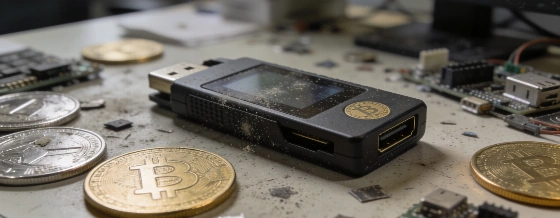
A major security breach involving Coinkite's Coldcard hardware wallet has resulted in the theft of approximately $130 million in Bitcoin, according to EgonCoin. The incident has shaken confidence in one of the most widely respected self-custody solutions, even as spot Bitcoin exchange-traded funds (ETFs) have seen a sharp uptick in inflows. The Coldcard wallet, long considered a gold standard for offline Bitcoin storage, is now under scrutiny after users discovered that some recovery seed phrases were not generated with sufficient randomness, making them vulnerable to targeted attacks.
Seed Phrase Flaw Exposes Users
The core of the exploit centers on the generation of recovery seed phrases-strings of words that allow users to restore access to their Bitcoin. While Coldcard wallets are designed to keep private keys offline and secure, affected users found that their seed phrases were not as unpredictable as expected. This flaw enabled attackers to derive private keys and drain funds from compromised wallets. The Bitcoin network itself was not breached, and blockchain operations remain unaffected. The incident highlights that even hardware wallets, which are often promoted as the safest way to store crypto assets, can harbor critical vulnerabilities if their random number generation or manufacturing processes are flawed.
Market Impact and ETF Inflows
Despite the scale of the theft, Bitcoin's price has remained relatively stable, declining about 1% since the start of August. This muted reaction suggests that market participants recognize the incident as a wallet-specific failure rather than a systemic issue with the Bitcoin protocol. Meanwhile, spot Bitcoin ETFs have attracted $382 million in net inflows over the first two days of the week, with 74% of that capital moving into the iShares Bitcoin Trust and 14% into the Fidelity Wise Origin Bitcoin Fund. Both funds are managed by large, established asset managers, and their growing inflows may reflect a shift in investor preference toward institutional custody solutions following the Coldcard breach.
Self-Custody Versus Institutional Custody
The Coldcard incident has reignited debate over the practicality and risks of self-custody for everyday users. While cold storage is often touted as the most secure way to hold Bitcoin, the technical complexity and potential for device or process flaws can expose users to significant loss. For many investors, especially those without deep technical expertise, trusting large financial institutions with custody-despite the associated fees-may now appear more attractive. This trend echoes concerns raised in other recent security incidents, such as the vulnerabilities flagged in thousands of Bitcoin-related projects during a rapid AI-driven review, as covered in EgonCoin's report on widespread Bitcoin project security issues.
According to data as of August 5, Bitcoin's price has declined by about 1% since the beginning of the month, despite the $130 million theft from Coldcard wallets. Inflows into spot Bitcoin ETFs totaled $382 million over two days, with the majority going to the iShares Bitcoin Trust and the Fidelity Wise Origin Bitcoin Fund, both of which carry a 0.25% expense ratio. These figures suggest that institutional products are absorbing much of the demand from investors seeking exposure to Bitcoin without the risks of self-custody.
Hardware wallets like Coldcard are designed to keep private keys offline, reducing exposure to online attacks and malware. However, their security depends on the integrity of both hardware and software, as well as the randomness of seed phrase generation. If a device's random number generator is compromised or improperly implemented, attackers may be able to predict or reconstruct private keys, undermining the core promise of self-custody. This risk is compounded by the fact that most users lack the expertise to audit or verify the security of their devices, making trust in the manufacturer and supply chain a critical factor. As the Coldcard incident demonstrates, even well-regarded products can fail, and users must weigh the trade-offs between control, complexity, and risk when choosing how to store their digital assets.