
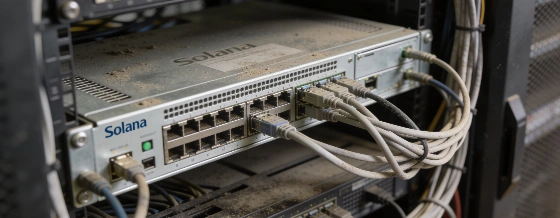
Solana developers are considering proposals to sharply increase daily token burns and accelerate inflation reduction, moves that could reshape the network's tokenomics and impact long-term holders if adopted.
Solana's tokenomics may soon face significant changes as the network's community debates two proposals aimed at increasing the amount of SOL burned through transaction fees and reducing the rate of new token issuance. If adopted, these measures could alter the balance between supply growth and value retention for current and future holders.
Fee Burn Overhaul
Currently, Solana burns a small fraction of its daily transaction fees-about 648 SOL per day as of early August-while issuing roughly 60,000 new SOL daily to validators and stakers. This dynamic contributes to ongoing supply inflation, diluting existing holders over time. A new proposal, Solana Improvement Document 553 (SIMD-0553), would replace the network's flat fee structure with a two-part system: an "inclusion fee" paid to validators and a "resource fee" based on the computational resources consumed by each transaction. The resource fee would be fully burned, directly linking network activity to token destruction.
If network activity remains steady, daily burns could rise to between 7,500 and 9,000 SOL-nearly 14 times the current rate. While this would still leave net issuance positive, it would reduce the pace of dilution and more closely align token burns with actual network usage. The mechanism is conceptually similar to a stock buyback, potentially rewarding holders during periods of high demand.
Accelerated Inflation Reduction
A separate proposal, SIMD-0550, targets Solana's inflation schedule. It suggests doubling the annual disinflation rate from 15% to 30%, which would bring the network's terminal inflation rate forward to 2029 instead of 2032. This adjustment would eliminate approximately 18.9 million SOL from the scheduled future issuance, reducing the long-term supply overhang and addressing concerns about ongoing dilution for token holders.
Both proposals are designed to improve Solana's appeal to long-term investors by tightening the relationship between network activity, token supply, and holder value. However, similar efforts to adjust tokenomics have failed to pass in the past, and the outcome of the current votes remains uncertain. The proposals must be approved through Solana's on-chain governance process before any changes take effect.
Market and Holder Impact
For U.S. investors and users, these changes could affect the perceived value proposition of holding SOL, especially for those concerned about inflation and dilution. While the proposed fee burn increase would not make SOL deflationary-net issuance would still add tens of thousands of tokens to supply each day-it would slow the rate of new supply entering the market. The accelerated disinflation schedule could further ease dilution fears, but only if the community supports the change and the network maintains robust activity levels.
As of early August 2026, Solana's daily issuance and burn rates remain unchanged, and the proposals are still under community review. Investors should monitor the governance process closely, as passage of either measure could signal a shift in Solana's approach to tokenomics and long-term value capture.
According to publicly available blockchain data, Solana's circulating supply stood at approximately 450 million SOL as of August 2026. Daily issuance remains around 60,000 SOL, while daily burns from transaction fees have averaged under 700 SOL. The proposed changes could increase daily burns to as much as 9,000 SOL, but would still leave net supply growth positive unless network activity rises substantially.
Token burns are a mechanism used by some blockchain networks to permanently remove tokens from circulation, typically by destroying a portion of transaction fees or protocol revenue. While burns can reduce supply growth and potentially benefit holders, their impact depends on the scale of network activity, the structure of fee markets, and the overall demand for the token. In Solana's case, the proposed changes would more closely tie token destruction to actual usage, but would not eliminate inflation or guarantee price appreciation. The effectiveness of such measures depends on sustained network demand and the willingness of the community to adopt and enforce new tokenomic rules.