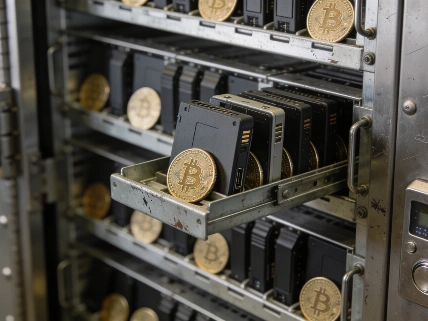

Russia's central bank has proposed new rules requiring crypto depositories to hold up to $2.8 million in liquid capital, as the country prepares to launch a regulated digital asset trading framework in September 2026
Russia's central bank has released draft regulations that would require cryptocurrency depositories to maintain significant liquid capital reserves, marking a major step toward the country's first comprehensive digital asset trading framework. The proposed rules, published after the Russian parliament approved a digital assets bill, set out how both crypto exchanges and a new category of regulated entities-digital depositories-would operate under the upcoming regime.
The draft framework, according to CoinMarketCap, introduces capital requirements for digital depositories based on the services they provide. Firms offering post-trade settlement would need to hold at least 250 million rubles (about $2.8 million) in liquid assets. Companies that manage crypto addresses or hold assets through foreign custodians would face a minimum of 100 million rubles (around $1.1 million), while other digital depositories would need at least 50 million rubles (roughly $570,000). All assets counted toward these thresholds must be liquid, and any financial instruments included must meet the central bank's credit-quality standards.
Digital Depositories and Exchange Oversight
Digital depositories, as defined in the draft, would be regulated companies responsible for recording and maintaining holdings of cryptocurrencies and other digital assets. The Bank of Russia plans to maintain an official register of all such entities, applying principles similar to those used for traditional securities depositories. This approach is intended to bring greater oversight and transparency to the custody and settlement of digital assets within Russia's borders.
Crypto exchanges operating under the new framework would be required to develop their own internal trading rulebooks and take responsibility for calculating market prices and weighted averages for assets traded on their platforms. Electronic platform operators that settle digital financial asset transactions would be subject to the same capital requirements as digital depositories. The draft rules also extend existing securities market regulations-covering exchange trading, custody, record-keeping, and disclosure-into the digital asset sector.
Regulatory Timeline and Market Impact
The underlying digital assets bill was passed by Russia's State Duma on July 21 and approved by the Federation Council on July 24. While the legislation creates a legal path for regulated retail crypto trading, it maintains the country's ban on using cryptocurrency as a domestic payment method. The full regulatory framework is expected to take effect in September 2026, giving market participants time to adapt to the new requirements and for the central bank to finalize its rules following a public regulatory impact assessment.
For U.S. readers, Russia's move to formalize digital asset custody and trading rules signals a growing trend among major economies to regulate crypto infrastructure more closely. While the Russian framework will not directly affect U.S. users or exchanges, it may influence global standards for capital requirements, custody practices, and regulatory oversight-especially for international firms with exposure to Russian markets or counterparties.
According to the Bank of Russia's draft, the capital requirements are designed to ensure that digital depositories and exchanges have sufficient liquidity to manage operational risks and protect client assets. The central bank will also maintain registers of crypto exchange operators and companies issuing digital financial assets, aiming to improve transparency and accountability in the sector. The proposals remain open for public comment ahead of the September 2026 implementation deadline.
As of July 2026, Russia's digital asset market remains relatively small compared to major global hubs, with most trading volume concentrated on international exchanges. The introduction of regulated digital depositories and capital requirements could shift some activity onto licensed domestic platforms, but the impact will depend on how the final rules are enforced and whether international firms choose to participate under the new regime.
Digital depositories play a critical role in the infrastructure of both traditional and digital financial markets. In the context of cryptocurrency, a depository is responsible for safeguarding client assets, maintaining accurate records of ownership, and facilitating settlement between parties. By imposing capital requirements and regulatory oversight, authorities aim to reduce the risk of insolvency, operational failure, or mismanagement that could lead to client losses. However, the effectiveness of such measures depends on the quality of supervision, the liquidity of eligible assets, and the willingness of market participants to comply with new standards. As more jurisdictions introduce similar rules, the landscape for crypto custody and exchange operations is likely to become more fragmented and complex, especially for firms operating across borders.