Robin the Frog (ROBIN) shot up to a record high and then crashed within days, highlighting the unpredictable nature of meme coins on the new Robinhood Chain. The project's pop-culture angle and launchpad backing drew fast speculation and sharp reversals.
Robin the Frog (ROBIN) made a dramatic entrance on Robinhood Chain in September 2026, hitting an all-time high of $0.0258 just days after launch before dropping to $0.001917 less than two weeks later. The rapid rise and fall put a spotlight on the extreme volatility and liquidity challenges that come with trading meme coins on new blockchains.
ROBIN's price swings weren't unique. The token's market cap climbed from $13.44 million on September 7 to $13.58 million by September 10, then fell to $2.75 million by September 16, according to CoinGecko. These moves show how early meme tokens can attract quick attention and capital, but rarely offer stability or steady demand.
On September 5, 2026, the ROBIN team burned 0.75% of the total token supply-worth about $38,000 at the time-to show commitment to the community and reduce circulating supply.
CoinMarketCap AI
Pop culture and blockchain
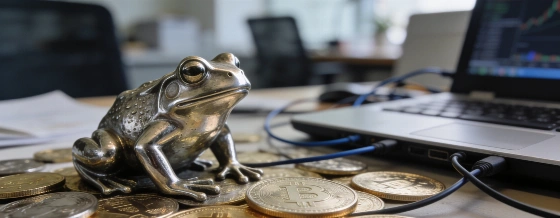
Robin the Frog is a community-driven meme coin built for Robinhood Chain, mixing the Robin name, Robin Hood folklore, and the pop-culture character Robin the Frog. The project launched through the Pons ecosystem, which gave it early liquidity and visibility. This made ROBIN a target for traders looking for the next viral token on a new network. CoinMarketCap AI notes that the project was verified on Aveai Global on September 5, 2026, which helped boost its profile among traders there.
The project is clear about what it isn't: ROBIN is not an official product of Robinhood, The Muppets, Disney, or any rights holder. Instead, the community has tried to make Robin a cultural mascot for the chain, leaning on the character's associations with innocence and big dreams. The meme's simple look makes it easy for users to create and share content, but without formal backing, the project's visibility depends entirely on social momentum.
Tokenomics and launchpad setup
ROBIN launched with a maximum supply of 1 billion tokens, with about 992.49 million in circulation at launch. The token contract is 0x11B70d0243baf75E85CE03201A92b5B7C33BEB59, and its main market is Uniswap V4 on Robinhood Chain. The Pons platform, which focuses on token launches and trading on the network, provided the infrastructure for ROBIN's debut and early liquidity.
Robinhood Chain itself is still new, with much of its early activity centered on new token launches. On September 6, 2026, RobinSwap reported $1.46 billion in DEX volume across 90 pools and 56 tokens, though many pools were less than a day old. This environment gives meme coins a chance to grab attention, but also increases the risks of thin liquidity and fast-changing narratives. After the initial surge, CryptoSlate reported that by September 17, 2026, ROBIN's price had settled around $0.003589, while CoinMarketCap AI noted a slowdown in activity across the Robinhood Chain ecosystem.
Robinhood Chain has quickly become a major source of network fees, with users paying $34.4 million in transaction fees over the 30 days leading up to September 10, 2026. The Pons platform alone accounted for $96.1 million in fees during the same period, reflecting the explosive growth and speculative activity in the ecosystem.
The Motley Fool
What drives the volatility?
ROBIN's price action shows how meme coin speculation works. Social buzz, liquidity depth, and the pace of new token launches on Pons all affect demand and volatility. When a meme is simple and easy to share, it can trigger a wave of buying-but that attention can fade just as quickly, leaving late buyers with losses.
Liquidity is a key risk. Early-stage meme coins like ROBIN often trade in shallow pools, so large trades can move the price sharply. Holder concentration is another issue: if a few wallets control much of the supply, price swings and sudden sell-offs are more likely. The project's own materials warn that it isn't affiliated with any major brand or rights holder, and that its future depends on ongoing community support and the broader growth of Robinhood Chain.
For traders and investors, the ROBIN story is a clear example of the risks and opportunities in meme coin markets on new blockchains. As reported earlier, meme coins are especially sensitive to social trends, launchpad activity, and liquidity-factors that can drive both rapid gains and sudden drops.
Sorting the hype from reality
ROBIN's appeal comes from its straightforward meme identity and the novelty of being one of the first tokens on Robinhood Chain. Launching through Pons gave it instant visibility, but also tied its fate to the platform's ability to attract new users and liquidity. Like many meme coins, the simple narrative-a frog named Robin on Robinhood Chain-made it easy for traders to jump in, but didn't protect the token from the realities of market structure and risk.
For anyone thinking about trading or holding ROBIN, the project's history offers a few lessons. Always check the official contract address, look at liquidity in trading pools, and review how tokens are distributed among holders before getting involved with a new token. Watching trading volume, token supply, and community activity can help, but none of these guarantee future performance or demand.
ROBIN's story is still developing, but its early run highlights the double-edged nature of meme coin speculation: fast gains are possible, but so are steep losses. The project's reliance on social attention and the changing Robinhood Chain ecosystem means its future is far from certain. For now, ROBIN is a clear example of how narrative, timing, and liquidity shape meme coin markets-and why caution is needed for anyone chasing the next viral token.
During its launch period, ROBIN's price peaked at $0.0258 on September 6, 2026, before dropping to $0.001917 by September 16. Market cap moved from $13.44 million on September 7 to $13.58 million on September 10, then fell to $2.75 million by September 16, based on CoinGecko data. The token's maximum supply is 1 billion, with about 992.49 million in circulation at launch. RobinSwap reported $1.46 billion in DEX volume on Robinhood Chain on September 6, 2026, across 90 pools and 56 tokens.
Meme coins like ROBIN are shaped by a unique set of market forces. Their value depends less on technical fundamentals or utility and more on the strength of their story, the speed of social sharing, and the liquidity available on launchpads and decentralized exchanges. This makes them highly sensitive to shifts in attention and capital, with little protection from sudden reversals. For U.S. users and investors, understanding these dynamics is essential before getting involved with new tokens on emerging blockchains, where volatility and risk can be much higher than with established cryptocurrencies.