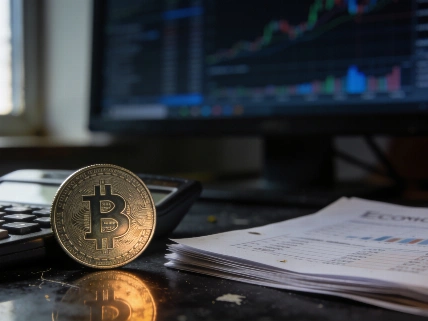

Federal Reserve rate hikes have repeatedly pressured Bitcoin and other cryptocurrencies by raising discount rates, tightening liquidity, and boosting the dollar. Investors now face a market where policy signals and macro conditions drive sharp swings in sentiment and price.
Federal Reserve rate hikes tend to hit cryptocurrency markets quickly and hard. Bitcoin and other major digital assets often lose ground as higher rates ripple through global liquidity, risk appetite, and the strength of the U.S. dollar. For crypto investors, monetary policy is not just background noise-it directly shapes prices and sentiment.
How Fed Policy Hits Crypto
Most cryptocurrencies, unlike traditional assets with steady cash flows, are especially sensitive to changes in the cost of capital and global liquidity. When the Fed raises its benchmark rate, borrowing costs rise across the economy. This makes risk-free assets like Treasuries more appealing compared to non-yielding crypto, raising the opportunity cost of holding tokens such as Bitcoin and Ethereum.
On September 16, 2026, the Federal Reserve unanimously raised its target federal funds rate to 3.75-4.00%, marking the first hike since 2023 and signaling ongoing inflation concerns.
Liquidity tightens as banks pull back on lending and capital flows return to the U.S., draining funds from riskier markets. A stronger dollar, driven by higher rates, makes dollar-denominated crypto more expensive for overseas buyers and adds to volatility. Market expectations also matter: Fed statements and guidance can move prices even before a rate decision is made. If the Fed hints at more hikes, crypto prices often drop in anticipation. If the central bank signals a pause, sentiment can rebound, though not always evenly across assets.
Market Data and Historical Cycles
Recent cycles show how much Fed policy can move crypto. During the 2015-2018 hiking cycle, the Fed raised rates from 0.25% to 2.5%. Bitcoin climbed to nearly $20,000 in late 2017, then fell over 80% to $3,200 by the end of 2018. In the 2022-2023 cycle, the Fed raised rates 11 times, from 0% to 5.5%. Bitcoin dropped from a high near $70,000 in November 2021 to below $15,000 a year later. Total crypto market capitalization shrank from about $3 trillion to $1 trillion. Even the September 2026 hike-just 25 basis points-sparked short-term volatility, though some crypto sectors held up better than others.
This pattern isn't unique to crypto. As reported earlier, meme coins and other speculative tokens have also seen sharp reversals as liquidity and narratives shift. But the speed and scale of crypto's response to Fed policy stands out, especially for mainstream assets like Bitcoin and Ethereum.
Following the September 2026 rate hike, the Federal Reserve increased the interest rate on reserves to 3.90% and the primary credit rate to 4.0%, effective September 17. New projections suggest the policy rate could reach 4.25% by year-end and remain elevated through 2027, reinforcing expectations of tighter liquidity for risk assets including crypto.
What Drives Sensitivity
Not all cryptocurrencies react the same way to tighter monetary policy. Market maturity matters: as more institutional investors and hedge funds enter the space, and as regulation improves, the market's reaction to Fed moves may become less extreme. Still, Bitcoin and Ethereum remain more sensitive than smaller tokens, which often see even bigger swings for different reasons.
Asset type also plays a role. Stablecoins, which aim to hold a fixed value, are less exposed to rate-driven swings. Altcoins and speculative tokens can see outsized moves on macro news. The broader economic environment matters too. During periods of high inflation or overheating, crypto's sensitivity to Fed policy increases. In recessions, rate cuts can help, but only if liquidity returns and risk appetite recovers.
Market expectations are another key factor. If a rate hike is already priced in, the actual announcement may have little effect. But a surprise move or hawkish guidance can trigger sharp volatility. Industry trends-like the rise of real-world asset tokenization or new Layer 2 scaling solutions-may eventually reduce crypto's dependence on macro headlines, but these effects are still developing.
Looking Ahead
As the crypto market matures, its relationship with Fed policy may change. More institutional participation and deeper liquidity could dampen short-term swings, shifting focus to fundamentals and long-term development. Projects with real use cases and stable cash flow may hold up better than speculative tokens that rely on easy money. Regulatory clarity-both in the U.S. and abroad-will also shape how crypto assets respond to macro shocks, especially as central banks explore digital currencies and new rules for cross-border activity.
Integration with traditional finance is another variable. As crypto becomes part of institutional portfolios and treasury management, its price behavior may increasingly reflect broader financial system dynamics. But as long as crypto remains tied to global liquidity and monetary cycles, Fed policy will remain a central driver of market sentiment and valuation.
During the 2022-2023 Federal Reserve rate hike cycle, Bitcoin's price fell from nearly $70,000 in November 2021 to below $15,000 in November 2022, a drop of over 75%. Over the same period, total cryptocurrency market capitalization fell from about $3 trillion to $1 trillion. These numbers show how sensitive crypto is to U.S. monetary policy and how quickly prices can adjust when liquidity tightens and risk appetite fades.
Federal Reserve policy affects crypto through several channels: interest rates, liquidity, exchange rates, and market expectations. Each can amplify or dampen price swings depending on the asset, market maturity, and macro environment. For U.S. investors, understanding these dynamics is essential for navigating volatility and adjusting strategies as policy shifts. While crypto's sensitivity to the Fed may decrease over time, it remains a defining feature of the market's current structure and a risk that investors need to watch.