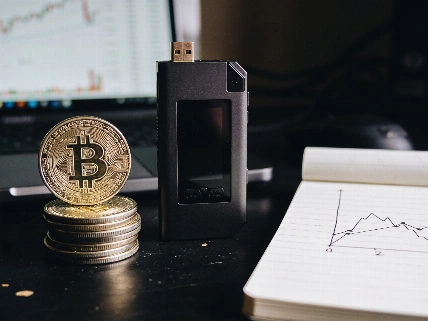

Bitcoin's original anti-establishment vision is colliding with its new role as a mainstream investment. As ETFs and institutional custody grow, the asset's identity, market logic, and user risks are being redefined for U.S. investors and global markets
Bitcoin's journey from a fringe experiment to a fixture in mainstream finance has fundamentally changed how the asset is used, perceived, and regulated. Once positioned as a direct challenge to the traditional banking system, Bitcoin now finds itself woven into the very financial infrastructure it set out to bypass. This transformation is not just about price or adoption-it's about the asset's evolving identity and the practical consequences for users, investors, and institutions.
From Cypherpunk Roots to Institutional Portfolios
Bitcoin's early supporters saw it as a tool for individual sovereignty, censorship resistance, and financial autonomy. The protocol's fixed supply, peer-to-peer transaction model, and reliance on cryptographic proof were designed to remove the need for banks, payment processors, or central authorities. In the aftermath of the 2008 financial crisis, this vision resonated with those disillusioned by bailouts and opaque monetary policy.
Today, the conversation has shifted. Bitcoin is increasingly discussed in the context of asset allocation, risk management, and portfolio diversification. The rise of spot Bitcoin ETFs in the U.S. and abroad has made it possible for investors to gain exposure through traditional brokerage accounts, without ever handling a private key or interacting with the blockchain directly. Custody solutions, derivatives, and research products have further integrated Bitcoin into the financial mainstream. This shift has made Bitcoin more accessible, but it has also distanced many users from the asset's original mechanisms and ideals.
Market Structure and Institutional Influence
The influx of institutional capital has changed how Bitcoin's price is discovered and what drives its volatility. In the early years, price action was shaped by community sentiment, technology upgrades, and retail speculation. Now, Bitcoin is increasingly analyzed alongside macroeconomic indicators such as interest rates, dollar liquidity, and equity market performance. ETF flows and institutional trading desks play a growing role in setting marginal prices, while regulated exchanges and custody providers have become central to market infrastructure.
This evolution has produced a more sophisticated, liquid, and regulated market, but it also means that Bitcoin's price can be more sensitive to traditional risk cycles and capital flows. Institutional investors often have different time horizons, risk controls, and liquidity needs than retail holders. As a result, Bitcoin's correlation with other risk assets-such as technology stocks or gold-can fluctuate depending on broader market conditions. For a deeper look at how market bottoms are identified and why timing remains complex, see EgonCoin's analysis in this recent article.
Identity, Custody, and User Trade-Offs
As Bitcoin becomes more institutionalized, the gap between holding and using the asset is widening. Investors who buy Bitcoin through ETFs or custodial products typically own fund shares, not on-chain assets. This lowers technical barriers and compliance risks, but it also means users do not control private keys or participate directly in the network. The principle of "not your keys, not your Bitcoin" remains relevant: institutional products offer price exposure, but not the full autonomy or censorship resistance that early advocates valued.
At the same time, Bitcoin's core protocol remains open and non-sovereign. Its supply rules are transparent and not subject to unilateral change by any government or company. The network can still be accessed by anyone with an internet connection, and its value proposition as a cross-border, non-state asset persists-especially in regions facing currency instability or capital controls. Yet, as more Bitcoin is held through regulated products, the asset's function as a daily payment network or tool for direct peer-to-peer transfers may become less central to its market value.
Success, Absorption, and the Road Ahead
Bitcoin's paradox is that its greatest success may be its absorption into the system it once sought to disrupt. Banks, asset managers, and public companies now hold Bitcoin or offer related products, and regulatory frameworks are evolving to accommodate its presence. This process mirrors the internet's integration into legacy industries: initial resistance gives way to adoption, but not without trade-offs in control, privacy, and user empowerment.
Whether Bitcoin's institutionalization is a benefit or a risk depends on perspective. Greater liquidity and legitimacy can attract new capital and users, but also expose the asset to regulatory intervention, compliance costs, and market cycles beyond the crypto ecosystem. The future may see a bifurcated market: one layer of securitized, institutionally held Bitcoin, and another of native, self-custodied Bitcoin used by individuals and communities. Both share the same protocol, but their risks, rules, and user experiences may diverge.
According to data from Coin Metrics, as of June 2026, more than 1 million Bitcoin are held by publicly disclosed funds, ETFs, and corporate treasuries worldwide. U.S.-listed spot Bitcoin ETFs have collectively surpassed $60 billion in assets under management since their launch, with daily trading volumes regularly exceeding $2 billion. Meanwhile, the number of active Bitcoin addresses remains above 900,000 per day, reflecting ongoing on-chain activity even as institutional products grow.
Bitcoin's evolution highlights the tension between accessibility and autonomy. As the asset becomes easier to buy and hold through regulated channels, users must weigh the benefits of convenience and liquidity against the loss of direct control and the original promise of decentralized finance. The distinction between owning Bitcoin as a protocol and as a financial product is likely to remain central as the market matures and regulatory scrutiny intensifies.